



Think back to the tech landscape two decades ago. We had PDAs, basic SMS, and the clunky beginnings of instant messaging. We knew these tools boosted productivity and kept us connected. We didn’t think about them as life-saving devices.
Today, that view is wrong. Emergency notifications are a different beast entirely.
These aren’t just marketing blasts. They are critical warnings delivered across every available channel—email, SMS, cell phones, PDAs, or outdoor sirens. The goal is simple: warn large groups of people about impending or existing danger before it becomes a tragedy.
Poor communication is the difference between a manageable crisis and a full-blown catastrophe. Look at the World Trade Center attacks. Confusion reigned. Communication broke down. Emergency workers were left in the dark.
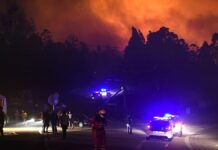
Or consider the 2003 California wildfires. Firefighters had to go door-to-door. They manually told residents to evacuate. It was slow. It was dangerous. Seventeen people died because the warning wasn’t fast enough.
That inefficiency spawned an entire industry.
Mass notification services now fill the gaps left by outdated protocols. Corporations subscribe to these systems to meet federal disaster recovery mandates. Schools use campus-wide alert systems to protect students and calm parents. Cities offer automated alerts that citizens can opt into via text or email.
But not all warnings are created equal.
We can split emergency notifications into two distinct buckets: non-discriminating warnings and targeted alerts.
Let’s look at the first one.
Non-Discriminating Alarms Explained
Non-discriminating alarms are the blunt instruments of emergency communication. They cast a wide net.
They don’t care who you are. They don’t filter by location, role, or threat level. If the system triggers, everyone in the designated zone gets the message.
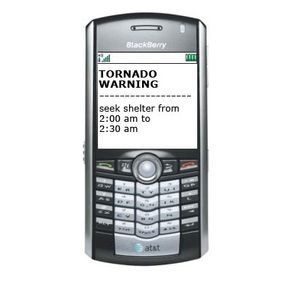
This approach is necessary when the threat is immediate and universal. A tornado warning isn’t selective. It doesn’t matter if you’re the CEO or the intern. If you’re in the path, you need to know.
These systems rely on speed over precision. They broadcast. They inform. They hope people act.
Non-discriminating warnings are essential for universal threats where hesitation costs lives.
Why do organizations still use them if they can be noisy? Because silence is worse. A false alarm is annoying. A missed alarm is fatal.
When a mass notification system fires a non-discriminating alarm, it bypasses bureaucracy. It doesn’t wait for approvals. It doesn’t check clearance levels. It pushes the alert out.
This is how we prevent the next door-to-door evacuation nightmare. This is how we ensure that when the siren sounds, everyone hears it.
The technology is mature. The adoption is growing. But the human element remains the weak link.
Will people listen? Will they act? The system can only do so much.
The rest is up to you.
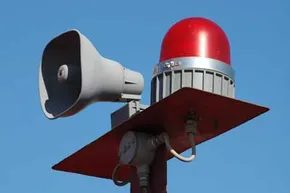
An air raid siren is the ultimate non-discriminating alert. It screams at anyone close enough to hear it. No matter who you are. No matter if you have a smartphone or a hearing aid. Just raw sound. Every other warning relies on hardware. TVs. Radios. Phones. Computers.
Sirens don’t pick targets. They hit a broad swath of population. Even if you are miles away from the actual danger zone. They just warn everyone within earshot. But that label—”air-raid siren”—is mostly historical baggage now. Very few long-range systems still sound for military attacks.
Think about what they actually do today.
- Volunteer fire department calls
- Severe storm watches
- Tornado warnings
- Hurricane tracks
- Tsunami alerts
- Dam failure notifications
- Chemical spill leaks
Most modern sirens start with a wail. Then a recorded voice. It usually tells you to turn on the TV or radio. That brings us to the Emergency Alert System (EAS).
Formerly the Emergency Broadcast System, this tool was built by the Federal Communications Commission (FCC). Its original intent? Let the President speak to the nation during a crisis. In 1963, state and local officials got permission to use it too. Now it broadcasts across every channel. Air. Cable. Satellite. Digital.
EAS messages are slightly more targeted than a siren. Officials can choose which stations carry the message. They pick the areas most likely to be hit. It also teams with the National Weather Service. Real-time storm data flows into participating stations. You can even get warnings in Spanish on Spanish-language networks.
The FCC is pushing to expand this system. They want to fully exploit digital and emerging communications technologies. Private companies are fighting for a slice of the emergency notification market.
This is a test…
Since it started, the Emergency Broadcast System was never actually used for its original purpose. The President never used it to interrupt programming during an actual emergency. But the test script is burned into our collective memory. “This is a test of the Emergency Broadcast System. This is only a test.”
That script is largely gone now. The EAS has gone digital. The national test is an unobtrusive eight-second digital data signal. You won’t hear a voice. State and local officials can still run the old test script if they want to.
Targeted Emergency Notifications
Why the Old School Phone Tree Is Failing You
The basic phone tree is the grandfather of emergency communication. It works for small groups under 100 people. It is targeted. Only the affected folks get called. The mechanics are painfully simple. You build a list. Then you assign each key member to call no more than ten others. The organizer starts the chain with a scripted message. Key members relay it down the line. Receipt is confirmed or the chain breaks.
Break the chain and the organizer is back on the hook. If a key person is unreachable, the burden shifts. They might not have time to make all the calls. Larger groups increase the risk of unavailable contacts. Plus, it relies on one channel. Phone. Just phone. That is a major bottleneck.
Automated systems solve this. They are essentially supercharged phone trees. They blast alerts to thousands simultaneously. E-mail. Phone. Cell. SMS. Pager. PDA. Fax. All at once.
How Subscription-Based Mass Notification Works
Most providers are subscription-based. The software and hardware live off-site. Clients access the system via a desktop web portal or a simple API. The setup looks familiar. Employees upload their contact info. Phone numbers. Fax. Email. SMS.
But here is where it diverges from the manual grind. You can organize contacts into unlimited groups and subgroups. Most systems let you upload directly from Microsoft Outlook. Some allow you to restrict who can contact massive groups. Authority is delegated, not chaotic.
When the crisis hits, you log in. Or you call the system directly. You choose your platforms. Text-to-speech converts written alerts into audio calls. The message hits off-site servers. Those servers fan out to five or 500,000 recipients instantly.
Targeting by Geography and Location
Municipalities use these services daily. Washington D.C. signs up citizens for alerts via email and SMS. But the real power lies in geospatial targeting. You can link these systems with GPS data.
Take the InstaCom GIS system by mass notification company 3n. It lets emergency workers and law enforcement target messages using a map interface. You draw a radius. You pick a zip code. Alerts go only to homes within that zone.
This specificity saves resources. It prevents panic across the entire city for a localized issue. A gas leak. A chemical spill. A child abduction. Even a prison escape. You warn only the people in danger. Not the rest of the county.
The Operational Advantages of Automated Alerts
Manual systems take time. Automated systems save it. They contact constituents simultaneously. This frees up emergency workers to focus on the crisis, not the contacts.
Reliability improves. Messages go out over every available platform. If one fails, another might succeed. You can track receipt in real time. You know who got the message and who didn’t.
Some systems stop calling after a set number. This helps when you need to quickly find available volunteers rather than just informing them. Others offer virtual bulletin boards. Record a message. Leave it on a secure number accessible via PIN.
The shift from manual to automated isn’t just about speed. It is about coverage and precision. Can you afford to wait for a phone tree to finish its rounds when a storm is hitting? Probably not.