



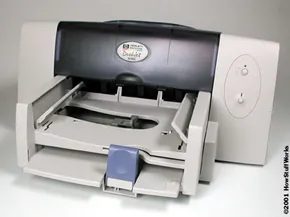
You probably have one sitting in the corner of your home office or tucked under a desk. It’s an inkjet printer. Since they hit the market in the late 1980s, these machines have gotten cheaper, faster, and sharper. They are no longer niche gadgets. They are standard issue.
An inkjet printer works by shooting microscopic droplets of ink onto paper. If you’ve ever stared at a fresh print, you’ve seen the result. The dots are tiny. We are talking 50 to 60 microns across. A human hair is roughly 70 microns wide. That means these ink spots are smaller than a strand on your head.
The placement is precise. You can get resolutions up to 1440×720 dpi. High resolution matters for sharp text. But it also matters for photos. The printer mixes different ink colors to create photo-quality images. It blends CMYK pigments to mimic skin tones, skies, and shadows.
This article breaks down how these machines function. We will look at the internal parts. We will explain how ink cartridges work. We will also cover the special paper some printers require for best results.
To understand inkjets, we need to look at the broader landscape of printer technology.
Impact vs. Non-impact
Not all printers work the same way. The main divide is between impact and non-impact technologies.
Impact printers use physical force. They strike an inked ribbon against the paper. Think of old dot-matrix printers. They are loud. They are rarely used today except for specific industrial needs.
Non-impact printers do not touch the paper with force. They use heat, light, or ink droplets. Laser printers use static electricity and toner powder. Inkjets use liquid ink. This distinction is key. It explains why inkjets are quieter and can handle thicker paper types better than impact models.
“Inkjet printers place extremely small droplets of ink onto paper to create an image.”
The next sections will dive into the specific mechanics of these non-impact systems. We will start with the hardware. Then we will move to the consumables. And finally, we will look at the paper itself.
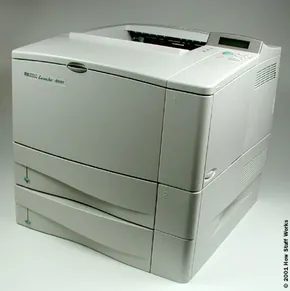
Printers generally fall into two buckets. One group hits the paper. The other doesn’t.
Impact printers—like dot matrix and character models—physically strike an inked ribbon against the sheet. Dot matrix uses tiny pins to create a grid of dots. Character printers are basically computerized typewriters with embossed letters. They’re fast for text. They’re useless for photos.
Then there’s non-impact. This is where inkjet, laser, solid ink, and thermal technologies live. They don’t touch the paper during the printing process. Laser printers use toner and static electricity. Solid ink melts wax sticks onto the page. Dye-sublimation vaporizes color films onto glossy paper. Thermal wax melts wax ribbons with heated pins. Thermal autochrome heats color layers already embedded in the paper itself.
But inkjet printers are the kings of the hill. They are by far the most popular technology. Laser printers are the only real competition today.
Let’s look under the hood of an inkjet.
What Is an Inkjet Printer and Why Does It Matter?
An inkjet printer sprays microscopic drops of liquid ink directly onto paper. It’s simple in concept. Complex in execution. The core mechanism involves a print head with dozens, sometimes thousands, of tiny nozzles. These nozzles fire droplets with pinpoint accuracy.
Why does this matter to you? Because inkjets handle color better than most other consumer technologies. They produce vibrant photos. They handle varied paper types. From glossy photo paper to matte cardstock, inkjets adapt.
How does it compare to laser? Laser uses powder (toner) and heat. It’s faster for bulk text. It’s cheaper per page for black-and-white documents. But for color images? Inkjet usually wins on quality and versatility.
How Inkjet Printers Create Images
The magic happens in the print head. There are two main ways inkjets fire ink.
- Thermal (Bubble Jet): Heated elements boil the ink, creating a bubble. The bubble expands and pushes a droplet out of the nozzle. The bubble collapses, creating a vacuum that pulls more ink in. This is the method used by Canon and older HP models.
- Piezoelectric: A crystal changes shape when electricity is applied. This pressure forces ink out of the nozzle. No heat involved. This method is used by Epson.
Which is better? Piezoelectric heads tend to last longer. They can use a wider variety of ink chemistries. Thermal heads are simpler and cheaper to manufacture. But the ink must be formulated to withstand high heat.
The ink itself is key. Standard inkjet ink is water-based. It soaks into the paper fibers. Pigment-based inks sit on top. They are more water-resistant and fade-resistant. Archival photos usually require pigment ink.
Where Inkjets Are Used Today
Home users buy inkjets for photos and school projects. Small businesses use them for marketing materials. They don’t need the volume capacity of a laser.
Commercial printers use large-format inkjets for banners and signage. These machines spray gallons of ink per hour.
Where are they not used? High-volume text printing. If you need to print 10,000 pages a day, you buy a laser. Or a dot matrix for multi-part forms.
The technology has evolved. Early inkjets were slow. They dried slowly. Colors bled. Modern inkjets are fast. They dry in seconds. Colors are sharp.
But the basic physics remain the same. Nozzles. Ink. Paper.
Why Inkjets Dominate the Market
Two words: color and cost.
You can buy a good color laser printer. But the toner cartridges are expensive. The machine is expensive. Inkjet cartridges are cheap. The printers themselves are often sold at a loss.
Which is better for everyday users? For most people, the inkjet. It handles the occasional photo. It prints labels. It handles the homework. It sits quietly in the corner until needed.
The trade-off is ink consumption. Inkjets dry out if left unused. You might need to run a cleaning cycle. This wastes ink. Laser toner doesn’t dry out. But you rarely need to print color photos at home.
So the inkjet stays. The nozzle stays. The ink stays.
And the cycle continues.
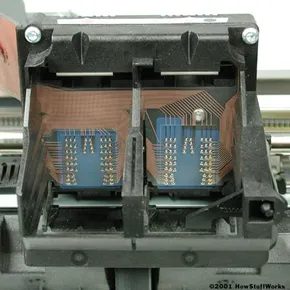
The Print Head Assembly
At the heart of the machine is the print head assembly. It’s not just one piece. It’s a cluster of components working in sync. The print head itself is the star here. Inside, you’ll find a series of microscopic nozzles. These spray tiny droplets of ink directly onto the page. Precision matters. If a nozzle clogs, you get streaks. If it misfires, you get blobs.
Then there are the ink cartridges. Manufacturers play with the configuration. Some use separate tanks for black and color. Others combine them into a single block. High-end models might dedicate a cartridge to every single ink color. Here’s a twist: in some designs, the print head is built into the cartridge. In others, it’s fixed to the printer. This distinction affects maintenance. If your head breaks, you either swap the cartridge or call a technician. Big difference in cost.
Moving all this hardware requires muscle. Enter the print head stepper motor. This motor drives the assembly back and forth across the paper. It’s precise. It doesn’t just guess where to stop. It counts steps. Some printers add a second motor specifically to park the head. Why park it? To lock it in place when idle. Think of it like a parking brake. Prevents accidental bumps from misaligning the nozzles.
The connection between motor and head? A belt. It transfers the motion. But movement needs stability. Otherwise, the whole assembly wobbles. That’s where the stabilizer bar comes in. It keeps the motion linear. Controlled. Smooth. Without it, every print job would be a gamble.
Feeding the Beast
You can’t print without paper. And getting paper there is its own mechanical challenge. Most units rely on a paper tray or feeder. The tray is standard. You slide paper in. The feeder is different. It usually snaps open at an angle on the back. You place the paper there. It holds less paper than a tray. But it’s common in sleek, space-saving models.
Once loaded, rollers take over. They pull the paper in. They advance it when the print head is ready for the next pass. It’s a rhythmic dance. Move head. Advance paper. Move head again.
Who controls the rollers? The paper feed stepper motor. This motor ensures the paper moves in exact increments. One pixel’s worth. Then another. Then another. If the timing is off, the image skews. The lines won’t match up. The result looks like a bad dream.
Powering all this? The power supply. Old printers used external transformers. Bulky. Annoying. Modern units integrate the supply into the body. Cleaner. Safer. More efficient.
But power is useless without brains. That’s the control circuitry. A small board. Sophisticated nonetheless. It handles the mechanical commands. It also decodes the data stream from your computer. It translates digital instructions into physical movements. One wrong signal, and the printer jams. Or prints gibberish.
How does the computer talk to the printer? Via interface ports. Parallel ports are still around. But they’re legacy. Most new printers use USB. Some older or specialized models might use serial or SCSI. USB is the standard. Simple. Fast. Universal.
Heat vs. Vibration
This brings us to the core technology debate. Thermal inkjets. Piezoelectric inkjets. The difference isn’t just marketing. It’s physics.
Thermal printers use heat. They heat a tiny reservoir of ink until it boils. Creates a bubble. The bubble expands. Pushes ink out of the nozzle. Pop. Gone. Then the bubble cools. Sucks in more ink. Repeat. Fast. Cheap. But the heat wears out the nozzle. You’re burning your ink. Literally.
Piezoelectric printers use vibration.
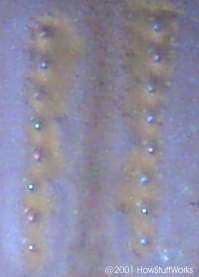
The core difference between inkjet printers boils down to how they get ink onto paper. Manufacturers generally rely on one of two technologies: thermal bubble or piezoelectric.
Thermal bubble, often called bubble jet, dominates the market from companies like Canon and Hewlett Packard (HP). Inside the print head, tiny resistors heat up. This heat vaporizes a small amount of ink, creating a bubble. The expanding bubble forces a droplet of ink out of a nozzle and onto the page. When the bubble collapses, it creates a vacuum that pulls fresh ink from the cartridge into the print head. A typical head contains 300 or 600 nozzles, all firing simultaneously.
Epson takes a different route. Their technology uses piezo crystals located at the back of each ink reservoir. An electric charge causes the crystal to vibrate. When it vibrates inward, it pushes ink out. When it vibrates outward, it pulls more ink into the reservoir to replace what was just sprayed.
The Journey from Click to Page
Clicking “OK” triggers a rapid sequence of events. The application sends data to the printer driver, which translates it into a format the hardware understands. It checks if the printer is online. Then, the data travels via USB or parallel connection to the printer.
The printer stores this data in a buffer. This RAM ranges from 512 KB to 16 MB, depending on the model. The buffer is crucial. It lets your computer finish its job quickly without waiting for the physical page to print. A larger buffer can hold complex documents or multiple simple pages.
If the printer has been idle, it runs a short clean cycle first. This ensures the print heads are clear. Once done, it’s ready.
The control circuitry activates the paper feed stepper motor. Rollers grab a sheet from the tray. A sensor in the tray detects the paper. If the tray is empty, the sensor isn’t depressed. The printer lights up an “Out of Paper” LED and alerts your computer.
Once paper is in position, the print head stepper motor takes over. A belt moves the print head assembly across the page. The motor pauses for fractions of a second as it sprays ink. Then it moves again. This stepping happens so fast it looks like continuous motion.
At each stop, it sprays precise amounts of CMYK (Cyan, Magenta, Yellow, Black) inks. These combine to create any other color you can imagine.
After each pass, the paper feed motor advances the sheet a fraction of an inch. Most modern printers reset the head to the start or simply reverse direction to print on the return trip. This continues until the page is complete.
Printing speed varies wildly. A printer might handle 16 pages per minute (PPM) for black text. But a single full-color, page-sized image could take minutes. It depends on complexity and image size.
When printing finishes, the print head parks. The rollers push the sheet into the output tray. Most modern inks dry instantly. You can pick up the sheet without smudging it.
Next, we look at ink cartridges and paper types.
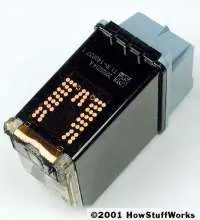
Inkjet printers are cheap. Cheaper than a basic black-and-white laser machine. And way cheaper than a color laser. Manufacturers actually sell some of these units at a loss. You can often find the hardware on sale for less than the cost of the replacement ink cartridges alone.
Why would a company give away the box for free? They aren’t doing it out of kindness.
The hardware is sold at or below cost. Once you buy a particular brand of hardware, then you must buy the other products that work with that hardware.
It is the razor-and-blades model. The video game industry does it too. You buy the console. Then you are locked into their ecosystem. You cannot buy a printer from Manufacturer A and ink from Manufacturer B. The chips and software won’t let them talk to each other. You are locked in.
This is where the business model shifts from hardware sales to ink cartridge costs.
The Print Head in the Cartridge
Another way manufacturers cut initial costs is by moving the print head into the cartridge itself. It sounds counterintuitive. Why put the delicate, wearing part into something you throw away?
The logic is simple. The print head is the component most likely to fail. By replacing the entire mechanism every time you swap out the ink, they ensure the printer keeps working. The printer itself has fewer moving parts to break. But you are paying for that print head over and over again. This is a major factor in how inkjet printers make money.
Paper Matters More Than You Think
You can have the best printer in the world. If you feed it standard copy paper, the results will be mediocre. It works. But it won’t look crisp. It won’t look bright.
Image quality on an inkjet depends on two physical properties of the paper:
* Brightness
* Absorption
Brightness and Surface Texture
Brightness isn’t just about the color white. It is about how the paper handles light.
Rough paper scatters light. It bounces it in every direction. Smooth paper reflects it back directly. When light hits your eye cleanly, the image appears brighter and sharper.
Think about a newspaper versus a glossy magazine. The newsprint is rough. The ink sits in the grooves. The magazine paper is smooth. The light reflects off the surface. That is why magazine photos pop. Any paper labeled as “bright” is generally smoother than standard copy paper.
Absorption and Feathering
The second factor is absorption. When ink hits the paper, it needs to stay in a tight, symmetrical dot.
If the paper absorbs the ink too quickly or deeply, the dot spreads. This is called feathering. The ink bleeds into the fibers. It creates an irregular shape. The result is fuzzy edges. Text looks soft. Objects lose definition.
High-quality inkjet paper is treated to control this absorption. It keeps the ink on top or just beneath the surface layer. Standard paper lets it sink in. That is why your photos look muddy.
Which Paper Should You Buy?
If you care about the output, stop using the cheapest copy paper you can find. The difference is night and day. Look for paper with high brightness ratings and controlled absorption. It costs a little more. But the images look like they were printed by a professional, not a machine fighting against the paper.
The hardware is just the entry fee. The real cost is in the consumables. Both the ink and the paper. Pick one, and you are stuck with the ecosystem.

Feathering isn’t a stylistic choice. It’s a failure mode. It happens because standard paper sucks up ink like a sponge, causing droplets to spread and blur before they dry. You can’t fix physics, but you can coat the paper.
High-quality inkjet paper uses a waxy film. This coating keeps the ink on the surface rather than letting it soak in. The result is a dramatic shift in print quality. But the real magic is in the resolution numbers.
Consider a typical Epson inkjet. On standard paper, it might hit 720×720 dpi. That’s decent. Switch to coated paper, and that number jumps to 1440×720 dpi. Why the double resolution? The printer knows the ink won’t feather. It can shift the paper slightly and add a second row of dots for every normal row. Without that coating, those extra dots would just bleed into each other. The coating allows for precision that standard paper physically cannot support.
Media Versatility Beyond Paper
Inkjets aren’t just for documents. Commercial units spray directly onto curved surfaces like beer bottle labels. For home users, the media landscape is weirder and more expansive.
We have adhesive labels. Business cards. Brochures printed on thick cardstock. Then there are the iron-on transfers. You can print an image, heat-press it onto a T-shirt, and walk out the door. It’s an affordable way to create custom merchandise without a screen-printing press.
The barrier to entry is low. The creative ceiling is high.
The Economics of Refilling Cartridges
Cartridges are expensive. Refilling them is a massive industry. For most people, it makes financial sense, but the risks are real. You’re playing with chemistry and hardware.
First, match the kit to the printer model. Different printers use different technologies for depositing ink. Thermal bubble printers heat the ink. Piezoelectric ones use crystals. If you use oil-based ink in a water-based system, you’ll destroy the print head. The composition varies wildly between manufacturers. Using the wrong chemistry doesn’t just degrade output. It can brick your printer.
Second, check the warranty. Most manufacturers mandate the use of their approved ink. Refilling almost always voids that warranty. You’re on your own if the machine fails.
Third, handle integrated print heads with extreme caution. Some cartridges have the print head built directly into them. Do not refill these more than two or three times. After that, the nozzle deterioration begins. Clogged nozzles can damage the printer’s internal circuits. Once is fine. Twice is risky. Three times is gambling.
“Refilling makes good sense, but be very careful of the ones that have the print head built into the cartridge.”
If you’re going to refill, do your research. Check specific guides for your model. Don’t guess at the chemistry.
Frequently Answered Questions
How does an inkjet printer work step by step?
The process starts with digital data. The printer reads this data and translates it into commands for the printhead. Tiny ink droplets are ejected through microscopic nozzles and land precisely on the paper. The printer moves the paper in micro-steps to build the image layer by layer.
How does an inkjet printhead work?
Inside the printhead is a small chamber for each nozzle. When activated, pressure forces ink out of the chamber and onto the paper. In thermal bubble printers, a heater creates a bubble that expands and pushes the ink out. In piezoelectric printers, a crystal changes shape to squeeze the ink out. Both methods achieve the same goal: precise droplet placement.
How does an inkjet printer produce printouts?
It produces printouts by projecting ink from cartridges onto paper. The cartridges hold the liquid ink, which is fed through tubes to the printhead. The prinhead acts as the gatekeeper, controlling exactly when and where each drop lands to form text and images.
Related Resources
- How Laser Printers Work
- How Parallel Ports Work
- How Serial Ports Work
- How FireWire Works
- How USB Ports Work
- How SCSI Works
- How Photocopiers Work
- What are TrueType fonts?
More Great Links
- Laser and Inkjet Printer Reviews and Prices
- Photo Printer Reviews and Prices
- PCTechGuide: Inkjet Printers
- Microscopic tour of an inkjet cartridge
- Travel to the center of an inkjet cartridge
- Whatis.com: Printer
- Inkjet Printer Head Technology
- How Inkjet Cartridges Work
- U.S. Patent 4,532,530: Bubble jet printing device
- U.S. Patent 4,849,774: Bubble jet recording apparatus
- U.S. Patent 5,646,660: Printer ink cartridge with drive logic integrated circuit
- U.S. Patent 5,063,396: Droplets jetting device