





Speaker wire used to be free. In the mid-1970s, stereo shop clerks handed out coils of twisted copper and plastic insulation like candy, hoping you’d spend your life savings on quadraphonic speakers that could peel the paint off your walls. You just wanted to blast Foghat or Aerosmith loud enough to rattle your ribs. The wire itself? Irrelevant. It was just hardware.
That changed.
Walk into a big-box electronics store or browse a home theater site today, and you are told a different story. Your high-end receiver and expensive speakers will sound like garbage if you don’t use premium audio cable. We are talking about the stuff that costs $20 to $35 a pair. But if you are serious about audio—really serious—you can spend thousands.
Take Pear Audio’s ANJOU cables. They promise the highest quality connection between your amplifier and speakers. They cost $7,250 for a pair of 12-foot runs.
Is that cable really better? Or is it just the new bling for audiophiles?
How Audio Cables Transmit Sound
Music doesn’t travel through the air until it leaves your speaker cones. It starts as digital data on a CD or stream. Your receiver decodes that data into an electrical signal. That signal travels through the cable. Inside your speaker, a cone vibrates based on the fluctuations in that electricity. The result is the screech of Jack White’s guitar or Adele’s vocals.
The cable is just the path.
Inside the plastic jacket is usually braided copper. Copper conducts electricity. That’s it. High-end cables add shielding. This shielding keeps the electrical signal inside the wire and blocks outside interference like radio waves or electromagnetic noise.
Old-school wire required you to strip the insulation with a knife and jam the bare copper into a spring clamp. Modern connectors use pins or plugs. Cleaner. Easier. But does the extra shielding matter?
The Resistance Problem
In a perfect world, a cable transmits electricity with zero loss. Reality is messier. Metal creates resistance. Some of that electrical energy gets lost as heat before it reaches the speaker. The sound isn’t as accurate as the recording.
The longer the wire, the higher the resistance.
This is why gauge matters. You measure thickness in American Wire Gauge (AWG). The number is inverse to thickness. Lower number means thicker wire. Thicker wire has less resistance.
For runs under 80 feet, a 16-gauge wire is usually enough. It handles the current without significant loss.
So, why do we need $7,000 cables?
If 16-gauge copper works for most people, what is the premium cable actually doing? Is it reducing resistance beyond what standard wire can achieve? Or is it something else entirely?
Do Premium Cables Make a Difference?
Some audiophiles swear by them. They claim these cables optimize sound quality. They hear details others miss.
Other tech heads roll their eyes. They call it the biggest hype in consumer electronics since Vanilla Ice.
The debate isn’t just about money. It’s about physics. Copper is copper. Resistance is resistance. But maybe the shielding makes a difference in noisy environments. Maybe the connectors reduce contact resistance at the terminals.
Or maybe you are just paying for the brand name.
The answer might depend on what you are listening to. And where you live. And how sensitive your ears are.
There is no simple yes or no. But there is a cost. And the cost can be astronomical.
Does the extra clarity justify the extra cash?
Or is it just a tax on people who love their gear more than their bank accounts?
The wire is still just copper. But the story around it has gotten expensive.
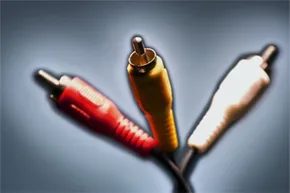
The Great Audio Cable Debacle
Let’s cut to the chase. High-end audio cable manufacturers will tell you that buying anything less than a fortune in wire is a personal insult to your hearing. They claim you’re cheating your ears. Skeptics? They call that marketing fluff. They argue the only real difference between a $50 cable and a $500 cable is the price tag, not the sound.
James Randi, the legendary magician and skeptic, actually put a million dollars on the line. The challenge? Prove that Pear Audio’s ANJOU cables sounded superior to a cheaper brand. No one took the money. One snarky internet reviewer went further, claiming he could get identical sound quality from straightened coat hangers.
But it’s not all snake oil. Gizmodo’s Wilson Rothman points to research suggesting premium cables do maintain signal strength better. Why? Materials. High-end wires often use exceptionally pure copper, silver, or even exotic metals like palladium. These are more conductive than the standard stuff in budget cables. Some even include built-in electronic filters to scrub out low-frequency interference that has no business being in your music.
So, does it matter? CNet’s Steve Guttenberg says the truth is somewhere in the middle. If you’re a hardcore audiophile with top-of-the-line speakers, you might notice a cleaner, more accurate sound with premium audio cable. For everyone else? Maybe not. It’s like buying wine. Do you need a $100 bottle? No. Unless you’re a connoisseur, a $10 variety will keep you happy.
How to Find the Right Cables for Your Listening Needs
You don’t need to spend thousands to get good sound. But you do need to make smart choices. The problem? You can’t easily compare cables in a store. Salesmen won’t let you swap wires on the same speakers to hear the difference. So, you have to rely on specs.
Here is how to pick cables that fit your budget without sacrificing performance.
Good Conductivity
You want a cable that transmits electrical current with minimal resistance. Look for oxygen-free, multi-stranded copper cable (OFMC). The general rule: thicker is better. This is especially true if you’re running wires more than a few feet.
Shielding
Electromagnetic interference can ruin your sound. Look for at least two shielding layers under the insulation. A foil shield paired with a braided shield is a good standard.
Connectors
This is the part that plugs into your gear. Gold-plated connectors are the way to go. Gold has extremely low electrical resistance, ensuring the signal moves from the wire to the speaker with almost no degradation.
Don’t overthink it. Gene DellaSala at Audioholics notes that a standard OFMC cable with an AWG of 10 to 12 is fine for most living rooms. Unless you are wiring the Bat Cave or the Palace of Versailles, you probably don’t need anything more.
If you are running cables over long distances, you’ll need specialized wire. Same goes for in-wall or in-floor installations. You need cables rated for that use. Check the label for Underwriters Laboratories certification of CL2 or CL3.
The Bottom Line
Is it possible to hear the difference? Maybe. Is it worth the price? For most people, probably not. But if you’re building a serious system, don’t cheap out on the wires. They are the arteries of your audio setup. Bad blood doesn’t flow well.
You could buy the fanciest cable money can buy. Or you could buy a decent OFMC wire and spend the savings on better speakers. Which path do you choose? The gear will tell you, eventually.