




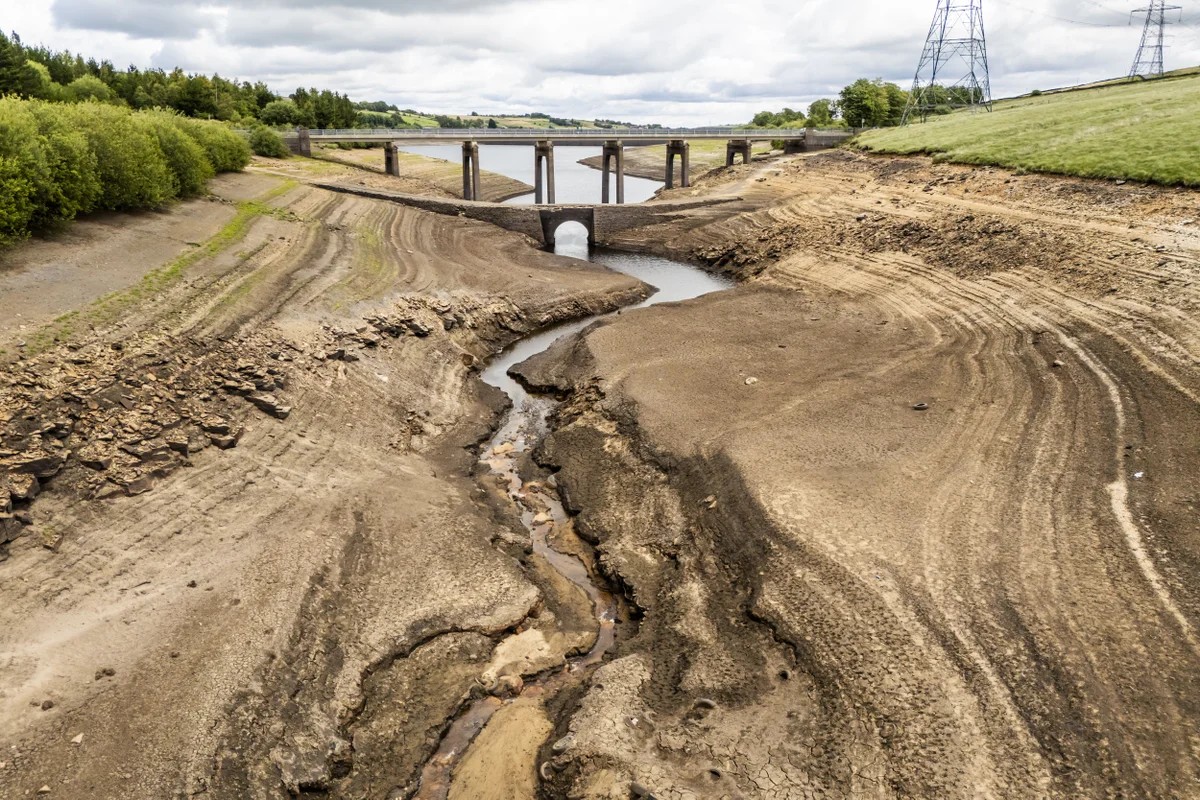
England is short on water. A lot of it.
The government wants to build 1.5 million new homes. Keir Starmer promised it as one of his five key missions before the 2024 election. It looks good on a press release.
It doesn’t exist in reality.
Independent analysis commissioned by Water UK says the country only has enough water to support 420,000 of those homes. That leaves a gap of more than one million. A massive, structural failure waiting to happen.
You might think this is just a construction problem. It’s not. It’s a regulatory one.
The “Future Use” red tape blocking homes
The bottleneck isn’t just pipes. It’s paperwork.
Bureaucracy is stalling new water infrastructure. The rules prevent companies from building ahead of demand. Why? Because of a specific legal barrier regarding “future use.”
David Henderson, boss of Water UK, is frustrated. He wants to supply water. He’s held back by a system that makes building reservoirs agonizingly slow. He also calls out “unrealistic optimism” about conservation.
Here is the rub. The current rules are based on a government target: business water demand will drop by 9% between now and 2038.
Real talk? That number is wrong.
Non-domestic water use is climbing. It’s not falling. And we know why.
Data centers are the elephant in the reservoir
Data centres are sucking up resources. They are growing fast across the UK.
Currently, there are 563 established facilities. Over 100 more are in development. These digital behemoths currently use 6.6 million liters of water every single day.
Think about that. 6.6 million liters.
That is the same amount of water used by 20,028 average homes. And it’s going to get worse. By 2030, usage is projected to hit 19.8 million liters a day. That equals 60,000 households.
But here is where the policy breaks.
The Environment Agency’s national framework for water resources—the official map of where water comes from and where it goes—does not explicitly count data centres. They are excluded.
This means the massive strain they put on the grid is invisible to planners. The extra demand isn’t being calculated.
“By excluding these centres from national calculations… new and existing houses will increasingly face more frequent restrictions on water use.”
If the demand isn’t counted, the capacity isn’t built. And if the capacity isn’t built, you get hosepipe bans. For everyone. Not just the tech giants, but you and me.
Planning freezes and dry taps
How does this hurt a homebuyer? Directly.
UK law is clear. Developers can’t just dig and build. Local planning authorities and water companies have to check one thing first: Capacity.
Does the local network have enough juice and H2O for new residents?
If the answer is no, water companies refuse to grant connections. Councils are then forced to freeze planning permissions. Stuck in limbo.
This happens already. It’s not hypothetical. Water shortages are literally halting construction sites because there is no supply.
Water UK wants to fix this by rewriting the national framework. Include data centres. Reflect actual usage. Acknowledge the risk.
If they do that, developers can bypass the red tape. They can build the reservoirs and pipes needed for the future. Right now, they are blocked by rules based on a 9% demand drop that will never happen.
Climate change makes it worse
Let’s not stop at data centres. The planet is heating up.
Climate change is intensifying the problem. The Environment Agency warns of a 5 billion liter daily shortfall by 2055. Five billion.
That’s not just a dip in the river level. That’s a systemic crisis.
The current plan assumes efficiency will save us. The data says otherwise. We need infrastructure. Real infrastructure. Built with accurate data, not optimistic fiction.
If we don’t fix the numbers, we don’t build the homes. The water simply won’t be there.