





Let the rhythm pound. That’s the call from Black Eyed Peas, and if you are like most people, you take it literally. You crank the volume on your portable MP3 player until the bass hits you in the chest. You shove those little buds deep into your ear canal. You think you’re living the moment.
You might also be going deaf.
The volume levels can hit 120 decibels. That is the same intensity as a jet engine taking off right next to you. A 2010 study in the Journal of the American Medical Association cracked open a scary truth: nearly one in five U.S. teenagers already shows signs of hearing loss. The culprit? Likely the constant abuse of earbuds.
It feels like a trap. You want the Foo Fighters. You want U2. You want to jog without feeling isolated in a bubble of silence. But the cost of that pleasure is your auditory nerves.
There is a way out. You don’t have to sacrifice your music to save your ears.
Enter the “bonephone.” Or, if you want the actual name, bone-conducting headphones. These gadgets skip the eardrum entirely. They transmit sound directly to the cochlea—the innermost part of the ear that sends nerve impulses to the brain. Your ears stay open. Your eardrums stay safe. The music still hits.
It sounds like magic. It’s just physics.
How Bone Conduction Works
Standard headphones work by pushing air pressure against your eardrum. That vibration travels through the tiny bones of your middle ear and into the fluid-filled cochlea. Hair cells in there translate that motion into electrical signals for your brain. Loud music destroys those hair cells. Once they’re gone, they don’t grow back.
Bone conduction takes a shortcut. The device sits against your cheekbone, just in front of your ear. It vibrates. Those vibrations travel through your skull bone directly to the cochlea. The outer ear and middle ear are bypassed.
“All you need is a set of bone-conducting headphones… designed to transmit sound directly to the innermost part of the ear.”
This matters for more than just teenagers with iPods. It matters for anyone who needs situational awareness. If you are running on a busy street, you can hear the traffic and your playlist. You aren’t trapped in an auditory bubble. You are present.
The technology isn’t new. It has been around for decades, mostly in niche military and industrial applications where workers need to hear warnings while wearing heavy protection. But recently, consumer brands have caught on. The designs have shifted from bulky, utilitarian clips to sleek, sporty bands.
Is it as good as high-end wired headphones? Probably not for audiophiles chasing the perfect frequency response. Bone conduction lacks the deep bass thump that air-conduction speakers provide. The sound can feel a bit hollow. But for the average jogger, commuter, or office worker who just wants to listen without risking permanent damage, it is a game-changer.
The trade-off is simple. You lose a tiny bit of sonic fidelity. You gain your hearing.
You can still listen loud. Just not into your ears.
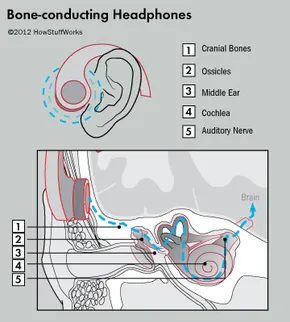
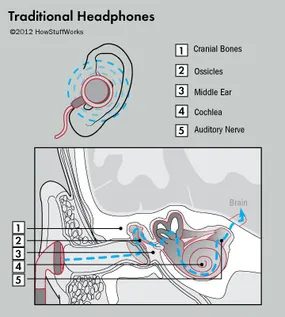
You have to start with the basics. How do we hear? We process sound in two distinct ways.
First, there is the standard route. Sound waves move through the air. They hit the pinna, that flappy cartilage on the outside of your ear. From there, the energy travels down the auditory canal and hits the eardrum. The eardrum vibrates. Those vibrations jump across the middle ear to the ossicles (three tiny bones). They push into the cochlea. The cochlea is fluid-filled. It turns those physical shakes into electrical impulses. The auditory nerve carries them to the brain. You hear a song.
But that isn’t the only pathway. Sound can also travel through your skeleton.
When you vibrate the bones in your head, the sound reaches the cochlea directly. It bypasses the eardrum entirely. The result? The same nerve impulses. The brain processes it the same way. This is bone conduction. It’s not magic. It’s anatomy.
A History of Vibrations
Ludwig Van Beethoven didn’t just compose deaf music. He actually went deaf. Or rather, he suffered progressive hearing loss, likely from thickening in his middle ear structures. He couldn’t use the standard air-conduction method.
So he built a workaround. In the late 18th and early 19th centuries, he attached a rod to his piano. He bit down on the other end or pressed it against his head. The vibrations from his playing traveled through the rod, through his jaw, and straight to his cochlea. He could feel the music. He could still compose.
That concept is the blueprint for modern bone conduction headphones. They don’t plug your ears. They rest on your cheekbones. They vibrate against your skull.
Why Bypass the Eardrum?
This technology matters because it changes the user experience fundamentally. You are not isolating yourself from the world.
Standard over-ear headphones create a seal. They block ambient noise. You are in a bubble. Bone conduction headphones leave your ear canals open. You can hear traffic. You can hear people talking to you. You can hear birds.
This is why they are popular for running, cycling, and industrial work. Situational awareness is critical. If a car is coming up behind you, standard headphones might mask its engine. Bone conduction lets you hear the music and the car.
The trade-off? Bass. Low frequencies rely heavily on air pressure to create that deep, thumping sensation. Without a sealed eardrum, you lose some of that rumble. The sound is lighter. Crisper highs. Less sub-bass. For many users, it’s a fair swap for safety and comfort.
Who Is It For?
Consider your daily routine.
- Runners/Cyclists : You need to hear hazards.
- Office Workers : You need to hear colleagues without taking off bulky headsets.
- Hearing Aid Users : If your eardrum or ossicles are damaged, air conduction might be impaired. Bone conduction can sometimes bypass that damage, sending vibrations directly to a healthy cochlea.
It isn’t a replacement for high-fidelity studio monitoring.

The shift toward electrically amplified sound in the 20th century didn’t just change music. It forced inventors to rethink how humans hear. They needed devices that worked for those with hearing loss or for people operating in environments where noise drowned out normal speech.
Consider 1935. Edgar Hand received a patent for a telephone with a unique twist. Instead of earpieces, it used a headband. The receiver pressed against the head, transmitting the caller’s voice vibrations directly through the bones. It was an early experiment in bypassing the ear canal entirely.
By the 1940s and 1950s, this concept expanded. Numerous patents emerged for hearing aids using bone conduction. The principle proved useful in high-stakes environments too. In 1957, Clairdon Cunningham, an engineer at defense contractor General Dynamics, applied it to aviation. He created a communication helmet for pilots. These aviators needed to talk over the deafening roar of jet engines. Standard earpieces failed them. Bone conduction did not.
Fast forward to the early 1980s. James P. Liautaud saw a different problem. People skiing, running, or bicycling shouldn’t wear traditional headphones. They blocked situational awareness. Safety was at risk. Liautaud patented a solution. A belt-worn music player connected to tiny speakers via wires. These speakers clipped onto clothing over the collarbone.
You might hear the music through your ears, but bone conduction played a significant role here too. It kept the ears open to traffic and terrain.
The technology matured further in 1994. H. Werner Bottesch patented a set of stereo music headphones designed specifically for bone conduction. His design sat just behind the outer ears. Sound transmitted through the mastoid bones of the skull. Bottesch also identified a technical flaw in the medium. Some frequencies don’t travel through bone as well as others. His device selectively amplified those weak frequencies to compensate.
Since then, bonephones have become significantly more sophisticated. But for the modern user, the question remains relevant.
Are bone-conducting headphones better than regular headphones?
The answer isn’t a simple yes or no. It depends on what you value more: audio fidelity or environmental awareness.
Regular headphones, whether earbuds or over-ear models, seal off or partially block the ear canal. This isolation creates a better bass response and higher volume potential. But it also isolates you from the world. If you are jogging near a road, you might not hear a car approaching. You might also be tempted to turn the volume up to dangerous levels to overcome ambient noise. This leads to noise-induced hearing loss over time.
Bone-conducting headphones offer a different trade-off. They leave your ear canals completely open. You hear your music or podcast and the world around you simultaneously. For runners, cyclists, and outdoor workers, this safety factor is significant. It’s why many athletes prefer them despite the audio limitations.
However, “better” implies superior sound quality for many users. In that regard, traditional headphones usually win. Bone conduction relies on vibrating the skull. This method struggles with deep bass and high-frequency clarity. The sound can feel thinner. It lacks the immersive “in-head” experience of good stereo ear
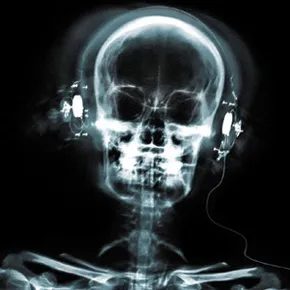
Bone-conducting headphones hit the consumer market in the early 2000s. Since then, adoption has steadily climbed. For buyers wondering if they are a genuine solution for ear safety, the verdict leans heavily toward yes.
Deborah Price, a doctor of audiology and vice-chair of the Audiology Foundation of America, called the technology “very safe” in a 2004 Wired interview. The mechanism bypasses the eardrum entirely. Sound vibrations travel through the skull bone directly to the inner ear. This physical separation from the ear canal is what makes bone conduction headphones safety such a compelling selling point. You aren’t blasting sound into a confined space.
The Sound Quality Trade-off
Safety isn’t the only metric that matters. Sound fidelity remains the weak link.
Do they match traditional earbuds? Usually not. Many users report that the audio profile feels thin. Ben Kuchera at Ars Technica tested a brand in 2009 and described the output as “tinny” and low-volume. He noted a complete lack of discernible bass. To hear individual voices in a podcast, he had to crank the volume up. That spike in volume introduced significant distortion.
The problem lies in physics. Bone conduction struggles to reproduce low frequencies. Bass requires moving more air or creating stronger physical displacement. The human skull is dense. It filters out those deep rumbles before they reach the cochlea.
Breaking the Stereo Myth
Scientists are still mapping out the capabilities of this tech. The goal is to determine which sounds transfer well and which get lost in translation.
One major hurdle was lateralization. This is the stereo separation effect that makes music feel three-dimensional. Skeptics argued that bone conduction couldn’t create the illusion that sounds originate from different locations. If the vibration travels through the skull as a whole, how can your brain know if the guitar is on the left and the vocals on the right?
Georgia Institute of Technology researchers proved the skeptics wrong.
Subjects equipped with bonephones perceived lateralization comparable to conventional over-ear headphones. The brain adapts. It uses subtle timing differences and intensity variations to map the sound source. The researchers are currently developing algorithms to enhance this 3-D quality further.
The Verdict
Will these headphones ever deliver high-fidelity audio that rivals high-end wired sets? Maybe. The physics are restrictive.
In the meantime, they serve as a viable alternative. If you are concerned about hearing damage from prolonged earbud use, switching to bone conduction reduces risk. It keeps the ear canal open and free of pressure.
It is a trade-off. You sacrifice some bass and richness for peace of mind.