




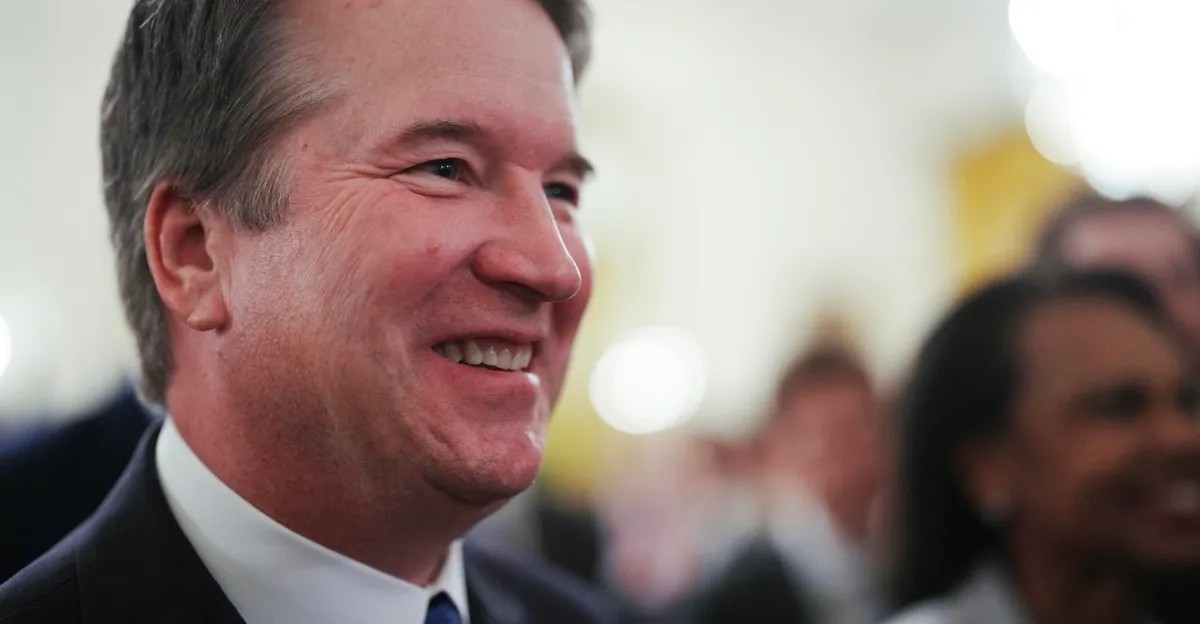
Justice Brett Kavanaugh is, on paper, the archetypal conservative jurist. He worked in the White House. He votes with his Republican colleagues. He sometimes aligns with Trump. You wouldn’t expect him to carry a torch for liberal causes for nearly forty years.
But he did.
Thursday’s opinion in Pitchford v. Cain came down to a proposal Kavanaugh drafted back in 1989. When he was still a law student. The proposal was simple. How do you keep racism out of jury selection? His answer then was strikingly similar to his ruling now.
The old argument resurfaces
Let’s be clear. Pitchford didn’t break new legal ground. It relied on Batson v. Kentucky (1986). The landmark case that stops prosecutors from dismissing jurors based on race. The facts here were fairly clear. The defendant won.
Yet the court split 5-4. Four of Kavanaugh’s Republican peers joined Neil Gorsuch in dissent. One swing vote kept a liberal principle alive.
It reminds us that justices are people, not just political machines. Even highly vetted appointees contain multitudes. Sometimes their old beliefs outlast their partisan shifts.
Advocates should note this. Liberal victories on this court aren’t common, but they happen. Especially when they tap into a justice’s personal history rather than current party lines.
The Yale Law Journal note
Back in 1989 Kavanaugh published a “note.” That’s law student shorthand for scholarship. Smart kids do it to show employers they can write.
Kavanaugh chose an unusual topic for someone who would later become one of the right’s most powerful legal minds. He wrote about Batson. The ruling had happened three years prior.
He argued for procedural protections. Specifically, that the defense needs a real chance to fight prosecutor biases during the hearing.
How strikes work (and fail)
Here’s how juries get picked. Prosecutors and defenses get “peremptory challenges.” They can throw out potential jurors for almost any reason. Bad haircut. Weird glance. Maybe the juror’s name starts with “M.”
The Constitution draws a hard line at race. Prosecutors cannot dismiss jurors because they are Black or White or Hispanic. Period.
To police this rule, Batson created a three-step process:
– Step 1: The defense objects to a strike.
– Step 2: The prosecutor offers a race-neutral excuse.
– Step 3: The defense gets to argue the excuse is a lie—a pretext. The judge then decides who is credible.
Kavanaugh’s 1988 paper insisted step 3 is non-negotiable. The defense must have the floor before the judge rules.
His recent Pitchford opinion repeats that logic verbatim.
What happened in Pitchford?
Mississippi prosecutors tried to convict Terry Pitchford of murder. They used peremptory strikes to remove four out of five potential Black jurors.
The defense cried foul. Cited Batson. The prosecution gave excuses. One juror was late. Two had violent family records. One was a young father, just like the defendant.
The trial judge nodded. Said the reasons were fine. Moved on.
He never asked the defense for their side. Never gave them the chance to tear those excuses apart.
Kavanaugh called it unacceptable.
“After a prosecutor asserts race-neutral reasons… defense counsel must at least have an opening to argue those reasons were not the actual ones.”
It sounds basic. But the judge skipped the step. That violation became the wedge for a federal appeal.
The waiver trap
If this is so simple, why did Gorsuch dissent?
Because federal law is a maze. Specifically, the Antiterrorism Act (AEDPA) from 1996. It makes it brutal for prisoners to challenge state convictions in federal court. The state court decision must have been an “unreasonable application” of law.
Gorsuch focused on waiver. Did Pitchford’s lawyers actually preserve the issue in trial?
Gorsuch said no. He argued the defense didn’t detail how the judge violated Batson enough at the trial level. The general rule: if you didn’t argue it fully in court, you can’t bring it to appeal.
That feels like a stretch.
Kavanaugh pointed out that the defense did raise it. Repeatedly. After one objection, the trial judge even told Pitchford’s lawyers: I heard you. Preserve it for appeal.
Would lawyers really risk pissing off a judge by haranguing them after being told to move along? No. So they didn’t. The issue remained preserved. The federal courts should have reviewed it. They shouldn’t have blocked it on a technicality.
The lasting lesson
This was an easy win on the merits. But AEDPA made the path steep. Only a strong commitment to Batson ’s structure could bridge that gap.
Kavanaugh provided it.
If he hadn’t cared about these procedures back in his youth, the result might have been different. Maybe Pitchford would be back behind bars.
It suggests something interesting. Liberal advocates might find wins not by appealing to the right, but by appealing to consistency. By digging into what a conservative justice believed before they were fully hardened by politics.
It’s a fragile strategy. It depends on one person’s memory.
But today it worked. And sometimes that’s all it takes.