


Big money for tiny magnets
$100 million.
Thea Energy told TechCrunch their Series B raised that much, and it was oversubscribed. The US Innovative Technology Fund led the charge. That kind of cash puts them squarely in the upper echelon of fusion startups. It also means they have a slightly better shot at actually building a reactor that prints energy, not just graphs.
Before this round? They closed a $20 million Series back in early 2022. Now they have $130 million in private money.
The new cash goes straight into manufacturing. Specifically, the magnets.
The pixel analogy holds
Fusion reactors need magnets. They hold superheated plasma tight, hot enough to smash atoms together, which releases the heat we want to capture. Standard story.
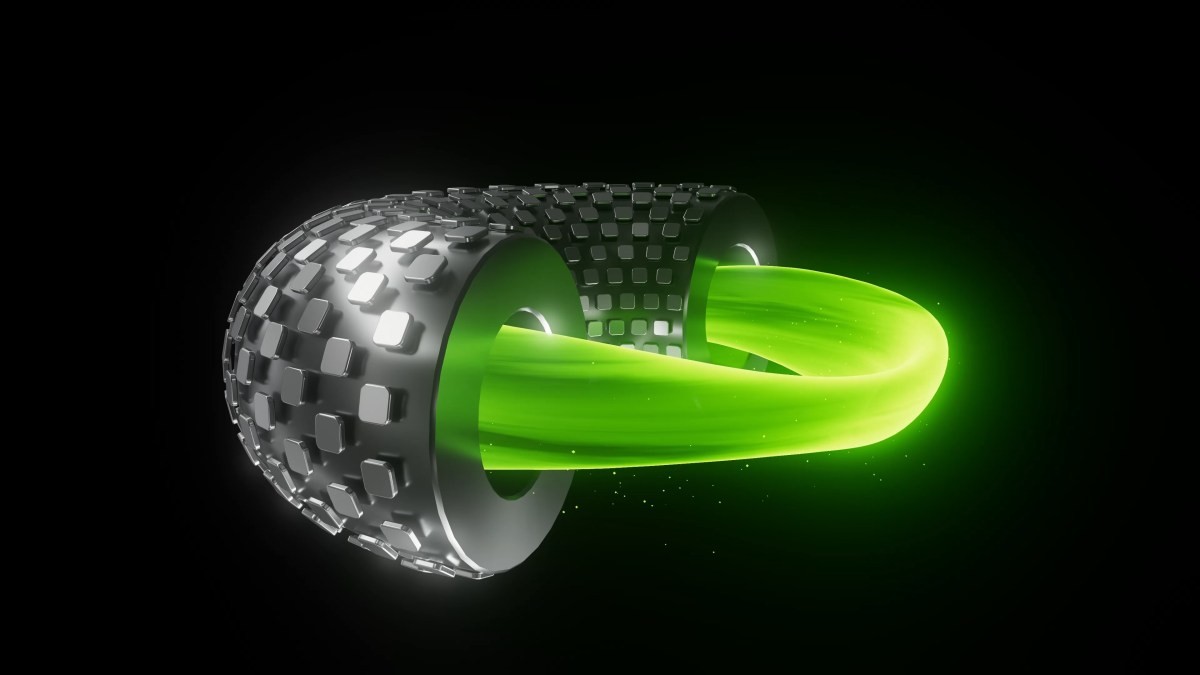
But Thea is doing it differently. Their magnets are small and rectangular. Each one tunes independently. The company likens them to pixels on a computer monitor. Software tells each “pixel” exactly where to pull the magnetic field.
This flexibility is non-negotiable for their design. Thea is building a stellarator.
Stellarators keep plasma stable by twisting the magnetic field into complex shapes. Tokamaks, the other popular design, just use brute force confinement. Simpler to build, harder to keep steady. Stellarators are stable, but their shape is a nightmare for manufacturers. The coils have to be bent and twisted in ways that are expensive and tedious.
Thea’s bet? Wrap the core in dozens of regular, off-the-shelf-style magnets. Let the software create the twisted stellarator field inside a boxy physical structure.
It sounds risky.
Thea proved the software works. They intentionally misaligned test magnets during assembly. The system compensated. The plasma didn’t notice the mistake.
Timeline and rivals
The goal is the Eos demonstration reactor. Construction starts next year. They want it running in 2030.
If Eos works, Helios comes online in 2033 as a commercial plant.
That puts them head-to-head with Commonwealth Fusion Systems. CFS wants its Arc reactor humming in Virginia in the same timeframe. It is getting crowded.
Manufacturing speed might be the edge here. Thea has already built dozens of full-scale magnet iterations in their Jersey City lab. No massive assembly halls needed. Other magnetic confinement startups had to construct giant factories just to bend their single huge coils.
There is a catch, obviously.
The 300+ tiny magnets do fine-tuning, yes. But 12 larger, distinct shapes handle the heavy lifting of confinement. Those big magnets are outside the planar array. Being reliant on large, complex magnets for the core function erodes some of that manufacturing advantage. You still need the heavy stuff.
Still. Any simplification in fusion is a win. These devices are some of the most complex humans have ever built.
A $100 million raise doesn’t hurt, either.
Investors backing the round include General Innovation Capital, Linse Capital, Divergent Capital Emerald Technology, and the rest of the list: Calm, Climate, Gaingels Idemitsu Overlay, Timescale, and What If.
Correction: Earlier designs featured 12 encircling magents. Those are gone from the later versions.