


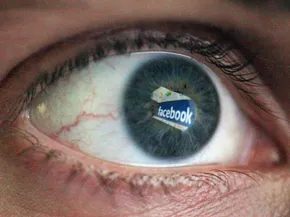
Oprah Winfrey sent her first tweet in April 2009. She took the conversation out of the tech bubble and into American living rooms. Now everyone has a profile. Your grandma is on Facebook. Your boss is on LinkedIn. People update their statuses obsessively. It feels harmless. It feels like fun. But can these sites actually be dangerous? Can you become addicted to social networking in a way that harms your life?
The answer isn’t simple. The concept itself isn’t new. A social network is just the structure of relationships among individuals. You have one. You have dozens of them. You have a network at work. You have one at the dog park. You have a circle of college friends. You have a book club. These groups overlap. New people enter your web constantly through existing contacts.
Online sites evolved from these face-to-face interactions. The difference is scale. The Internet allows us to map these relationships visually. You can see your friends. You can see their friends. You see the connections between them. It makes the invisible visible.
Different Types of Online Communities
Social networking platforms aren’t all the same. They serve different purposes. LinkedIn targets professionals. It is about career growth and networking. Ravelry targets hobbyists. It focuses on knitting and crochet communities. Facebook and MySpace are general interest hubs. They allow users to form smaller communities within the larger platform.
Once you join, you might spend a lot of time there. Is it just passing time? Or is it a compulsion?
Internet Addiction and Digital Health
Children spend hours in front of screens. A 2007 study by the University of Southern California’s Annenberg School Center for the Digital Future found that nearly half of parents believed their kids watched too much television. About 20.7 percent felt their kids spent too much time online.
Twenty percent might seem low. It doesn’t mean there are no problems. In 2005, a young South Korean man collapsed and died after playing online for 50 hours with few breaks. Authorities were so concerned they founded “Internet Rescue Schools.” The goal was to get children away from computers and into fresh air. Physical activity. Socializing with other kids.
Adults get hooked too. In 2008, the American Journal of Psychiatry published an editorial supporting “Internet addiction” as a real mental condition. The medical community largely disagreed. It is not currently a formal disorder. But excessive use causes real problems.
Many treatment centers worldwide now offer services for digital dependency. They treat cyberporn addiction. Online gambling. Online affairs. eBay addiction. These behaviors have serious consequences. The hallmark of any addiction is whether your actions negatively affect yourself or others.
Social Media vs. Traditional Socializing
Is hanging out on Facebook different from talking on the phone for hours? Or gabbing with friends over coffee? Not necessarily. If you are spending normal amounts of time there. The average American Internet user spends about 15 hours online per month. If you are reading this article, you are likely one of those people. Congratulations. You are average.
However, abnormally large amounts of time can damage relationships. It can hurt your health. Experts claim a lack of face-to-face contact affects you socially and physically. Depending on a computer screen for human interaction might undermine your ability to follow social cues. You might miss body language. Some researchers believe we are genetically predisposed to benefit physically from face-to-face contact with another human.
There is even an online test you can take to see if your time online might be a problem. Unless you are addicted to online tests.
If you belong to a social network, you know how compelling these sites can be. What compels us to keep logging on?
The Isolation of Stay-at-Home Mothers
The newest group of Internet addicts? Stay-at-home mothers (SAHMs). Blogs and social networking sites provide interactivity. They provide connection. These are things hard to come by when raising an infant. First-time moms sometimes feel isolated. Alone. Going online to share feelings and advice can be therapeutic.
Famous “mommy blogger” Heather Armstrong credits her readers for helping her cope with postpartum depression. The support is real.
However, some SAHMs turn to the Internet to avoid the difficulties of daily life. It becomes an escape. Once real life begins taking a backseat to online life, it is time to close the laptop.
The line between connection and avoidance is thin. We seek community. We fear loneliness. The screen offers both. It offers a quick fix for isolation. But it doesn’t replace the physical presence of another human. The risk lies in mistaking the digital for the real. And then losing the ability to distinguish between the two.
It isn’t an accident that you can’t put the phone down. Websites are products. Every pixel on a social network is engineered to maximize return visits. More visits mean more ad revenue. More revenue keeps the lights on for the tech giants. Programmers design every scroll, ping, and notification to hook your attention and refuse to let go.
The mechanism is simple but relentless. You post a status update. You check your feed. You see a friend’s photo. You comment. Then you get an email notification about that comment. It’s a closed loop. You reach out, and the platform reaches back.
This cycle runs dozens of times a day.
The rise of wireless devices like the BlackBerry and early iPhones accelerated the addiction. High-speed mobile data meant constant access. Social networks built dedicated apps for phones. Logging on became frictionless. You are always connected because the device in your pocket demands it.
But the technical convenience is just the delivery system. The payload is deeper.
The Psychology of the Feed
What makes these platforms so sticky? It’s not just the notifications. It’s human nature.
Narcissism plays a huge role. We broadcast our personalities online. A photo. A thought. A YouTube link. An answer to a “25 Things About Me” meme. We publish this data so people will respond. We want connection. We want validation.
Being part of a social network feels like having a personal entourage. They follow you. They comment. They applaud. It is seductive.
The rush of nostalgia as you connect with your former grade-school classmate on Facebook can be quite heady and exciting.
In 2008, University of Georgia researchers studied this exact dynamic. They looked at the correlation between narcissism and Facebook usage. The results were predictable. The more friends and wall posts a user had, the more narcissistic they were.
Narcissistic users treat the platform as a stage. They use it for self-promotion rather than genuine connection. The study suggests that social networks don’t just attract narcissists. They bring out the narcissist in everyone.
Voyeurism and Status
It’s also voyeurism. Following exchanges on Twitter or posts on Facebook is like eavesdropping. It’s entertaining. You feel like a “fly on the wall” in someone else’s life.
Then there is the status game.
Social networks publicly list your friends and followers. This is instant social proof. How many people are obsessed with their follower count? We work hard in real life to build our reputation. Online, we can do it without leaving the couch.
No sweatpants required. Just a login.
The Landscape in 2009
The hierarchy of influence was different back then. In January 2009, Compete.com published a study on traffic. The dominance of MySpace was still visible, though Facebook was pulling ahead.
Here were the top 10 social networks by monthly visitors at that time:
- Facebook : 1,191,373,339 monthly visitors
- MySpace : 810,153,536 monthly visitors
- Twitter : 54,218,731 monthly visitors
- Flixster : 53,389,974 monthly visitors
- LinkedIn : 42,744,438 monthly visitors
- Tagged : 39,630,927 monthly visitors
- Classmates.com : 35,219,210 monthly visitors
- MyYearbook.com : 33,121,821 monthly visitors
- LiveJournal : 25,221,354 monthly visitors
- Imeem.com : 22,993,608 monthly visitors
The gap between the top two and the rest was massive. But the behavior hadn’t changed. We were still checking our phones. We were still looking for likes. We were still waiting for the next hit of dopamine.
And the cycle continued.
The Dark Side of the Digital Connection
We’ve talked about the mechanics. We’ve looked at the hype. Now let’s look at the cost.
The narrative isn’t just about connecting. It’s about consumption. And the metrics are shifting.
Facebook didn’t just take over. It eclipsed MySpace. Compete.com data from early 2009 showed Twitter climbing the ranks, but the giants were still the story. This wasn’t just a trend. It was a structural change in how we spend our waking hours.
“Online networking ‘harms health’.” — BBC News, 2009
That headline wasn’t clickbait. It was a warning label.
Is It Addiction or Just Habit?
Here is the uncomfortable truth.
For many, the line between “staying connected” and “obsession” is blurry.
CNN reported on signs of Facebook addiction in 2009. They weren’t talking about casual scrolling. They were talking about compulsion. Checking. Refreshing. The dopamine hit of a notification.
Salon asked the question: Why is Facebook so addictive? The answer wasn’t in the code. It was in the psychology.
It’s about validation. It’s about the “new narcissism” described by Christine Rosen in The New Atlantis. Your profile becomes a curated museum of the self. Every post is a performance. Every friend count is a score.
LiveScience even found that profiles can indicate narcissistic tendencies. Think about that. The digital mirror doesn’t flatter. It reflects.
The Extreme Cases
Most people aren’t going to a boot camp.
But in South Korea, some did.
Martin Fackler of the New York Times covered a rehabilitation center for web obsession. It wasn’t a spa. It was a boot camp.
Why? Because the consequences were real.
A S. Korean man died after a marathon gaming session. That’s not a statistic. That’s a life.
The Center for the Digital Future at USC Annenberg highlighted shifting trends among adults. They noted the benefits, sure. But they also tracked the consequences.
Especially for kids.
How much time are kids spending online versus watching TV? The data from 2007 and 2008 showed a stark divide. The screen wasn’t just entertainment anymore. It was a second home.
Social Capital vs. Social Health
Nicole Ellison’s research offered a counterpoint.
She studied college students. She found “social capital.”
Facebook friends provided support. They provided connection. In a fragmented world, these digital ties mattered. They weren’t fake. They were functional.
But functionality doesn’t equal wellness.
Brian Solis called it “cultural voyeurism.” We watch. We judge. We participate without fully engaging. It’s a spectator sport of human interaction.
The Human Need
Rick Kirschner asked the fundamental question: Why do we need human connection?
Because we’re wired for it.
The internet didn’t create the need. It just provided a new channel. A high-bandwidth, low-friction channel.
Sometimes that’s good.
Sometimes it’s dangerous.
The BBC reported on health harms. Psychology Today debated whether overuse should be a mental disorder.
It’s a gray area.
Most of us are somewhere in the middle. Scrolling at 2 AM. Checking stats. Feeling both connected and alone.
The sources don’t give us a final verdict. They give us a snapshot.
A snapshot of 2009.
The platforms have changed.
The behavior hasn’t.
We’re still looking for connection.
We’re still wondering if we’re losing ourselves in the process.
The tools evolve. The human element stays the same.
Or does it?
The data stops there. The debate continues.


