




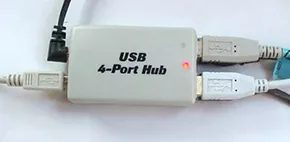
Almost all peripherals that can be connected to computers today are based on the Universal Serial Bus standard. The connection environment is controlled by a single port from printers and scanners to mouse and joysticks. The list of compatible devices is extensive: webcams, digital cameras, modems, speakers and even specialized equipment such as flight yokes and scientific data acquisition devices. USB memory, Phone and Videophone can be found in the same language.
The irony? Your computer may not have room to combine them all.
Most machines only have one or two active USB ports. It doesn’t take long to use. Let’s take my current setup as an example. Running USB printer. USB scanner. web camera. USB network connection. So 4 devices. Your own laptop? Only one USB connector is available.
So how do you connect all your devices?
The answer is simple and cheap. USB hub required.
The USB specification enables the support of up to 127 devices on one bus. Hubs are a key part of the standard and are specifically designed to expand limited connections. Daisy-chain peripherals that turn a single port into a multi-device workstation. If you’re looking for the best USB hub for multiple devices, often all you need to do is find a powered model that can handle the load.
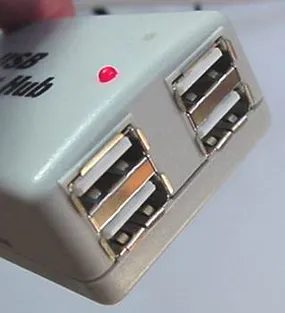
Basic hubs usually have four new ports, but some models have more ports. Connect the hub to your computer and daisy-chain your devices—or other hubs—into it. By stacking these units, you can create dozens of usable USB ports for a single computer connection.
Hubs are divided into two categories: powered or non-powered. This difference is important because the USB standard allows devices to draw power directly from the interface. Each USB cable has two wires, one for +5 volts and one for ground. High-powered peripherals such as printers and scanners often have their own external power supplies. Low-power devices, such as mice and digital cameras, need bus energy.
Computers typically provide up to 500 mA of this power at 5 volts. If your configuration primarily includes self-powered devices, a unpowered hub will suffice. Peripherals do not require additional power, so the computer can handle the load. However, if you connect a large number of unpowered devices, you may need a hub with a power supply. These units have their own transformers. Provides power to connected devices and prevents overloading of the computer’s internal power supply.
Can I use multiple devices at the same time?
Universal Serial Bus can easily handle multiple devices. You can scan and print at the same time without any problems. The original USB standard supports up to 12 megabits per second. With USB 2.0, this increases to 480 Mbit/s. Most devices consume only about 6 megabits per second. The bandwidth is enough to use several devices at the same time.
USB port extension FAQ
What is a USB port?
USB stands for Universal Serial Bus. This is a standard connector on computers for connecting external devices. Keyboards, mice, printers, phones and cameras use this. Personal computers usually have at least two ports.
What is the difference between USB and USB-C?
The biggest difference is the charging speed. USB-C delivers power faster. Most USB-C ports have a maximum output power of 100 watts. This allows you to quickly charge your laptop or other power-consuming devices.
Why is my USB port no longer working?
Hardware failure is a common cause. Software incompatibility is another problem. You may need to update your computer drivers. Your operating system may be missing an important component. In some cases, the port may be physically damaged.
What is a USB port extension?
USB port extensions extend the connection distance of peripheral devices. In addition, a port is added to the system. However, these devices consume a lot of power. Using it on the go can quickly drain your laptop’s battery.
“By linking hubs, you can create multiple usable USB ports on one computer.”
Although this extension is useful, it has limitations. Power delivery becomes the bottleneck before bandwidth does. If you are building a complex workstation, check the power requirements of your peripherals. Cheap hubs may look cheap but have poor performance or fail under stress.
Technology is also constantly developing. USB-C changes the way we think about connectivity. Handles data and power through small, reversible connectors. But traditional USB-A hubs are still everywhere. You may need an adapter to fill the gap. Alternatively, you can find a hub that offers both ports.
Where do you draw the line? How many devices do you really need? Most users will find that six or eight ports are sufficient. Not only that, but we’re also starting to cover power modules and cable management. It gets messy. But for power users, the extra connectivity is worth it.
Just remember the power dynamics. Non-electric hubs are especially important for high traction gear. Powered hubs keep things stable. Check the specifications. Look at the amperage. The incompatibility may cause the external drive to disconnect randomly. Or the mouse lags. Small details that matter when you’re in the middle of a workflow.
There is no one-size-fits-all solution. It depends on what you want to connect to. and where it is connected. With the right hub, your setup can be seamless or tangled mess.