



Why Friendster disappeared after #Facebook took over
Social networks have changed the Internet. Friendster was the spark that started it all. Founded by Jonathan Abrams in 2002, the site does more than reinvent the way we meet people. It digitized the connection. Unlike Evite, which is purely about coordinating the activities of existing friends, Friendster allows you to bridge the gap. You can contact friends of friends. You can find your neighbor. You can join groups based on your school or hobbies.
This is the community engine.
Members use it to post messages, share blogs, play games, and showcase their businesses. This platform promises to give you a way to express yourself on the wider internet. At its peak, it had over 65 million users. This is a huge amount. However, when culture is gone, numbers mean nothing.
The rise of competitors and the decline of Friendster
Friendster’s decline began around 2004. Newer platforms entered the fray. Facebook and MySpace offer a more diverse range of applications. They felt cooler. Users are gradually leaving. “Cool” is a vague measure, but it’s a reality. Embracing technology is not just practicality. It’s about social dynamics.
The site’s direction became uncertain when Abrams turned down a $30 million purchase from Google. Finally, he resigned. Management shuffled. Growth slowed in the West. However, the platform is not dead. It has changed.
Friendster continues to attract a large number of users, many of whom are from outside the United States.
The user base is getting older. The early 20s moved on. The current core population is the elderly. They are financially independent adults who have graduated from college. They are not looking for an invitation to the next big party. They are looking for a digital address book.
Is Friendster a dating site?
Rumor has it that Friendster started as a dating service. Jonathan Abrams does not completely deny this. He confirmed a version of the truth. After a breakup, he wanted for a better way to meet new people. He realized that most relationships start with mutual friends. He built a tool that mirrors the process online.
This is not limited to love. It’s for friendship. It was for business contacts. The dating angle is a hook. Community is a product.
Understand your Friendster profile
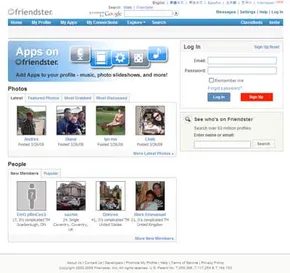
If you’re looking into how Friendster works, you need to understand the profile. This is the core unit of the website. Each user has one. It represents your interests, connections and activities.
The next section looks at the structure of these profiles and why certain profiles get almost 800,000 views per month. We also cover the dark side of social networking. Safety. Tracking. The cost of free services. Friendster’s history isn’t all about failed IPOs and failed acquisitions. This was in the early days of social networking. A time before algorithms decided what you saw.
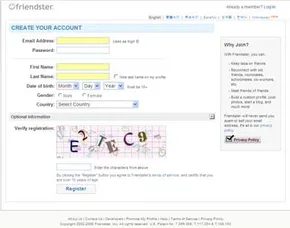
Creating an account is easy
Getting started with Friendster is easy. Just click “Register ” on the front page. This form asks for username, email address, password, country, gender and date of birth.
You can also choose a secret question. If you have forgotten your login information, use it. Next, upload a photo. Are you shy? Skip it. Just click “Continue”.
Confirm your identity by email
Next, check your mailbox for a confirmation message. Follow the instructions there. Once you’re done, you’ll officially a Friendster.
Create your public profile
You can now create your profile. It’s like this.
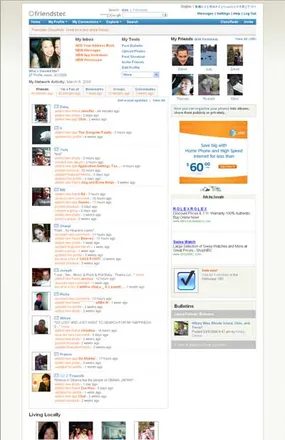
How #Friendster profiles defined early social networking
Your profile is more than just a page. This is your presence on Friendster. Manage your account here. This is how the world sees you. You control your connection. You decide who sees what. If you get lost in the maze of sites, you can return to your profile by clicking the Home tab in the blue navigation bar at the top. It’s your home base.
These features are simple but powerful.
- More pictures and videos. ** Upload photos of yourself, your pets, friends and family. Keep it clean though. No nudity. No copyrighted material. Nothing explicitly negative. If you break these rules, you risk getting banned. Or worse.
– Send your message. Each profile has a message board**. Friends left messages there. You left them back. This is a public wall for interaction. - Write a blog. Personal thoughts, public.
- Write music, movie, book and TV reviews. Share your preferences.
- Create your avatar. ** Avatar** represents your personality. It can be a static image or a 3D animation. A digital alter ego of your real self.
Think about scale. There are 65 million users. This means that there are up to 65 million profiles. There are also ghostly shells. Minimum information. No photos. As the initial excitement subsided, it was abandoned. Others were fully tricked-out pages. Flashing with animation. Updated every hour. The detail depends entirely on your commitment.
This demand has created a cottage industry. Websites like Friendster-Tweakers, Friendster-Layouts, and Pimp-My-Profile were helpful. Create beautifully organized profiles for those without time or technical skills. There is usually a fee. You pay people to look cool. Many people don’t know that this job is outsourced.
Karen Kong holds the record for the most used Friendster profile. The Malaysian pop star gets 800,000 page views a month. What constitutes the image of a superstar? Is it celebrity status? Want to generate buzz for your blog or app? Or do you just have the most friends? Technically speaking, Kong’s page is a fan profile.
The Rise of Fan Profiles
Fan Profile caused a huge sensation and controversy. Critics called them “fakesters.”
Individuals use public profiles for personal contact. Fan Profile is different. They were dedicated to famous celebrities, bands, TV shows, movies and characters. This blurs the lines between social networks and celebrity fandom.
Some users see similarities with MySpace. MySpace is often seen as a social tool for bands rather than the general public. Fan Profiles raised questions about the very notion of “friends”. Is it still a social network or a fan club?
How evil is it? Find out who’s asking and what a “friend” is in the next section.
Friendster Applications
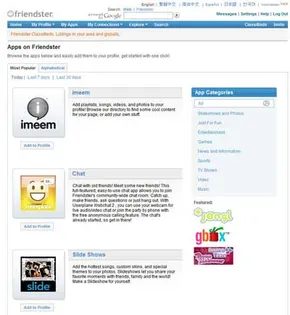
How the #Friendter app turns social boredom into an interactive game
If your profile is your home, your apps are your TV or phone.
Social networks are reaching saturation. You have a profile. You have hundreds of friends. You had absolutely nothing new to do with them.
Apps fill this gap. Also known as widgets, these are fun, interactive tools designed for sharing and real-time gameplay. Create quizzes like “How bad am I?” Compare answers with your friends. Broadcast your up-to-the-minute mood with the Emote app. Just click the Add App button underneath the application
Be careful though. Applications can be highly addictive. They are notorious for being major distractions.
Navigating the App Ecosystem
There are literally thousands of apps to choose from. Most are free. Some require you to earn “spending” points. Send a certain number of virtual gifts to your friends in exchange for extra points.
Sending and receiving invitations to add widgets are great ways to figure out which widgets you like. Share your favorites. You can also browse by category. Search alphabetically. Check out the daily Most Popular list to see what others are using.
These are just a few of the thousands of apps you can use after joining Friendster.
Top Applications on Friendster
Some of the top applications on Friendster include the following:
- Imeem : Similar to iTunes. You can add music, videos and photos to your profile.
- Chat : Chat with your friends in real time via the instant messaging service via text message, webcam or anonymous call.
- MyMiniLife : Build and decorate 3-D homes and compete with other users over whose digs are most fabulous.
Video and photo applications are also big attention-getters. Personalize and share favorite YouTube videos with SkinFlix. With the Similarity app, you can find the coolest celebrities you are most similar to and compare them to your friends.
Entertainment and music categories range from fan groups for TV shows like Addicted… (like “Heroes” and “Lost”) and gBox Wishlist, where you can share your favorite music with friends or download it as a gift.
The Shift to an Open Platform
Some of these apps are designed by Friendster. Many of them are created by third-party developers or savvy Friendster users who create fun things and share them with their friends.
In November 2007, Friendster opened the door to creativity. It went to an open platform system.
Basically, it makes it easier for developers to create, update, and market apps to the Friendster community. (For more on open platforms, see the Competition and Future of Friendster ).
Can you have 150,000 friends? And what exactly is a “friend,” anyway?
Find out in the next section.
Friendster Connections: Six Degrees of Separation
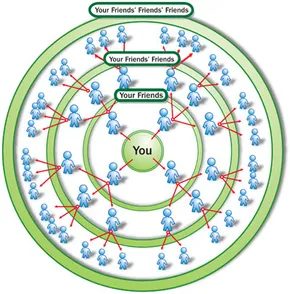
Friendster works on the same principle as Six Degrees of Separation. Start with people you know and expand from there. These connections are marked as friends. If Mary is connected to David and David is connected to Kumar, then Mary has a digital link to Kumar. David is just a bridge.
Here’s how to build this network:
Build your network
There are several mechanisms for adding people. You can search for existing members by clicking “Invite” on the home page. Alternatively, you can visit the user’s profile and select Add as friend.
Upload your email address book to speed up your onboarding. The system scans these names and marks those who are already friends.
Topic-based groups help you find people with similar interests. For example, the Chocoholics group had around 45,000 members at its peak. You can also join forums to discuss everything from philosophy to cult movies.
Interaction has evolved beyond just a bulletin board. The platform directs users to the application. Comparing quiz results and voting on friends’ 3D virtual homes are now important ways to participate.
Visibility is important. Use Featured Friends to highlight your Closest Contacts. This not only prioritizes them on your profile, but also encourages interaction. If you recommend them, they are more likely to recommend you too, increasing your visibility online.
Stumble onto the Explore page The list contains the most Followed profiles, popular groups and fan profiles. It is a combination of networking and voyeurism.
The number of friends is not limited. Your list can include family, classmates, business contacts, or random people you meet while eating truffles in your chocolate-loving community.
Defining digital friendship
What is your goal after becoming popular? Some users just want to exchange pictures or invite their friends to a party. Others are looking for dates. Many people use this platform for professional networking and job hunting.
As the web grows, the definition of “friend” becomes more and more vague. The very popular Karen Kong has 150,000 friends. Is this intimacy? Most people would say no. We need a depth that cannot be achieved with 150,000 people.
Adding colleagues also stretches the term. Platforms like LinkedIn are designed to separate professional connections from your personal life. If you don’t want your boss to see your vacation photos, this is a smart choice.
Until recently, Featured Friends was the clearest way to separate your inner circle from your wider network. While sites like Facebook later introduced rankings based on characteristics like “smartest” or “funniest,” Friendster relied on manual selection.
Manage and delete contacts
What happens when a friendship ends? If Mary and Kumar are in conflict, you can eliminate them.
Go to the Block Users tab. This will prevent that person from accessing your profile. It is a hard stop. They won’t be able to see your updates or send you messages.
Privacy and data security
The growth of social networks has raised concerns about privacy protection. Friendster says it “does not send spam or sell email addresses.”
Registration requires basic information such as name, email address and date of birth. Like most platforms on the Internet, Friendster may share non-personalpersonalunlikelypersonalGrocericalGroceric.
Whether they see your profile or not is largely up to you. In addition to basic information, you can manage visibility. You can block specific users. You can filter by country. You can limit access to “friends only” or secondary friends (friends of friends). Public settings make your profile available to everyone.
The “Fakester” problem
Lying in a profile is very common. Friendster initially refused to use “Fakester” profiles, such as fake pets or fake rock bands. This backfired. The user filed a complaint. Despite these limitations, groups and fan pages are still popular.
The platform eventually created fan profiles to fill this need.
The real risk is related to security. Spammers, stalkers and marketers use fake names to hide their identity. The same strategy protects users from predators.
Age verification must be reported yourself. You enter your birth date and year. There is no identity verification. Even a little basic math can be enough to fake eligibility. You must check the box to accept the terms of use.
Is underage use a big concern? Friendster is intended for persons 18 years of age and older and with a minimum age of 16. Although there may be underage users, the platform’s usefulness to older adults reduces the desire of teenagers to participate. Apps like Classmates connect college students. You can make your site adult-oriented by adding your school’s profile to a separate page. Other sites are open to all ages, so you usually don’t need to pretend you’re over 16.
Who is watching you?
The “who saw me” feature is controversial. Shows people who have viewed your profile.
This is perfect for sparking curiosity. Does your ex still care? It’s embarrassing for the viewers. It would be embarrassing if someone stalked your profile and found out.
You can change the setting to “anonymous”. This will hide access from others. You can watch without being watched.
Why Friendster couldn’t compete with MySpace and Facebook in the US
Friendster effectively lit the flame of social networking, but then stumbled. The business model is the same as any other. There are no subscription fees and just ad revenue targeting users. However, the company had yet to report a profit as of June 2007, despite claiming to be close to breaking even.
Meanwhile, competitors like Facebook and Bebo are attracting a much younger audience. In 2003, MySpace surpassed Friendster among 18-29 year olds in the US. This change can be due to several factors.
Dead ends. ** Before interactive apps became the norm, there wasn’t much to do after creating a profile. Users have no incentive to return often.
Small scale. MySpace allows you to see a wider variety of profiles. Access to Friendster is even more restricted.
Lack of vision. ** Users protested when Friendster removed the “Fakester” profile. These profiles evolved into groups on MySpace and eventually fan profiles on Friendster.
**Inferior technology. ** Insiders say the infrastructure can’t handle the flow of users. People get frustrated when pages load slowly, and frequent outages drove people away.
Can Friendster regain its magic in Asia?
The community has a bad reputation. It might have already reclaimed some magic in Asia. According to Time magazine, 89% of Friendster’s traffic comes from Asia. Less than 10% of MySpace and Facebook users live there.
At the time of writing, Friendster is the number one social network in Asia according to comScore Media Metrix. Expansion to China and other Asian markets is not far off. Friendster is not the only company in this market, but it is still one of the leaders.
The company is aimed at people over 18 years old. It sells itself as a “clean environment”. This means that the user interface is cleaner than MySpace. Older users may find less flash more comfortable. Apps like quizzes and games can help keep users coming back. Engineered features such as mobile communications are designed to extend the reach of new technologies.
Technology improvements and an open platform
The website has been technically improved. Efforts to increase page views have intensified. Page load and outage issues have decreased. New Graph Server features make it easy to see who’s on your network and how you are connected.
Email notifications of new messages and friend activity, as well as real-time profile updates, generate more views. Friendster representatives said the update caused the site’s numbers jumped 40% in a month.
Perhaps the most positive move Friendster has made toward redemption is opening up the platform to app developers. This means developers have more access and flexibility within the site. It will be much easier to create rich, flashy applications that work alongside existing apps.
Friendster has also announced that it will no longer require revenue sharing for these apps in order to further attract developers and their fan-drawing widgets. For some, this is too little, too late. In the end, it comes down to who creates the best and most popular apps.
$30 million oops
Hindsight is 20/20. Friendster turned down Google’s $30 million bid to buy the site. At that time, Friendster was still a star in the world of social networking. Founder Jonathan Abrams decided to hold out for more after seeing others in a similar position become billionaires after turning down lower offers.
Only he didn’t bank on future problems or competitors to devalue his gold mine. If he had, he could be worth $1 billion, one person said.
The Algorithm That Broke Friendster’s Vibe
The real story of Friendster isn’t just about the people you know. What matters is how the platform tries to manage these connections. In the beginning, users faced difficulties. If you have too many friends, the site would literally block you from seeing them. The logic is simple: scalability. The servers couldn’t handle the graph. So they cut the ties. It felt like a betrayal. Users are angry. When the central link is severed, the promise of “six degrees of separation” feels like a lie.
These technical limitations shape culture. This creates a two-tiered system. Your direct connections mattered. The others are just noise. This algorithm prioritizes proximity. It pushes you into your inner circle. This makes the site feel different from later platforms. This has nothing to do with broadcasting. It’s all about filtering.
Why Facebook wins and Friendster fails
Facebook didn’t win because it was faster. It won because it was honest about connections. Mark Zuckerberg’s team at Harvard University does not hide this graph. they expanded it. When Friendster struggled to handle the load on its servers, Facebook expanded its infrastructure. The difference is fundamental. Friendster sees social data as a burden. Facebook sees it as a strength.
“Friendster opens the platform for developers.” – PC World, 2007
The pivot came late. In October 2007, Friendster finally opened up the API. Developers can build apps. They thought it would save the ship. Too little, too late. Network effects have changed. People already use Facebook. That momentum is irreversible.
Asia Hub: Another game
By 2008, the US market was in the red. The leadership made a hard call. Friendster is shifting its focus to Asia. Thailand and Vietnam became new battlefields. The strategy has changed. This is not about copying the American model. It’s about the local relevance. Mobile adoption was higher there. Social graphs are different.
This shift didn’t bring the same hype. This is a survival strategy. The global focus has changed. The tech media no longer sees Friendster as a threat. This is going to be a case study. A lesson in timing. And the infrastructure.
Legacy of broken links
Your old Friendster account is now a ghost. Some still exist. But the social engine is dead. The rest is data. The patterns of connection. How early adopters tried to build intimacy on a large scale.
We now take infinite scrolling for granted. The lack of artificial walls. But then the wall was real. They force certain kinds of interactions. You couldn’t just broadcast. You had to earn the view.
It’s weird when I look back on it. The infrastructure failed. But the questions it raises remain. How do we map ourselves to others? The answer is constantly changing. Facebook changed that. MySpace changed that. Even LinkedIn has changed that.
Friendster asked the first big question. The answer is confusing. But that started the conversation.
The next wave of platforms isn’t just about speed. They remove obstacles completely. The graph became visible. And in total.
Where does it stop? The chart just keeps growing. The connections multiply. The wall is gone. But so is friction.
Is friction bad? Or does it give weight to the connection?
We don’t know. The feed keeps moving. Data is constantly flowing. The past is just cached content now.