




Looking back at games from twenty years ago feels quaint. You marvel at how simple they were. Simple used to mean good. Or at least honest. If That’s No Moon gets this right, we’ll look at modern cover shooters the same way we now look at Tomb Raider on PS1.
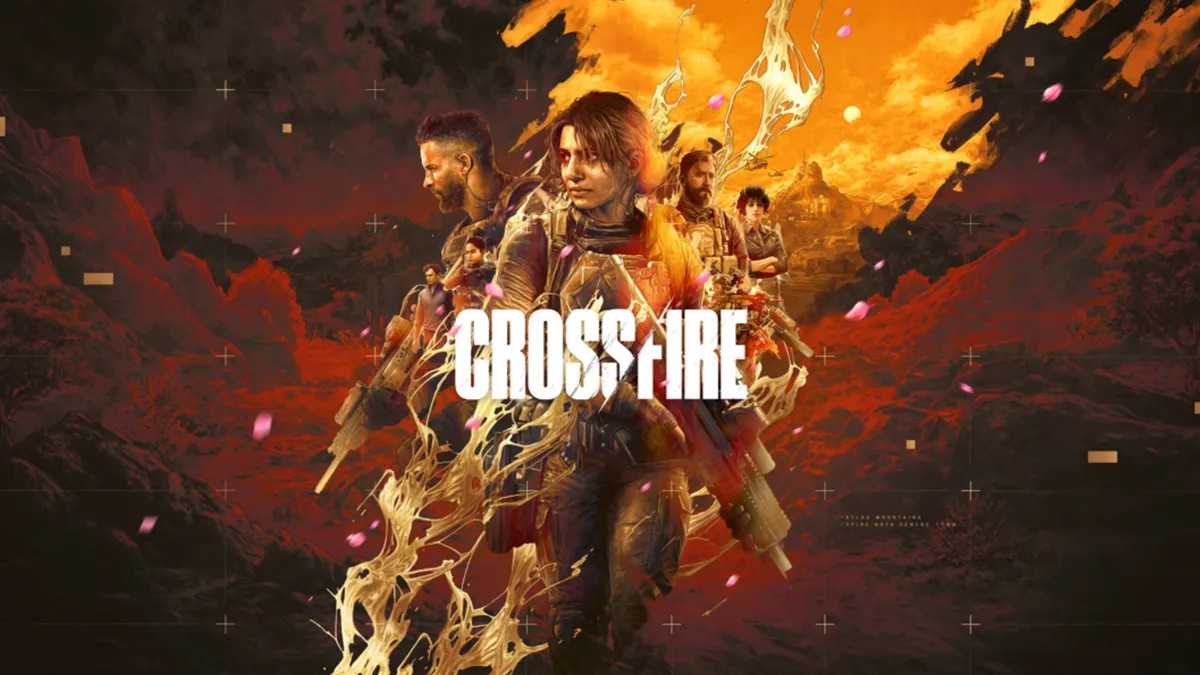
They revealed Crossfire at Summer Game Fest 2016. Yes. 2016 is a long time ago, but for this game it was just the start. It shares a name and a universe with a 2007 multiplayer shooter popular in East Asia, but that’s where the similarities end. No Counter-Strike team battles here. This is a single-player narrative game.
I visited their studio near LAX. It feels like a workspace that people actually love. Not corporate sterile, just busy. Desks piled with stuff. Walls covered in caricatures of the dev team. A hallway signed by voice actors. Behind all that, a sound stage. The same stage used for the first two Uncharted games. Then The Lion King (2019 live-action). Then The Mandalorian.
It’s a heavy lineage for a debut.
The tour was a setup. A grandiose wind-up. Then we sat down for the pitch: this game changes how third-person shooters work. When they showed the tech demos, I stopped leaning back.
Seeing the Invisible
Think of Gears of War or Uncharted. You hide behind a box. You are safe. You peek out. You shoot. It’s binary. Seen or hidden. Static.
That’s No Moon throws that rule out.
Their system visualizes visibility as vectors. Think of them like a web of light stretching from the character’s head. As Layla (the player) climbs over rocky terrain, the green vectors turn red as enemies spot her. It’s dynamic. Real-time.
This lets devs design messy, uneven terrain instead of painting yellow paths for us to follow. Players choose their route. They find their own cover. It frees the level design. It frees the player.
We don’t have a release date yet. We don’t have much story info either. That’s by design. They’re keeping the secrets tight. But the mechanics look like they carry the weight.
Uneasy Allies
The game follows two mercenaries. Layla Qassem and Delroy Cross.
They hate each other’s philosophy. Layla wants change. Maybe chaos. Delroy wants order. Stability. They are forced to team up against a threat neither understands.
Layla is played by Claudia Doumit (The Boys ). Cross is played by Ricky Whittle (American Gods ). You’ve seen them do these exact roles before. They appeared in episode 7 of Secret Level last year, titled “Good Conflict.” The episode left their fates vague. Will it matter for the game? We don’t know.
The writing leans into the friction between them. It’s Uncharted meets The Last of Us. No surprise there, really. That’s No Moon was built by ex-Naughty Dog developers. Taylor Kurosaki, their Chief Creative Officer, comes from there.
“We love those tentpole single-player games,” Kurosaki says. “They’re getting rarer. We want to keep that art form alive.”
He prefers third-person for this kind of story. Seeing your character’s body. Seeing their reaction. It’s harder to build an emotional connection with a pair of floating gun barrels.
The Friction of Combat
The demo showed a fight on a bridge. Rocky ravine below. Six enemies.
It looked brutal. Hard.
There’s no quick-save checkpoint right after every kill. You manage armor plates. You load magazines manually. You scavenge off dead bodies. Layla falls fast under heavy fire. You have to retreat. You have to lose line of sight to breathe again.
The new cover system means uncertainty. When Layla crawls over jagged rocks, you aren’t sure if she’s safe. The game doesn’t tell you. You have to guess. You have to look around like you’d look around if you were actually trying not to die.
Cross isn’t just an AI drone. He’s an ally. A difficult one. His programming reflects his personality—stubborn, protective, wrong-headed.
“Everyone is just doing their best with the flaws they have,” Kurosaki said. “It’s not about being a bad person. It’s about disagreeing and finding a way forward.”
That’s the hook. Not the graphics. Not the story twist. But the moment you and Cross survive a firefight because you finally stopped fighting each other.
Reinvention Requires Freedom
You can’t build this in a AAA studio with twenty years of legacy code.
That’s No Moon is free from it.
“We couldn’t have done this at an existing studio,” Kurosaki admits. “They’re too invested in old ways. We had to relearn everything.”
Game Director Jacob Minkoff is a self-confessed nerd for technical papers. He’s watched SIGGRAPH demos for twelve years. He saw neural networks for facial animation and complex environmental navigation tech sitting on the shelf. Unreal Engine 5 finally let them use it.
Most big studios won’t risk it. They have brand names to protect. Tech stacks that work good enough. Minkoff knows the technology existed to model complex organic environments perfectly. Nobody used it.
Until now.
Traditional games follow dogma. Obstacles come in specific heights. Ankle-high for walking over. Hip-high for crouching. Simple boxes.
Crossfire doesn’t care about that.
Objects are weird heights. Irregular. The characters model human biomechanics to flatten, squeeze, and slide around them. Combined with the dynamic cover, the environment becomes fluid. Everything is cover. Nothing is guaranteed safe.
They removed objective dots. Minimap clutter. Guidance markers.
“The experience is immersion,” Minkoff says. “I’m analyzing the space like a real person would.”
It’s a single-player only game. No microtransactions. No multiplayer mode to worry about. No seasonal passes. Just a beginning, a middle, and an end.
Kurosaki argues this is the only way to innovate. Without the constraints of balancing online play or supporting endless content loops, they can break the genre wide open.
Or it might just be a beautiful mess.
We won’t know until we play. But the ambition is visible. And usually, ambition like this either flies or crashes. Hard.