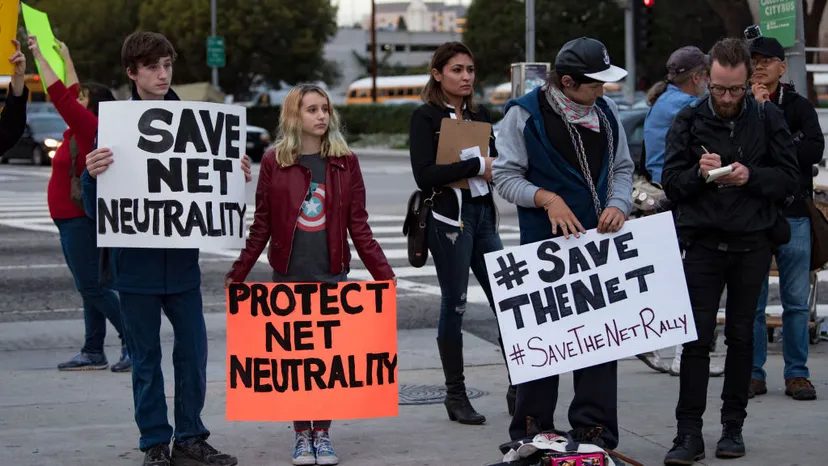
Let’s be honest. The phrase “net neutrality” sounds like a government form you’re required to sign but never actually read. It’s dry. It’s bureaucratic. It’s the kind of topic that makes your eyes glaze over before you even finish the sentence.
But here is the annoying part: you need to pay attention.
Net neutrality isn’t just tech jargon. It is the basic rule that your Internet Service Provider (ISP) must treat all data on the internet equally. They can’t slow down Netflix because you didn’t buy their premium package. They can’t speed up Amazon.com while throttling a small startup’s website. They can’t create fast lanes for the highest bidders and leave everyone else in the slow lane.
In 2015, the Federal Communications Commission (FCC) under Obama applied strict utility-style regulations to ISPs. This meant providers were treated like common carriers, similar to phone companies. They couldn’t discriminate.
Then came the Trump administration.
The FCC voted to scrap those rules. ISPs lobbied hard for this change. They wanted the freedom to manage their networks however they saw fit. Consumers? Not so much.
If net neutrality is gone, several freedoms vanish. You lose the ability to compete on a level playing field if you’re a small business. Your online speech could be suppressed if it doesn’t align with provider interests. You might find yourself paying extra just to load a website in a reasonable timeframe.
Here are the concrete reasons why this matters to your everyday digital life.
The Expectation of an Open Internet
We assume the internet is a public square. We assume that if we type a URL, the site loads. We don’t assume that our ISP is deciding how fast that site loads based on a corporate contract.
This expectation is the foundation of the modern web. Without net neutrality, that foundation cracks.
ISPs argue that they need flexibility to manage network traffic. They claim that without the ability to prioritize certain data, the internet will become congested and slow for everyone. It’s a valid engineering concern. Bandwidth has limits.
But critics argue this is a Trojan horse for anti-competitive behavior. Once ISPs have the power to throttle or prioritize, they have a financial incentive to do so. Why would Comcast speed up Netflix if they could charge Netflix for that privilege? And why wouldn’t they slow down a competing streaming service that threatens their own video bundle?
The result is a tiered internet.
- Heavy hitters : Big corporations pay for priority access. Their content loads instantly.
- Small players : Startups and independent creators get the residual bandwidth. Their content loads slowly, if at all.
- Consumers : You get what the market dictates. If you want fast access to specific sites, you might need multiple subscriptions or accept a degraded experience.
This isn’t theoretical. It’s a direct consequence of deregulation.
The FCC’s decision to repeal net neutrality rules shifted the burden from the provider to the user. Instead of a regulator ensuring fairness, the market decides who wins. And in an unregulated market, the biggest wallets usually win.
You might think you’re immune to this. After all, you’re just browsing. But browsing is how you access news, banking, healthcare, and education. If those pathways become


You probably know the internet is a global web of computers. But do you really understand why the way data moves matters? The modern internet was built on a simple promise: it’s open. Anyone with a connection can talk to anyone else. No middleman. No gatekeeper. Just direct communication across a free and open network.
Over the last twenty-five years, that promise has reshaped everything. Look at what we’d lose without it. Instant access to global information. Email. Online shopping. Social networks that let you find your old high school friends. Independent news sources that aren’t controlled by a single government or corporation. Streaming services. Video calls. Online banking. All of these rely on the fact that data flows freely.
Why has the internet worked so well? Because the underlying technology is neutral. The cables, routers, switches, and servers don’t care what you’re sending. A Netflix movie travels down the same fiber optic lines as a photo of your niece’s birthday party. The network treats every byte equally. It doesn’t pick favorites. That’s net neutrality. And it’s the reason you should care. It keeps the internet free, open, and fair — exactly as it was designed to be.
But not every country plays by these rules.
How China’s Great Firewall Enforces Non-Neutrality
China has built a distinctly non-neutral internet. It’s not just slower. It’s controlled.
The Chinese government uses the Great Firewall to block, monitor, and manipulate traffic. Unlike the open internet, where data flows freely, China’s version is filtered. Some websites are banned entirely. Others are slow. Some keywords are censored. The state decides what you see, when you see it, and how fast it arrives.
This isn’t just about blocking Facebook or Google. It’s about control. By breaking net neutrality, the government can prioritize its own services. Censor dissent. Monitor citizens. Shape public opinion. The internet becomes a tool for power, not a platform for freedom.
Why This Matters to You
You might think, “I’m not in China. Why should I care?”
Because the principles at stake are global. If we accept that internet providers or governments can pick winners and losers, the open internet dies. Slow down competitors. Boost their own services. Charge extra for “fast lanes.” It’s a slippery slope.
Net neutrality isn’t just a technical detail. It’s a foundational rule for a free society. Without it, the internet becomes another medium where power dictates access. Where wealth buys speed. Where truth is filtered.
The Difference Between Neutral and Non-Neutral Networks
| Feature | Neutral Internet | Non-Neutral Internet (e.g., China) |
|---|---|---|
| Data Treatment | Every byte treated equally | Data prioritized or blocked based on state/corporate interest |
| Access | Open to all legal content | Restricted by government censorship |
| Speed | Uniform for all users | Varied; some services slowed, others fast-tracked |
| Control | Decentralized | Centralized by state |
The Cost of Losing Neutrality
When neutrality goes, so does innovation. Startups can’t compete with giants who pay for faster lanes. Artists can

The Illusion of an Open Web
In nations where the internet remains largely unregulated, we often treat net neutrality as a baseline reality. You search without oversight. You decide which narratives to trust and which to ignore. You choose your platforms freely.
This luxury is nonexistent in mainland China. The internet there is a tightly monitored, heavily censored environment.
ISPs actively block government-banned sites. Search engines like Google trigger automatic 90-second blocks if you type specific flagged terms. Providers receive lists of problematic keywords and must remove pages containing them.
The scale of enforcement is massive. The government and private contractors employ roughly 100,000 people to monitor content and report dissenters. Beyond surveillance, state-funded agents post pro-government messages across social networks and forums.
Defenders of net neutrality aren’t claiming the FCC’s proposed changes will recreate a Chinese-style censorship state. Their concern is different. They fear corporations will pay ISPs to throttle or block competitors. They worry about speech suppression when a company’s interests are at stake.
8: Fast Lanes Already Exist
The debate often centers on future threats. But fast lanes are not hypothetical. They already exist.
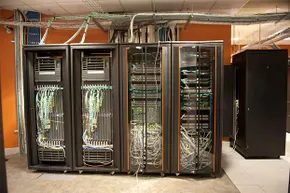
We like to believe the internet is a meritocracy. A sprawling, open grid where data flows freely from server to user, unaffected by who pays whom. It’s a comforting story. The reality is messier. The “fast lanes” that net neutrality proponents are fighting against aren’t theoretical future threats. They are already built. Big players like Google, Facebook, and Netflix aren’t waiting for permission. They are already paying for direct, privileged access to the pipes run by Comcast, AT&T, and Verizon.
This isn’t about blocking content. It’s about buying speed. And it happens in two distinct ways.
Peering: Cutting Out the Middleman
Most data doesn’t go straight from a website to your living room. It has to traverse the internet backbone —the massive, global infrastructure of cables and data centers operated by wholesale transit providers. Think of it as the interstate highway system. If you’re a smaller company, you pay to get on the highway, pay tolls at various exits, and hope traffic isn’t backed up.
Wealthier companies have a different option: peering.
Peering allows a data provider to connect directly to an ISP’s network at a local exchange point. It bypasses the broader backbone entirely. The result? Data takes a shorter, faster path to the consumer. It’s not magic. It’s infrastructure. And it costs money. By paying for this direct link, companies like Netflix ensure that when you hit “play,” the video starts instantly, regardless of congestion on the general internet.
Content Delivery Networks: Servers in the Basement
There is a second, even more aggressive form of preferential treatment: Content Delivery Networks (CDNs), specifically the “edge” caching strategy.
Google doesn’t just pay for better roads; it builds its own rest stops. The search giant pays ISPs to host its servers inside the provider’s facilities—literally in the basement. When you search for “weather,” the answer doesn’t come from a Google data center in California. It comes from a server down the street, managed by your ISP. This reduces latency to near-zero. It makes Google’s service feel instantaneous compared to competitors who have to fetch data from farther away.
“If web companies can already pay ISPs for preferential treatment, then why are net neutrality advocates making such a stink about the FCC’s proposed rule change?”
So, if the rich are already playing by different rules, why is this a political firestorm? The answer lies in the distinction between the “backbone” and the “last mile.”
The Last Mile Monopoly Problem
The connection between a web company and an ISP is a business-to-business market. It’s competitive. If AT&T offers terrible peering rates, Google can negotiate with Verizon or switch to a different transit provider. There are alternatives.
The last mile —the final connection from the ISP’s node to your home router—is different. In most of the United States, you don’t have a choice. If you live in a Comcast-dominated area, Comcast is your only option. There is no competition. This lack of choice creates a monopoly.
When an ISP controls the only path to your home, they hold a choke point. The fear among net neutrality advocates isn’t just that big companies will pay for speed. It’s that this monopoly power could
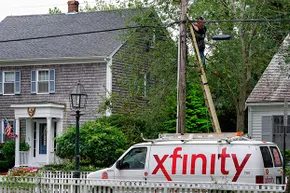
Comcast isn’t just an internet provider. It is the largest cable TV company in America. With NBCUniversal in its pocket, it stands as a media behemoth. In 2015, the Department of Justice blocked a proposed merger with Time Warner. The FCC agreed. That decision spared the public from a single entity controlling high-speed access for 40 percent of American homes.
The fear is real. A handful of ISPs now act as gatekeepers. They pick winners and losers based on who pays the most. A web company cannot deliver content directly to consumers. It must go through an ISP. Comcast, Verizon, and Time Warner hold de facto monopolies in many large markets. Web companies have no choice but to bow to the local king.
Tim Wu coined the term “net neutrality.” He argues the real issue isn’t fast lanes. It is the lack of competition. How do you fix that? Look at the United Kingdom. Regulators require ISPs to lease fiber optic lines to competitors at cost. This rule forces infrastructure sharing. Without it, upstart ISPs cannot afford to enter the market. This is the reality in the U.S. today.
The High Cost of Market Entry
Building a new network is prohibitively expensive. Digging trenches and laying fiber takes capital that most new players simply do not have. In the UK, the regulation changes the math. Competitors can piggyback on existing infrastructure. This lowers the barrier to entry. It allows smaller providers to offer service without building from scratch.
In the U.S., the absence of such rules protects the incumbents. Comcast and Verizon have already paid for the lines. They have no incentive to share them cheaply. New entrants face a wall. They cannot compete on price or service if they cannot reach the customer’s home efficiently. This stagnation benefits the few large players. It hurts the consumer. It limits choice.
Who Controls the Pipe?
The concern isn’t just about speed. It is about control. When one company controls the physical path to your home, they control what you see. They control what you buy. They control how fast you load it. This power distorts the web. Startups struggle to reach audiences. Established giants pay for preferential treatment. The market doesn’t decide who wins. The ISP does.
“The real issue isn’t fast lanes, but rather increasing competition among ISPs.”
This shift changes the nature of the internet. It becomes less like a public square. More like a gated community. Access depends on your relationship with the property owner. That is a dangerous precedent. It undermines the open nature that made the web powerful in the first place.
Breaking the Monopoly
Restoring competition requires structural changes. Simply banning paid prioritization isn’t enough. You need to allow new players to enter the market. You need to lower their costs. You need to force incumbents to share their assets. This is what the UK model attempts to do. It is not perfect. But it creates space for competition.
The U.S. has not adopted this approach. The result is a few giants. They raise prices. They offer mediocre service. They face little pressure to improve. Consumers pay for the privilege of being locked in. This is not a free market. It is a managed one. And the managers are the ISPs.

The FCC’s 2010 Open Internet Order was built on a simple premise: the internet should be a level playing field. In that document, the Commission argued that consumers thrive when they can freely choose which apps, services, and content to access. Openness, they claimed, drives competition. To back this up, they codified three hard rules.
First was transparency. Internet service providers had to disclose how they managed network traffic. No more secret throttling. Second was the no blocking rule. ISPs couldn’t stop users from reaching websites or streaming services owned by competitors. Third was a ban on unreasonable discrimination. Providers could tweak their networks for legitimate performance reasons, but not to punish a specific type of content or give an unfair advantage to partners.
It sounded solid until a 2014 court decision shattered it. A judge ruled the FCC lacked the legal authority to stop ISPs from discriminating against websites or creating paid “fast lanes.” The problem was classification. Without reclassifying ISPs as utilities under Title II of the Communications Act, the FCC couldn’t enforce strict anti-discrimination measures.
So, in 2015, they did exactly that.
After processing input from over 4 million public comments, the Obama-era FCC reclassified broadband ISPs as Title II telecommunications utilities. This shift brought a heavier regulatory burden, including new reporting requirements and stricter bans on anti-competitive behavior.
The new rules tightened the screws on three fronts:
- No blocking : The status quo remained; ISPs still couldn’t block access to legal content.
- No throttling : This was the new addition. ISPs were explicitly forbidden from slowing down or degrading the delivery of any content, particularly from competitors.
- No paid prioritization : ISPs could no longer charge websites or content providers for faster delivery speeds.
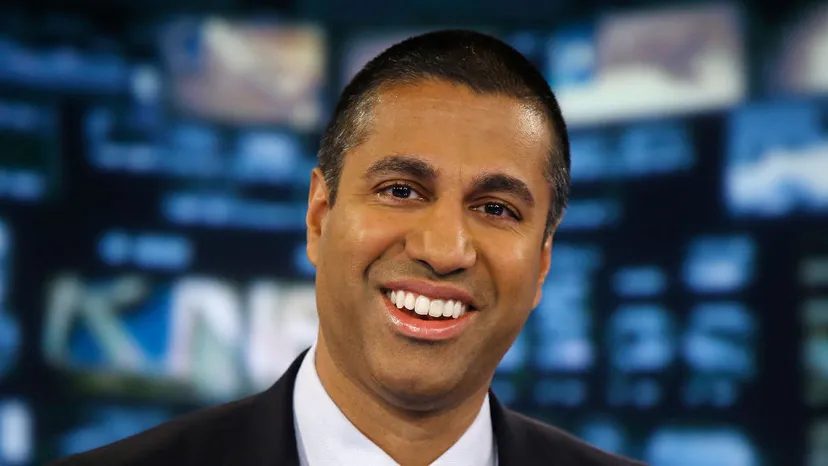
The concern here was stark. Paid prioritization would create a two-tiered internet. Startups with shallow pockets would languish in the slow lane, while deep-pocketed corporations would cruise at light speed. This uneven playing field is precisely what former FCC Chairman Ajit Pai sought to dismantle when he pushed for the 2017 repeal.
The Precedent of Interference
This regulatory battle didn’t happen in a vacuum. ISPs have a documented history of manipulating data flow. Before the 2010 and 2015 rules, there were numerous instances where providers slowed down (throttled) or blocked data entirely.
Consider the early days of peer-to-peer file sharing. ISPs often targeted BitTorrent traffic specifically, recognizing it as bandwidth-heavy. They didn’t need a formal rule to justify this; they just did it. Then there was the 2008 case where Comcast was caught secretly interfering with BitTorrent users by sending spoofed packets to reset connections.
These weren’t hypotheticals. They were real-world examples of what happens when an ISP controls both the pipe and the content. They could choose to degrade the experience for a competitor’s service to nudge users toward their own video streaming platform. Or they could slow down a specific service to encourage users to buy a “premium” tier.
The 2010 rules tried to curb this. The 2014 court ruling gutted them. The 2015 Title II reclassification attempted to rebuild the wall. And now, with the repeal, that wall is gone.

The narrative that major Internet Service Providers (ISPs) like Comcast and Time Warner are benevolent utilities waiting to serve the public good falls apart under scrutiny. Sure, every corporation wants market share and happy shareholders. But do they actually care if you can stream a movie without buffering?
Look at the data. The 2014 American Consumer Satisfaction Index gave cable giants a failing grade. The complaints were consistent: high prices, poor reliability, and declining customer service. The customers weren’t wrong.
Comcast has a documented history of prioritizing revenue over user experience. Take the 2012 dispute with Netflix. It wasn’t just a disagreement; it was a blockade. Netflix was consuming massive amounts of bandwidth on Comcast’s networks. Instead of upgrading the infrastructure to handle the traffic, Comcast refused to move unless Netflix paid a toll.
The result? For two years, Netflix streams for millions of Comcast subscribers slowed to a crawl. It was a bottleneck engineered for profit.
Netflix had no leverage. Comcast controlled the last-mile broadband connection to 25 million homes. There was no alternative provider for many customers. They had no choice but to agree to a direct peering arrangement—a deal that essentially functioned as a tax on content delivery.
Verizon did the same thing. They used similar strong-arm tactics to extract money from Netflix in an earlier, secretive deal. This isn’t an isolated incident. It is a pattern of behavior that defines how these monopolies operate when left unchecked.
The Rise of the Internet ‘1 Percent’
This dynamic creates a tiered internet. A small group of wealthy content providers can pay for fast lanes. Everyone else gets the slow lane.
“These examples and others worry net neutrality advocates who fear that the FCC’s proposed rules will sanction more anti-competitive behavior.”
The fear among net neutrality proponents is that without strict rules, the FCC will effectively legalize this extortion. It turns the internet into a playground for the Internet ‘1 Percent’. The big players buy speed. The rest of us pay more for less.
Why should the quality of your access depend on how much money a streaming service can afford to bribe an ISP? That is the core of the debate. It isn’t about regulation for regulation’s sake. It’s about whether the pipeline remains a public utility or becomes a private toll road.

The wealth gap in the digital world is staggering. Just like the real economy, where a tiny fraction holds half the pie, the internet is concentrating power in ways that threaten to silence everyone else. Oxfam notes that one percent of the global population controls nearly half the world’s wealth. Net neutrality advocates argue that deregulating ISPs will create a “one-percent internet” — a place where only the wealthy can buy visibility.
The trend is already visible. In 2004, traffic was spread across thousands of sites. Ten years later, half of all internet traffic came from just 30 companies. By 2017, Google, YouTube, and Facebook dominated daily unique visitors and page views. In North America, Netflix and YouTube consume more than half of all downstream traffic. Half the bytes moving across the web are streaming video from just two giants.
If ISPs are allowed to prioritize these behemoths, what bandwidth remains for the rest? Independent creators, small startups, bloggers, and podcasters could be pushed to the margins. The infrastructure would effectively price them out.
3: How Net Neutrality Safeguards Free Speech
The connection between net neutrality and free speech isn’t abstract. It’s about who gets heard. Without rules preventing ISPs from picking winners and losers, communication becomes a commodity. If you can’t pay for priority access, your voice is throttled or blocked. This doesn’t just affect content; it affects the fundamental ability to express ideas.
Consider the role of smaller platforms. They often serve niche communities or provide alternatives to mainstream narratives. If ISPs favor established players, these alternatives struggle to gain traction. Users are left with a curated feed, not a open web. This curation isn’t always transparent. It happens through technical prioritization that favors deep pockets.
The risk is a homogenized internet. Where diverse voices once thrived, only the most commercially viable survive. This isn’t just about business models. It’s about the ecosystem of ideas. If access is tied to payment tiers, the internet stops being a public square and starts looking like a gated community.
“The internet was built to be open. Closing it off through paid prioritization changes its very nature.”
This shift matters because it influences what information reaches the public. It shapes political discourse, cultural trends, and even education. When a few companies control the flow of data, they control the narrative. Net neutrality acts as a buffer against this consolidation. It ensures that a new blog post has the same technical chance of reaching an audience as a corporate press release.
The debate isn’t just about speed. It’s about equity. How do we ensure that the next big idea isn’t crushed before it starts? The answer lies in keeping the network neutral. Without it, the internet becomes a reflection of existing power structures, not a tool for change.
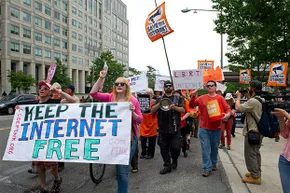
Think about the last time you streamed a video that refused to load. That buffering wheel isn’t just an annoyance; it’s a potential barrier to communication. The internet today functions as an open forum. It doesn’t care who you are or what you believe. Data from a massive corporate news outlet travels the same physical path as data from a lone activist’s blog. They arrive at your screen with equal priority.
That equality is fragile.
If the FCC permits internet service providers to introduce paid “fast lanes,” that balance shatters. Suddenly, speed becomes a commodity you buy, not a standard you receive. Entities with deep pockets can pay for priority access. Their content loads instantly. Their messages are crisp, clear, and immediate.
Meanwhile, everyone else gets the slow lane.
Activists. Independent artists. Political outsiders. These groups rarely have the budget for premium bandwidth fees. If they can’t pay, their data packets get deprioritized. Their websites load slower. Their videos buffer. Their voices get drowned out by the lag.
You wouldn’t choose to watch a grainy, stuttering clip when HD is available. But if the infrastructure is built to make the grainy version the default for non-payers, you’re left with no real choice. Your ability to consume information—or express it—depends entirely on the financial clout of the sender.
Political Implications of Paid Prioritization
This isn’t just about video quality. It’s about political power.
When access to an audience is tied to payment, speech becomes stratified by income. The wealthy and well-funded organizations can dominate the digital public square with superior delivery speeds. They can host live streams without interruption. They can distribute large files instantly.
Smaller voices struggle. A grassroots campaign trying to gain traction online faces a technical headwind that their opponents do not. If their site slows down during a critical news event, they lose attention. If their video quality drops during a rally broadcast, they lose credibility.
The playing field tilts. Not because of the merit of the argument, but because of the cost of the connection.
Who decides which messages move at the speed of light? And who gets left in the dust? The answer shouldn’t be a billing department at your ISP.

The partisan split here is predictable. Democrats and Republicans stand on opposite sides of the net neutrality fence.
Democratic lawmakers are pushing back against proposed changes to Federal Communications Commission (FCC) regulations. These changes would let Internet Service Providers (ISPs) charge for VIP fast-lane treatment on their broadband networks. Sen. Ron Wyden, D-Oregon, didn’t mince words. “Without net neutrality, the internet as we know it ends,” he said in July 2017. “It’s just that simple.”
Republicans argue the exact opposite. They claim unnecessary government regulations — specifically the Obama administration’s ban on fast lanes — are stifling innovation. Their stance is that new rules discourage new ideas rather than protect them. If a company engages in anti-competitive practices, Republican lawmakers argue, the government can already prosecute them using existing antitrust laws. They see the current regulatory framework as a hindrance to fair play and growth.
1: It’s Decision Time

The stakes have never been higher because the rules are still in flux. This isn’t a settled issue. It is a live wire.
On April 27, 2017, FCC Chairman Ajit Pai dropped a proposal that would effectively dismantle the Obama-era protections known as net neutrality. His argument? The current framework is too heavy. He wants to scrap Title II classification, which currently treats internet service providers (ISPs) as common carriers. Pai calls the existing reporting requirements “burdensome.” He views the rules as stifling innovation. His goal is a “light touch” regulatory approach that gives ISPs more freedom to manage their networks as they see fit.
The December 14 Deadline
The clock is ticking. The FCC is scheduled to vote on these rule changes on December 14.
Here is the reality of the situation: the outcome is largely predetermined by politics. The commission consists of five voting members. Three of them are Republicans appointed under the current administration. Two are Democrats. With that 3-to-2 majority, the rollback of net neutrality protections is widely expected to pass.
Who Is Listening?
Public outcry has been massive. Tens of millions of Americans have flooded the FCC website with comments opposing the rollback. They want to keep the internet open, fast, and free from ISP interference.
But will those voices matter?
The FCC has a history of prioritizing industry feedback. Corporate donors and large telecom lobbyists have significantly more resources to influence the narrative than individual users. We have seen this dynamic before. The megaphone of corporate interests tends to drown out the whisper of consumer advocacy.
If you have been convinced that net neutrality is worth fighting for, waiting for the vote is not an option. The system is designed to ignore passive observers.
Speak up. Post a consumer comment to the FCC. Do it now.
More Resources
For those digging deeper into the technical and legal specifics, there is plenty more information available to understand the full scope of these changes.