




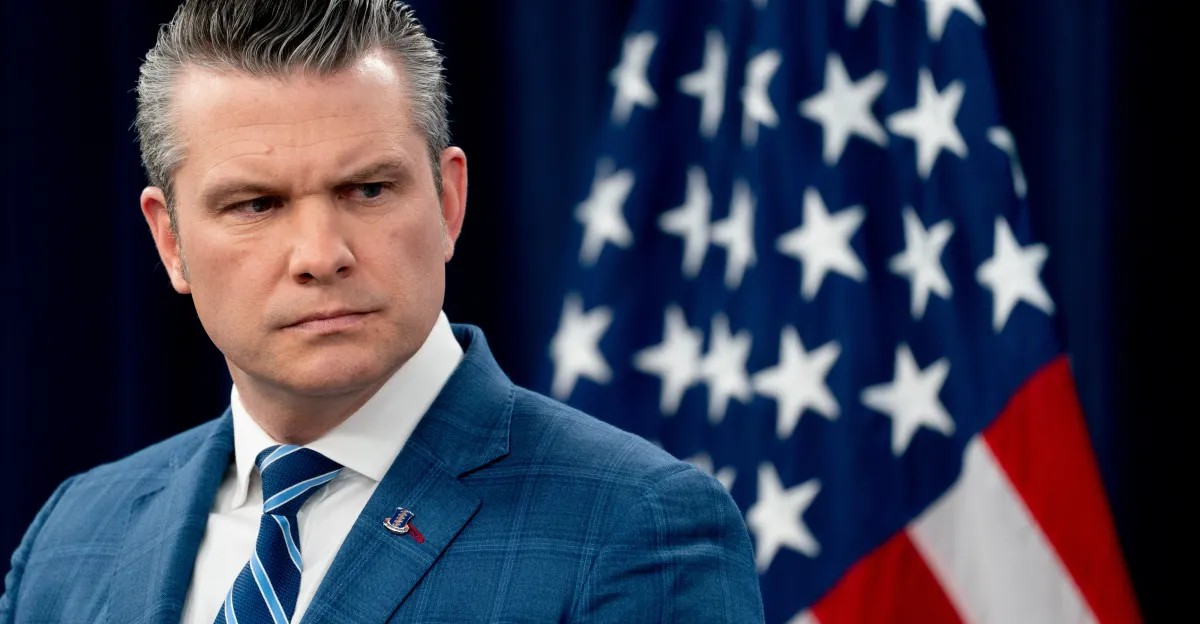
The intersection of American military policy and radical theology is becoming increasingly visible in the highest levels of government. This is perhaps most evident in the rhetoric of Pete Hegseth, the Secretary of Defense, whose approach to international conflict is deeply intertwined with a specific, militant interpretation of Christianity.
Hegseth frequently frames U.S. military actions—specifically regarding Iran—as being divinely sanctioned. Whether it is likening the recovery of a downed service member to the resurrection of Christ or invoking biblical verses to justify combat, Hegseth’s worldview is not merely personal; it is reflective of a growing movement within American evangelicalism that seeks to merge political power with religious doctrine.
The Influence of Pastor Doug Wilson
Central to understanding Hegseth’s perspective is his spiritual connection to Pastor Doug Wilson. Wilson, the founder of Christ Church in Moscow, Idaho, has moved from the theological fringes to the center of American political influence. His movement, the Communion of Reformed Evangelical Churches, is increasingly focused on Christian nationalism and theocracy —the belief that the United States should be governed by Christian principles.
In a recent interview, Wilson confirmed that Hegseth’s public stance on war aligns perfectly with his own teachings.
“I don’t hear anything from him that contradicts what we teach,” Wilson stated, noting that Hegseth’s view of conflict is consistent with the church’s pulpit.
A “Chemotherapy” Approach to Leadership
When discussing President Donald Trump, Wilson offers a provocative analogy: he views the President not as a traditional moral leader, but as a “radical chemo treatment.”
According to Wilson, while Trump’s leadership style may be “toxic” and cause damage to the “healthy tissues” of the nation, he views the disruption as a necessary means to “kill the cancer” of the current political establishment. This perspective allows evangelical leaders to navigate the tension between Trump’s controversial personal behavior and his policy achievements, which Wilson believes are moving the country closer to a Christian nation.
Theology in the Theater of War
The most significant friction point lies in how these leaders interpret the morality of warfare. While many religious leaders, including the Pope, argue that a follower of Christ should be a “Prince of Peace” who rejects the sword, Wilson relies on a different biblical tradition.
- The Old Testament Defense: Wilson cites Psalm 144:1 (“Blessed be the Lord, my rock, who trains my fingers for battle”) to justify the use of force.
- Moral Absolutism: Wilson argues that the conflict between Western civilization and regimes like Iran’s is not “morally ambiguous.” He posits that the violence of a Sharia-based state justifies a more aggressive, even holy, stance from the West.
- Rejection of Pacifism: He dismissed the Pope’s calls for peace as mere political posturing, suggesting that critics are often “selective in their indignation.”
The Growing Reach of Christian Nationalism
The transition of figures like Wilson from small-town pastors to voices at the Pentagon and major conservative conferences signals a shift in the American landscape. This is no longer a fringe movement; it is a structured effort to integrate theological mandates into the machinery of the state.
While critics argue this movement tests the secular foundations of the U.S., Wilson views the current political chaos as a divine test—one that he believes many conservative Christians are successfully navigating by supporting leaders who advance their religious agenda, regardless of personal temperament.
Conclusion: The alignment between Secretary Hegseth and Pastor Doug Wilson highlights a significant trend where military strategy is increasingly viewed through the lens of divine mandate, signaling a potential shift toward a more overtly religious foreign policy in the United States.