



A recent military parade in Beijing served as a stark visual reminder of a shifting paradigm in global security. As President Xi Jinping, Vladimir Putin, and Kim Jong-un observed, Chinese forces demonstrated advanced drones capable of flying autonomously alongside fighter jets. This display was more than a mere show of force; it signaled a significant leap in the integration of Artificial Intelligence into modern combat.
The Growing Technological Gap
The demonstration has triggered urgent concerns within the United States. According to defense and intelligence officials, the Pentagon’s assessment is sobering: America’s programs for unmanned combat drones may currently be lagging behind those of China. Furthermore, Russia is reportedly making significant strides in establishing the industrial infrastructure necessary to mass-produce advanced drone technology.
This competition is not merely about who has the most hardware, but who possesses the most sophisticated autonomous decision-making capabilities.
The U.S. Response: Accelerating Production
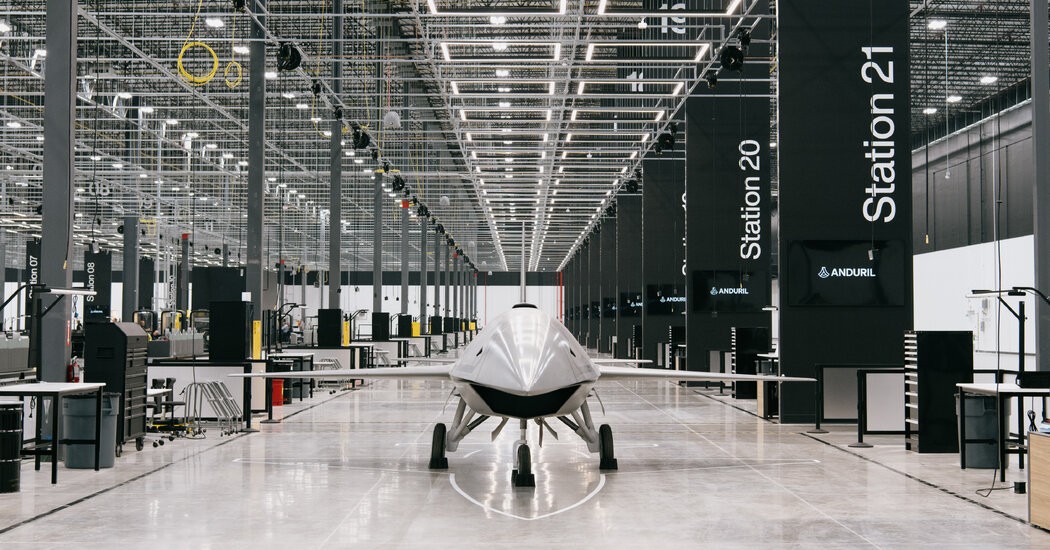
In an effort to close this widening gap, the U.S. is leaning heavily on its domestic defense tech sector. A notable example is the California-based startup Anduril, which has begun manufacturing AI-backed, self-flying drones similar to the models showcased by China.
To meet the urgency of the moment, production at a facility outside Columbus, Ohio, has reportedly begun three months ahead of schedule. This rapid mobilization highlights a critical shift in defense strategy: the transition from traditional manufacturing to high-speed, software-driven production.
Understanding the AI Arms Race
At the heart of this escalation is the development of autonomous weapons systems. Unlike traditional remote-controlled drones, these systems use AI to operate with minimal human intervention. This technology enables machines to:
– Identify and strike moving targets independently.
– Coordinate complex aerial attacks at speeds and altitudes that exceed human pilot capabilities.
– Analyze intelligence in real-time to recommend strike targets with unprecedented speed.
The core of this race lies in the reduction of “human-in-the-loop” latency. In modern warfare, the ability to process data and execute a response in milliseconds can be the difference between victory and defeat.
A Fragmented and Expanding Global Landscape
While the rivalry between the United States and China remains the primary driver, the race for military AI has become a global phenomenon, fueled by various geopolitical tensions:
- The Russia-Ukraine Conflict: Now in its fifth year, this war has become a continuous testing ground for technological advantages in drone warfare and electronic countermeasures.
- Regional Arms Buildups: Nations such as India, Israel, and Iran are aggressively investing in military AI to bolster their regional influence and defense.
- European Rearmament: Countries including France, Germany, Britain, and Poland are accelerating their military capabilities, driven by shifting political landscapes and questions regarding the long-term stability of NATO commitments.
Conclusion
The global landscape is shifting from traditional kinetic warfare toward a high-speed, AI-driven competition where speed and autonomy are the ultimate currencies. As nations race to integrate intelligence into their arsenals, the very nature of combat—and the threshold for human intervention—is being fundamentally redefined.