


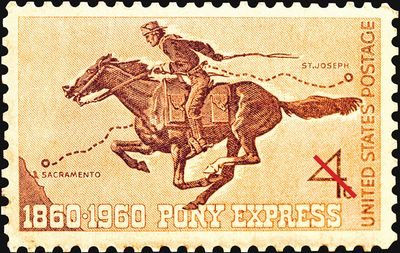
It lasted less than two years. That is it. Sixteen months. That is the entire lifespan of the Pony Express.
Yet, nobody forgets the name. We remember the dust, the sweat, and the sheer audacity of it. The system was a simple, brutal solution to a massive problem: getting mail across the continent faster than a ship around South America or a slower overland stagecoach.
How It Actually Worked
The logistics were brutal but elegant. Mail ran from St. Joseph, Missouri, to Sacramento, California. From there, it hopped onto a steamer to San Francisco. The goal was speed. Pure, unadulterated speed.
They didn’t just send one rider with a heavy bag. They used continuous horse-and-rider relays. A rider would take a fresh horse at a station, push his miles as hard as he could, then hand off the mail bag to the next guy. It was a chain of adrenaline.
This wasn’t a leisurely ride. It was a sprint that never ended. The riders covered hundreds of miles between stations, often in hostile territory and terrible weather. They didn’t stop for sleep. They didn’t stop for safety. They stopped for fresh horses.
The Riders Who Made It Mythic
You know the names, even if you don’t know the details. William “Buffalo Bill” Cody rode for the Pony Express. So did Robert “Pony Bob” Haslam. These weren’t just mail carriers. They were the face of a new kind of American bravery.
Cody was young. Haslam was tough. They became legends because the story demanded legends. The Pony Express captured the national imagination because it felt like something out of a movie. It was daring. It was colorful. It was the American West distilled into its most romantic form.
Why It Was a Financial Disaster
Here is the catch. The business model collapsed under its own weight. It cost too much to run. The horses died. The riders got killed or injured. The infrastructure was expensive to maintain in the middle of nowhere.
The government didn’t pay enough to cover the losses. Customers complained about delays. The system was efficient in theory but too costly in practice. It was a financial disaster from day one, or close enough to it.
The End of the Trail
The Pony Express died not because it failed to deliver mail, but because something better came along. The transcontinental telegraph was completed. Messages could now be sent instantly via wire. The need for a physical mail relay across the continent vanished overnight.
By October 1861, the last rider arrived in Sacramento. The service was suspended. The magic was gone. The wires hummed instead.
We remember it because it was brief. We remember it because it was hard. We remember it because it was human-powered in an age that was quickly going electric.
It was a flash of fire. Then it was ash.
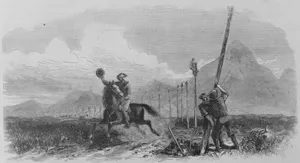

The push westward in the mid-19th century didn’t just bring settlers; it created a desperate logistical bottleneck. People needed mail. The early solution was a messy patchwork of overland stagecoach lines and steamship routes. Ships had to sail all the way around the tip of South America. Or they could drop passengers off and force them to trek across the Isthmus of Panama or Tehuantepec in Mexico. It was slow. It was expensive. It was unreliable.
Then the political temperature in the US started to rise. Tensions were boiling over the issue of slavery. The Civil War was looming. In this climate, speed wasn’t just a convenience. It was a strategic necessity. News needed to move fast. If Washington DC could know what was happening in California in days rather than weeks, it could manage the crisis.
The existing mail service was failing. The standard schedule for overland delivery from Missouri to the West Coast took roughly 24 days. For a nation on the brink of splitting in two, a month-long delay was unacceptable. The government needed a faster system. Who had the resources to build it? And who had the audacity to try?
The standard 24-day schedule for overland delivery from Missouri to the West Coast thus proved no longer sufficient.
The credit for the initial spark usually goes to William M. Gwin. He was a senator from California. A Democrat with strong ties to the South but also deeply invested in California’s connection to the Union. Gwin reportedly pitched the idea to a private freighting firm called Russell, Majors and Waddell. These men already owned the infrastructure for transporting goods west. They had the teams. They had the stations. They just needed the contract to make it official.
This was the genesis of the Pony Express. It wasn’t a government invention. It was a private enterprise born out of political urgency and logistical necessity. The idea was simple in theory: use relay teams of horsemen to carry mail across the continent. Simple in theory. Nearly impossible in execution. But the 24-day clock was ticking, and someone had to beat it.
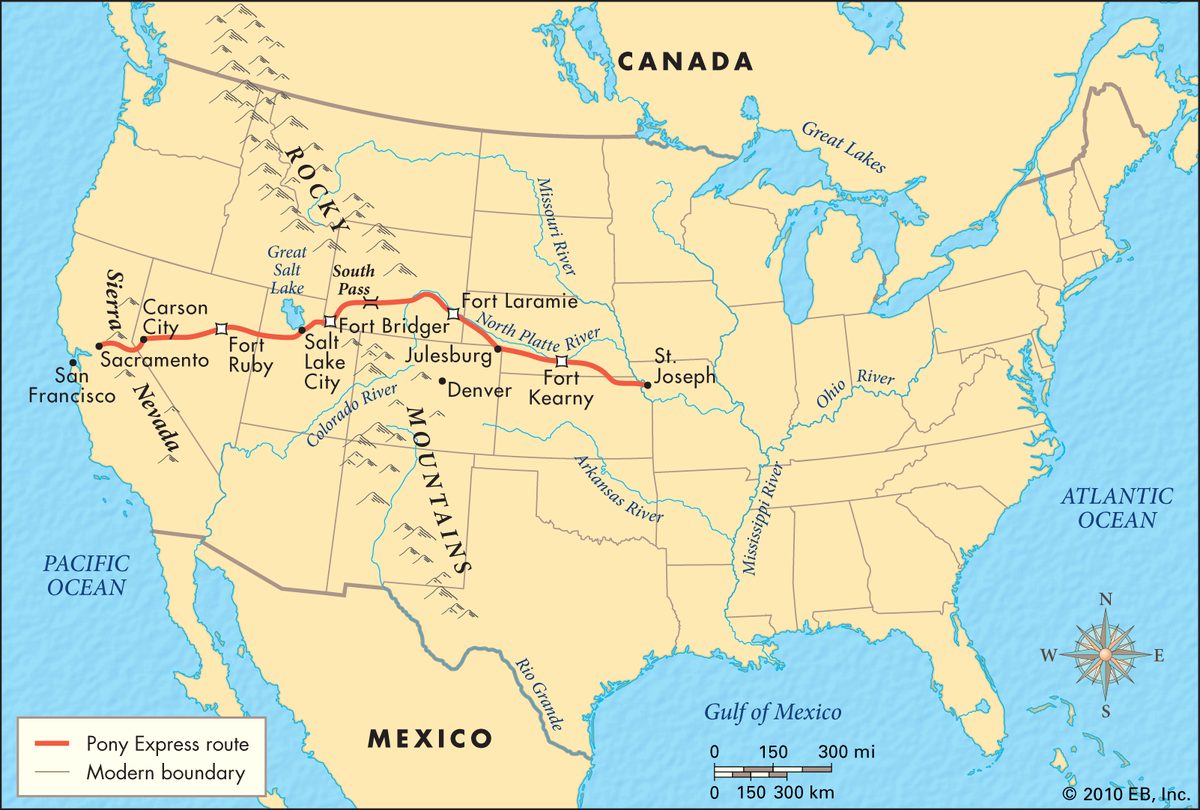

The logistics behind the Pony Express were staggering. We’re talking about a route stretching nearly 2,000 miles (3,200 km) across rugged, open terrain. To keep that mail moving, operators established about 190 stations. Most of these outposts clustered in Nebraska, Wyoming, Utah, and Nevada. The goal? Cut the coast-to-coast delivery time down to roughly 10 days.
It sounds efficient on paper. In practice, it was a logistical nightmare.
Each rider tackled a grueling 75 to 100 miles (120 to 160 km) leg. They didn’t stop for a break. Instead, they swapped horses every 10 to 15 miles (16 to 24 km). This constant rotation kept the horses fresh but required massive infrastructure. You needed fresh mounts on standby every few miles. That cost money. A lot of it.
Why Did It End So Quickly?
The service itself was a marvel of operational discipline. It primarily served newspapers and businesses that needed time-sensitive information—stock prices, political news, anything that could make or break a decision. During its entire 18-month lifespan, only one bag of mail was ever reported lost.
One bag.
That is an exceptionally high reliability rate for the 1860s. Yet, the model collapsed under its own weight. The Pony Express was never meant to be a permanent solution. It was a stopgap measure. A bridge over a gap that was closing faster than anyone anticipated.
The moment the transcontinental telegraph system was completed, the need for physical horseback mail delivery vanished. Telegraph lines moved data at the speed of electricity, not muscle. The cost of maintaining thousands of horses, stations, and riders could no longer be justified when messages could be transmitted for pennies.
The Real Legacy of the Route
We often romanticize the riders. The lone figure galloping through storms. But look at the economics. The Pony Express was an expensive experiment in speed. It proved that faster delivery was possible. It also proved that speed has a price ceiling.
For the average user today, the lesson is subtle. We assume infrastructure is permanent. It isn’t. The Pony Express route mapped a path that later became crucial for railroads and highways. But the service itself? It was obsolete the day the wires went up.
“The service was remarkably efficient… but it was ultimately an expensive stopgap.”
The efficiency didn’t save it. The cost killed it.
How It Compared to Later Systems
Think about modern logistics. We expect same-day delivery. We accept it. But back then, 10 days was revolutionary. The transcontinental telegraph changed the game by removing physical constraints entirely. You didn’t need horses. You didn’t need stations. You needed copper wire and electricity.
The Pony Express failed not because it was bad. It failed because something better arrived. The telegraph was that “something better.” It was faster. It was cheaper. It was scalable.
Did the riders know it was coming? Probably not. But the business models were clear. The gap between


The High Cost of Waiting for Letters
By the 1840s, the West was moving. Pioneers were carving paths along the Oregon Trail. Mormons were settling in Utah. And after the 1848 gold strikes, California was drowning in prospectors. All of them wanted mail. The East Coast needed a way to get letters to San Francisco without losing their minds in the process.
Steamships were the primary option, but the routes were brutal. You could sail all the way around the southern tip of South America and creep up the West Coast. Or you could head down to Panama. The isthmus was riddled with malaria. You’d cross it by mule and canoe, then hop on another steamer for the final leg to California.
Months passed. That was the price of speed.
The economics made little sense. The government spent over $700,000 annually on these routes. In return, they collected just $200,000 in postage. A massive loss. Even when the Panama Railroad opened in January 1855, steamship delivery remained too slow for the growing population.
Overland Risks and Rough Beginnings
Overland travel west of the Missouri River offered an alternative. It was desolate. It was dangerous. And it was unreliable.
The first real attempt at overland mail service happened in 1851. George Chorpenning and Absalom Woodward took a contract from the U.S. government. Their job? Deliver mail monthly between Sacramento, California, and Salt Lake City, Utah. They chose the Carson Valley as their route.
To make it work, they erected crude stations along the path. These stops were basic, but necessary. They were the only breaks in a harsh journey.
This service worked in tandem with another route. Samuel H. Woodson had already started stagecoach service on July 1, 1850, running from Salt Lake City east to Independence, Missouri. Together, these two legs created regular overland transcontinental mail delivery.
Was it perfect? No. Weather, especially in winter, caused delays. Attacks by certain Native American groups also threatened the mail carriers. But it was satisfactory. It kept the lines open. It proved that land could connect the coasts, even when the terrain tried its best to stop them.
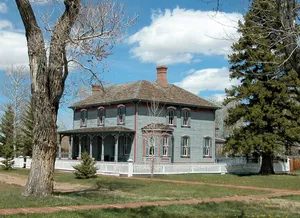

The Butterfield Overland Mail Company wasn’t built on sand, but it certainly cracked under pressure. John Butterfield’s route, an ambitious southern arc from St. Louis to San Francisco, looked good on paper. It connected four major express companies: Adams, American, National, and Wells, Fargo & Company. They secured a six-year federal contract on September 15, 1857. The itinerary was brutal. Drivers navigated 2,700 miles of terrain, hitting Little Rock, El Paso, Yuma, and Los Angeles before the final leg to San Francisco. The schedule promised a 25-day sprint.
It failed to account for the people already living there. Apache, Comanche, and Kiowa warriors viewed the mail coaches as intrusions. Attacks were frequent. Then came the Civil War. By 1861, Confederate troops didn’t just disrupt the Butterfield line; they dismantled it. The southern route was dead.
But the demand for connection didn’t die with the coaches.
As North-South tensions boiled over, the West needed a central corridor. The prevailing wisdom said it was impossible. The distance was too vast. The terrain too hostile. Yet the urgency was palpable. This vacuum of necessity birthed the concept of the Pony Express.
Who actually dreamed it up?
The Pony Express wasn’t an invention of pure genius. It was a repurposed ancient strategy. Genghis Khan used horse relays across his empire centuries earlier. Marco Polo wrote of riders stationed every 25 miles. A single rider could push 300 miles in a day. That wasn’t myth. It was logistics.
In the U.S., the idea had been floating around since the 1820s. Newspapers used relay teams between New York and Boston for news. The distances were short. The stakes were low. The Pony Express would cover nearly 2,000 miles of wilderness.
So, who got the credit? History is messy here.
Henry O’Rielly proposed a telegraph line that doubled as a mail relay in 1849. He wanted daily deliveries between stockades 20 miles apart. Senator Stephen Douglas tried to pass a bill for it in 1852. It died in committee.
Then came B.F. Ficklin. He was the superintendent for Russell, Majors & Waddell. Legend says he pitched the horse relay idea to Senator William M. Gwin of California in 1854. They were riding from San Francisco to Washington, D.C. Gwin introduced a financing bill in January 1855. It also failed.
Others point to William H. Russell himself. He allegedly discussed the relay system with Secretary of War John B. Floyd in early 1858.
There are even more obscure claims. John Scudder, an employee of Russell, Majors & Waddell, argued that he and his coworkers in Salt Lake City conceived the idea in December 1859. Frederick A. Bee, a telegraph partner, reportedly shopped the plan to San Francisco newspaper owners in the mid-1850s.
It doesn’t matter who had the first flash of inspiration. By January 1860, William H. Russell had taken the reins. He was backed by Senator Gwin. The government contract was signed. Mail service was supposed to start in April.
That left barely three months to build an empire from scratch.
The Rush to Launch
Russell had made a unilateral decision. He committed the company to the contract without consulting his partners, Alexander Majors and William Waddell. They were furious. The plan was risky. The timeline was insane.
They could have walked away. They had the legal standing to void the agreement.
They didn’t.
Majors and Waddell swallowed their objections. They realized walking away would be more expensive than trying to win. So, the three men plunged into the work. They had to build a network from Missouri to California in weeks.
The preparations were frantic. They needed horses. They needed riders. They needed stations every ten to twelve miles. They needed supplies in places that didn’t exist yet. The clock was ticking toward April.
The chaos was just beginning.
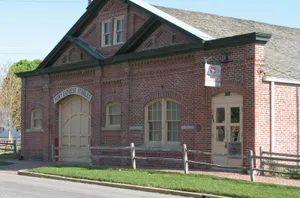

The Corporate Shield and the Division of Labor
Russell, Majors, and Waddell didn’t just launch a service; they built a legal fortress. To protect their personal assets from the inherent risks of crossing the continent, they incorporated the Central Overland California & Pike’s Peak Express Company. This wasn’t just paperwork. It was a liability shield.
Then came the acquisition spree. They didn’t start from scratch. They absorbed the Chorpenning Stage Company, taking its equipment, facilities, and seasoned staff. They also bought out smaller rivals like the Leavenworth & Pike’s Peak Express Company and the Hockaday Stage Line. Consolidation was key.
Each partner had a lane.
“Russell handled politics. Majors handled the range. Waddell handled the money.”
William Russell was the face. Personable. Sophisticated. He understood the political machinery. He moved to Washington, D.C. to lobby, negotiate contracts, and navigate the complex world of national politics. You don’t run a cross-country mail service without government contracts.
William Majors was the muscle. He knew the prairie. He understood horses, oxen, heavy wagons, and unruly crews. He stayed home to manage the operation on the open range. If a teamster quit or a wagon broke, Majors handled it. He kept the wheels turning.
Benjamin Waddell was the brain behind the books. Low-key. Practical. He oversaw purchasing, hiring, payroll, and bookkeeping from the home office. The headquarters moved from Leavenworth, Kansas, to St. Joseph, Missouri. Why the move? St. Joseph became the eastern starting point for the Pony Express. Proximity mattered.
The structure was rigid. Each man knew his role. No overlap. No confusion. They built an empire on clear boundaries.

The Logistics of Speed
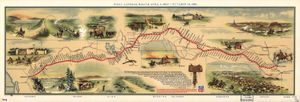
The initial leg of the route traced the familiar path of the Oregon Trail. Starting in St. Joseph, Missouri, the line cut across Kansas, Nebraska, Colorado, and Wyoming before reaching Salt Lake City in Utah. It was only once the riders hit the Utah desert that the path diverged. Instead of sticking to the established pioneer tracks, the new route took a sharper southern angle through Nevada, finally landing in San Francisco. The total distance? Approximately 1,840 miles (2,960 km).
To honor the company’s promise of 10-day mail delivery, speed wasn’t just a goal. It was a mechanical necessity. Letters and newspapers had to move at a top sprint. Horses couldn’t sustain that intensity over long distances. They needed a change every 10 to 15 miles (16 to 24 km), depending on how rough the terrain was.
This required a dense network of infrastructure. The company set up nearly 200 relay stations along the path. At each stop, the routine was brutal but efficient. The rider would pull up, grab the mochila —a specially designed saddlebag holding the mail—and swap it onto a fresh horse. The filled mochila weighed about 20 pounds (9 kg). Swapping it out took seconds. Hesitation meant failure.
Home stations were scattered along the route to provide food and sleeping quarters. Riders would hand off the mochila here after a long day or night of riding. But existing stage stations didn’t work for this new model. They were too far apart. Additional stations had to be built to close the gaps.
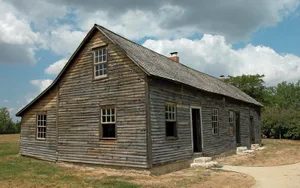
In Utah and Nevada, the land offered little help. Most of the trail crossed wasteland. The relay stations there were rudimentary. They provided the barest essentials for survival. Because nothing existed in these stretches, nearly all of them had to be constructed from scratch. In some western sections, the trail itself wasn’t good enough. Surveyors had to map new paths to ensure they were actually the fastest.
“The horses, therefore, could not run a great distance and had to be changed every 10–15 miles.”
This wasn’t just about riding. It was about engineering speed into a broken landscape. Every mile had to be accounted for. Every second saved added up over 1,840 miles. If the relay system slipped, the guarantee failed. The riders pushed their mounts to the limit, knowing the next station was the only thing standing between them and a failed deadline. The wasteland didn’t care about deadlines. It just demanded more structures. More effort. More speed.

Getting the horses was only half the battle. The company needed hundreds of top-tier animals, selected specifically for the terrain. Most were half-breed California mustangs. They were well-fed on premium grain. This diet made them faster than the mounts used by most Indigenous groups. Speed mattered. It wasn’t just about the schedule. Fast horses often saved riders from Native American attackers. Outdistancing danger was a matter of life and death.
But speed meant nothing without skilled riders.
Russell, Majors and Waddell tasked their division superintendents with hiring 70–80 riders each. The criteria were strict. They wanted young men born to the saddle. They needed people undaunted by danger. They preferred slight builds to minimize strain on the animals. Experience with the specific trail segment was non-negotiable. A rider couldn’t afford to get lost in rain, snow, or darkness.
High Stakes, High Pay
The compensation reflected the risk. Riders earned between $100 and $150 per month. This was the highest pay in the service, second only to top executives. Compare that to station keepers and general hands. They made as little as $50 a month. Plus, room and board were included, though the quality rarely matched the wage.
Once the stations were built and the routes set, the logistics shifted to the cities. The company established collection points in major hubs. New York. Washington. Chicago. St. Louis. All mail funneled through St. Joseph. The West Coast had a similar setup.
The schedule was the law. It had to be followed strictly. Day and night. Every weather condition. No exceptions. The mail had to go through. That was the only motivation that mattered.
The first delivery
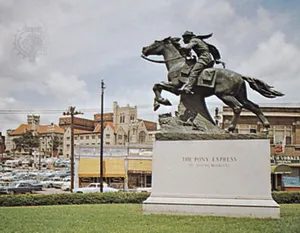

The April 3, 1860, launch wasn’t just a logistical operation. It was a media event. Newspapers across the United States covered the inaugural ride with heavy fanfare. The stakes were high. President James Buchanan sent a congratulatory letter to California Governor John Downey. This specific letter traveled in the first mochila —the leather mail bag slung across a horse’s back.
Forty riders tackled the first leg of the journey. They left St. Joseph, Missouri, and arrived in Sacramento, California, at 5:45 pm on April 13. Exactly ten days later. It was a sprint. A historic sprint.
The reception in Sacramento was chaotic in the best way possible. Bands played. Bells rang. Crowds stood on balconies and rooftops. They waved flags. They sang. They shouted. The mail then moved to San Francisco aboard the large side-wheeler steamboat Antelope. The celebration followed there too. The same fervor repeated hours after the initial arrival.
How the Pony Express Achieved 10-Day Delivery
The promise was simple but unprecedented. Deliver mail from St. Joseph to San Francisco in ten days. No one had ever done that before. The distance was massive. The terrain was hostile. Yet the Pony Express fulfilled the contract.
The system relied on relay stations spaced roughly 10 to 15 miles apart. Riders swapped horses frequently. They kept moving. Day and night. The horses were bred for speed and endurance, not comfort. The riders were young, often reckless, and paid poorly. But they were fast.
The Reality of the Route
Life on the trail was brutal. The stations were not safe havens. They were exposed outposts. Riders faced weather extremes. They faced mechanical failures. They faced human threats.
Many stations were unmanned or poorly guarded. Bandits knew this. They targeted the mochilas. The mail contained cash, gold dust, and private correspondence. It was valuable. It was tempting.
The terrain itself was a killer. Mountains, deserts, and rivers blocked the path. Rivers flooded. Snow buried the trails. Horses died. Riders got sick. Injuries were common. There was no hospital out there. There was only the next station.
“Never before in history had letters been delivered over such a distance so quickly.”
Why Speed Mattered More Than Safety
You might wonder why anyone risked their life for a letter. The answer lies in information latency. In 1860, news traveled at the speed of a horse or a boat. A letter from Washington D.C. to California could take months. Political decisions, business deals, and personal messages were stuck in transit.
The Pony Express cut that time to ten days. That is a massive reduction. It allowed the West and East to communicate in near-real-time. Businesses could check stock prices. Families could send urgent news. The government could coordinate with distant territories.
The risk was worth the speed. For ten days, the mail flew. It was dangerous. It was expensive. But it was fast. And in a expanding nation, speed was power.
The first ride proved the model worked. It also proved it was unsustainable. The cost per ounce was high. The danger

The Hidden Mechanics of the 190 Stations
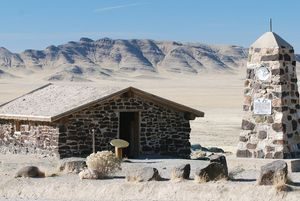
Historians don’t have exact ledgers for how many waystations dotted the trail. The consensus? Around 190. It’s a number that feels abstract until you realize the sheer logistical nightmare of keeping them operational. Each station wasn’t just a rest stop. It was a high-stakes relay hub where failure meant a dead rider or a missed delivery.
The station keeper’s job was brutal in its simplicity. They had to have a fresh horse saddled and ready before the incoming rider even appeared on the horizon. Time was currency. Keepers tracked every arrival and departure with military precision. If a rider was late, the whole chain behind them suffered.
Distance Dictated by Terrain and Stamina
You might assume stations were evenly spaced. They weren’t. The spacing was dictated by one thing: how far a good horse could push at a full gallop across specific ground. The standard range settled at 10–15 miles (16–24 km). But that’s an average. In flat country where the trail was straightforward, stations spread out. In the mountains, where terrain chewed up horsepower, they huddled closer together.
“The distance between stations was determined by the distance a good horse could run at a full gallop over that particular terrain.”
This meant riders faced wildly different physical demands depending on where they crossed the map. A flat stretch in Kansas felt easy. A mountain pass in Utah was a death sentence for weaker mounts.
The Deadliest Corridor
Not all sections of the Pony Express route were created equal. Some stretches were simply worse than others. The zone between Salt Lake City and Carson City in Nevada stands out as particularly hostile. It wasn’t just the isolation. It was the lack of natural resources and the constant threat of attack.
Native American groups in that region were often resisting encroachment on their lands. For station keepers, this wasn’t historical abstraction. It was daily risk. Most of these stations were indefensible cabins. Easy targets. If a group decided to overrun a station, the keeper was alone. The cabins offered little protection. The danger wasn’t confined to that specific corridor though. Working in any of the isolated outposts carried the same inherent peril. Vulnerability was the constant companion.

The gritty reality of the trail
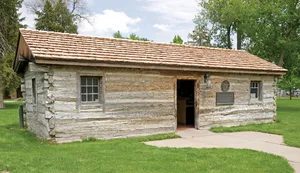
Forget the romanticized images of clean uniforms and easy rides. The infrastructure behind the Pony Express was barely functional. Most relay stations were little more than dirt-floored shacks with wooden crate furniture. You wouldn’t find glass windows. You’d find a corral, some stalls for the horses, and a food supply that was strictly utilitarian. Cured meats. Dried fruit. Flour. Molasses. Pickles. Coffee. Cornmeal. It was fuel for humans who were fuel for the horses.
Home stations were the exception. They offered actual sleeping quarters and a place to breathe. A rider could stop, eat without rushing, and chat with the station keeper. That rest was critical. The next leg of the journey demanded everything.
How the relay system actually worked
A typical run covered 75 to 100 miles. That sounds short until you realize the rider had to swap horses four to seven times. The terrain dictated the placement of these stops. If a fort or a stagecoach stop already existed, they used it. Otherwise, they built based on what the land allowed.
At a home station, the handoff was brutal in its efficiency. The rider pulled the mochila—the mail bag strapped to the saddle—from his exhausted horse. He threw it over the saddle of the fresh mount. A new rider leaped into the seat. No time for tea. No time for rest. Just momentum.
They didn’t carry everything initially. Early riders brought rifles and pistols. The rifles were too heavy. Too awkward. They dropped them after a few weeks. Some carried horns to signal their approach, cutting down on the confusion of who was coming and who was going.
Hostility and the Pyramid Lake War
The trail wasn’t just hard on the body. It was dangerous. Insects. Harsh weather. Scarce water. And then there were the people.
Indigenous groups saw the encroachment as a threat. Riders and station keepers were targets. In the spring and summer of 1860, the Pony Express was right in the middle of the Pyramid Lake War in Nevada. The conflict involved the Paiute people. The first shots likely rang out at Williams Station, about 30 miles east of Carson City on the Carson River. The mail had to keep moving, even when the land was burning.
The myth of the hero
Fame arrived quickly. The riders were young. Some were just boys. But they were small in stature yet tackled an epic job. Newspapers loved the angle. They turned these kids into larger-than-life figures. Epic heroes.
With that fame came strict expectations. The pledge required of every rider was severe:
I [name], do hereby swear, before the Great and Living God, that during my engagement, and while I am an employee of Russell, Majors & Waddell, I will, under no circumstances, use profane language; that I will drink no intoxicating liquors; that I will not quarrel or fight with any other employee of the firm, and that in every respect I will conduct myself honestly, be faithful to my duties, and so direct all my acts as to win the confidence of my employer. So help me God.
Break that oath. You’re fired. You lose your back pay.
Were they saints? No. But most were loyal. Most showed up.
Stories that defined the legend
William “Buffalo Bill” Cody is the name everyone knows. His runs were legendary. He once rode nearly 22 hours straight in Wyoming. From Red Butte Station to Pacific Springs and back. About 300 miles. Some of his escapes from Native Americans and highwaymen were likely embellished by dime novelists looking for sales. But the stamina was real.
Then there was “Pony Bob” Haslam. He holds the record for the longest and fastest run in Pony Express history.
In May 1860, it started at Friday’s Station on Lake Tahoe. Haslam rode east to Buckland’s Station. No relief horse. Just him and the miles. Then the next rider in the chain refused to go. The Paiute threat was too high for him. Haslam didn’t stop. He rode another 90 miles through hostile territory. He turned around. He replaced a rider who didn’t show up. He rescued a stationmaster from a Paiute attack.
He covered about 360 miles in 40 hours.
That kind of reliability made him the go-to guy for high-stakes mail. He carried the news of Abraham Lincoln’s election to the presidency.
Jack Keetley was another beast. He rode 340 miles in 31 hours. No significant stops. He arrived at his destination asleep in the saddle.
Final days

Why the Pony Express Failed
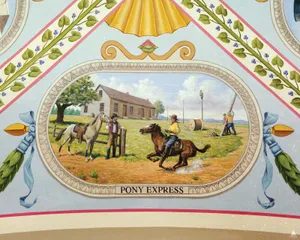
The transcontinental telegraph wasn’t just a competitor. It was the nail in the coffin. Completed in October 1861, it made the Pony Express obsolete almost overnight. But blaming the telegraph is too simple. It ignores the rot already eating the company from the inside.
Russell, Majors, and Waddell were bleeding cash long before the wires went live.
Financial Bleeding and War
The trouble started early. A massive herd of oxen, pulling supply wagons, froze to death in a blizzard at Ruby Valley, Nevada. That was a huge loss. Then came the Pyramid Lake War in the spring and summer of 1860.
Paiute, Shoshone, Bannock, and Gosiute bands attacked. They burned stations. They killed keepers. They stole horses and equipment. The company needed $75,000 just to replace what was lost. They also had to replace horses killed in the brutal winter of 1860–61.
They didn’t have the money.
Executives turned on each other. Internal dissension weakened an already crumbling structure.
Too Expensive for Regular People
The public didn’t support the service either. Sending mail cost $5 per ounce. That is hundreds of dollars today. Even when the rate dropped to $1 per ounce, it was still out of reach for most citizens.
Who used it?
Newspapers. Businesses.
Regular folks couldn’t afford it. The service was a luxury item for the wealthy and the press.
Bankruptcy and Scandal
Income never covered expenses. Daily costs were about $1,000.
Total costs: $700,000.
Total receipts: $500,000.
The gap was massive. Creditors got nervous. They demanded immediate payment.
In December 1860, Russell was arrested in New York City. He was charged with accepting stolen government bonds. Before that scandal, Majors had started preparing for bankruptcy in October. He authorized the sale of assets for creditors.
When Majors filed for personal bankruptcy, the business community shook. Russell, Majors, and Waddell had been seen as untouchable. They were not.
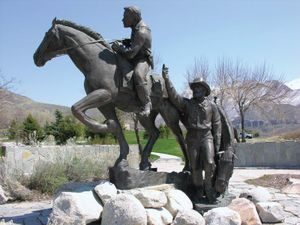

The math was brutal. Every single letter the Pony Express delivered bled the company $13. That wasn’t just a bad quarter. That was a death sentence written in red ink.
Russell, Majors, and Waddell were hemorrhaging money. The Butterfield Overland Mail Company wasn’t faring any better. Their route to California had been choked off by Confederate forces, leaving them stranded and insolvent. The government saw a chance to consolidate failing assets. They merged the two operations. Russell, Majors, and Waddell handled the leg from St. Joseph to Salt Lake City. Butterfield took the Salt Lake City to Sacramento stretch. It was a bureaucratic lifeline. It didn’t work.
The end came not with a bang, but with a spark. October 24, 1861. Two telegraph wires were connected. Instant communication. The East and West coasts were finally linked. The Pony Express announced its closure two days later. They kept going into November, just to clear the backlog of mail they had in hand. But the era was over.
The Numbers Behind the Myth
People talk about the Pony Express like a romantic adventure. It was. It was also a logistical marvel that defied gravity.
In its short 18-month lifespan, the service completed 308 runs. The horses and riders covered roughly 616,000 miles. That’s 991,000 kilometers. Think about that distance. It’s enough to circle the Earth more than 30 times.
The reliability was startling. Out of 34,753 letters delivered, only one mochila —the waterproof leather mail bag—was ever lost. That’s a failure rate so low it feels almost impossible. The riders were fast. They were relentless. But speed doesn’t pay bills.
Why It Matters Today
The primary failure of the Pony Express was simple: it couldn’t make a profit. The infrastructure was too expensive. The terrain too harsh. The technology too primitive.
But look closer.
The founders assembled this service under conditions that would break most modern logistics chains. Extreme weather. Hostile territories. Financial ruin. Their courage and ingenuity turned an impossible route into a reliable artery.
The Pony Express wasn’t just moving paper. It was keeping California and the rest of the West tethered to the nation’s pulse. News traveled faster than ever before. The country was hurtling toward war. The Pony Express provided a thread of connection when isolation was the only other option.
It filled an urgent need. It played a pivotal role in the development of the United States. And when the telegraph made it obsolete, it didn’t fade away quietly. It was replaced. Instantly.
The wires hummed. The horses stood still. The legacy remained.


