



Microsoft wants your attention. Not the kind that comes from spreadsheets or cloud infrastructure, but from creative output. Tuesday changed that dynamic.
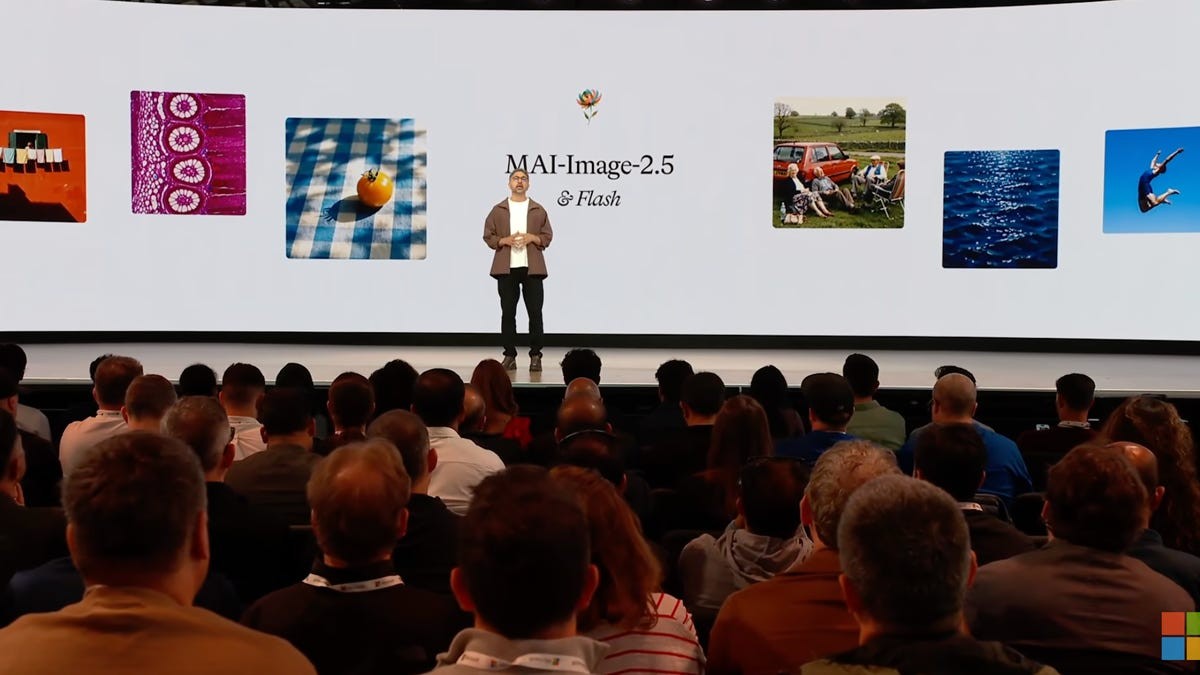
The tech giant dropped two new text-to-image AI models, MAI-Image and its high-speed cousin, Flash. The timing wasn’t accidental. This launch occurred right alongside Google’s dominant Nano Banana models, creating an immediate face-off for supremacy in AI image generation.
Who actually wins this round?
If you picture Microsoft, you likely think of enterprise tools, not artistry. But the new MAI-Image 2.5 models aim to dismantle that stereotype entirely. These aren’t just novelty toys. They are precision instruments.
Microsoft’s CEO for AI, Mustafa Suleyman, was explicit about their purpose. “They give you precise editing with incredible consistency,” he noted during the Build keynote. The message is clear. They aren’t trying to beat Nano Banana at making weird, surreal landscapes. They are trying to beat it at editing.
And on that specific task? Microsoft claims the crown.
Beating Google on Precise Editing Control
Google’s Nano Banana series has reigned over the AI image space since its mid-2025 debut. The results are stunningly good, if not occasionally concerning due to the prevalence of slop and deepfais.
But Nano Banana has a weakness. Microsoft points to benchmarks on the Arena AI leaderboard where its MAI-Image model takes the top spot specifically in editing capability.
Why does this distinction matter?
Generating a new image from scratch is one thing. Tweaking an existing photo with surgical precision is another. The benchmarking shows MAI-Image outperforming the Google equivalent in consistent, faithful edits. You change one detail, the rest of the image stays intact. Google sometimes drifts, warping unrelated pixels. Microsoft’s model keeps the structure rigid while allowing flexible modification.
However, there is a caveat. Microsoft holds the silver medal overall.
OpenAI’s GPT-Image remains the undisputed leader in these broader tests. So Microsoft isn’t claiming total victory. Just the win for editors and designers who need control over nuance.
A Flood of New AI Capabilities from Build
Image generation was only a slice of Tuesday’s pie. Microsoft unveiled seven new models total.
This wasn’t just a marketing blitz. It was an infrastructure expansion. The lineup included:
- MAI-Thinking-1 : Their first reasoning model. These models pause. They iterate. They “think” longer to solve complex queries. It’s about depth over speed.
- Advanced Voice Models : Upgrades for transcription and speech synthesis.
- Coding Assistant : Optimized for GitHub, which Microsoft owns, creating a tighter loop for developers.
The underlying theme of the conference, however, wasn’t just models. It was “agentic AI.”
Suleyman hinted heavily that the future of computing is about systems that act autonomously. Images, text, and code aren’t just outputs. They are assets for agents to use and manipulate. The MAI-image model is built with that autonomy in mind. It doesn’t just show you a picture. It prepares a picture for your digital assistant to deploy elsewhere.
Access Over Raw Power: PowerPoint vs. Google Slides
Benchmarks tell only part of the story. The other part is integration.
You don’t choose an AI tool in a vacuum. You choose it based on where your workflow lives. If your life happens in PowerPoint, Microsoft’s immediate rollout is a massive advantage.
The new MAI-image tools are already in PowerPoint and Foundry. They are rolling out in OneDrive right now. For the millions of corporate users stuck in Microsoft 365 ecosystems, friction is near zero. They don’t have to leave their slide decks to generate or edit visuals.
If you use Google Slides, you have Nano Banana. The decision becomes a lock-in question rather than a capability contest.
For most users, ease of access dictates adoption more than marginal differences in benchmark scores. Will you really open a separate tab for higher-fidelity edits if you have to log into a new platform? Probably not.
Enterprise Rights and Real-World Usage
Here is where it gets tricky for commercial creators.
Microsoft notes that usage rights vary. If you are generating assets for business use, the enterprise plan structure matters. The AI leaderboards show raw technical ability, but legal protection shows actual commercial viability.
Nano Banana dominates the individual creative space. But Microsoft’s enterprise focus targets teams already paying for security and compliance. For a corporation, knowing exactly who owns the edited image—and whether the underlying AI respects copyright laws—can outweigh a 5% bump in benchmark fidelity.
So, is Nano Banana dead?
Absolutely not. For solo creators and designers who want maximum creative freedom from a text prompt, the Google model remains a powerhouse.
But Microsoft is forcing a pivot. The conversation is shifting from “which model creates cooler pictures” to “which model edits them without breaking them.”
The winner is the user who doesn’t have to think about the backend at all.
Does raw creative genius still mean the most, or has the industry finally moved on to pragmatic, controllable utility?
Maybe it doesn’t matter which model you use. Maybe it just matters which one loads the fastest in your browser while the server room behind you burns through compute power to dream up a sunset you’ll delete in an hour.