



It felt less like a film industry gathering and more like a tech cult retreat. AI on the Lot. That was the event, held last week at Amazon MGM Studios in Culver CA. Nearly 2,500 heads packed the venue, buzzing about artificial intelligence’s promise to save Hollywood.
Most panels ignored the human element. They skipped creativity, identity, intent. The impact on real people? Often an afterthought.
But the side chats? Those were different. That’s where you found Luke Arrigoni. He’s the CEO of Loti AI. His job is simpler than it sounds: scour the web for fake faces. Take them down. It is a critical role for anyone looking to protect their likeness online.
I talked to him outside the Culver Theater to see how one man’s fight against digital forgery intersects with the wider AI arms race.
The “Search, Find, and Destroy” Model
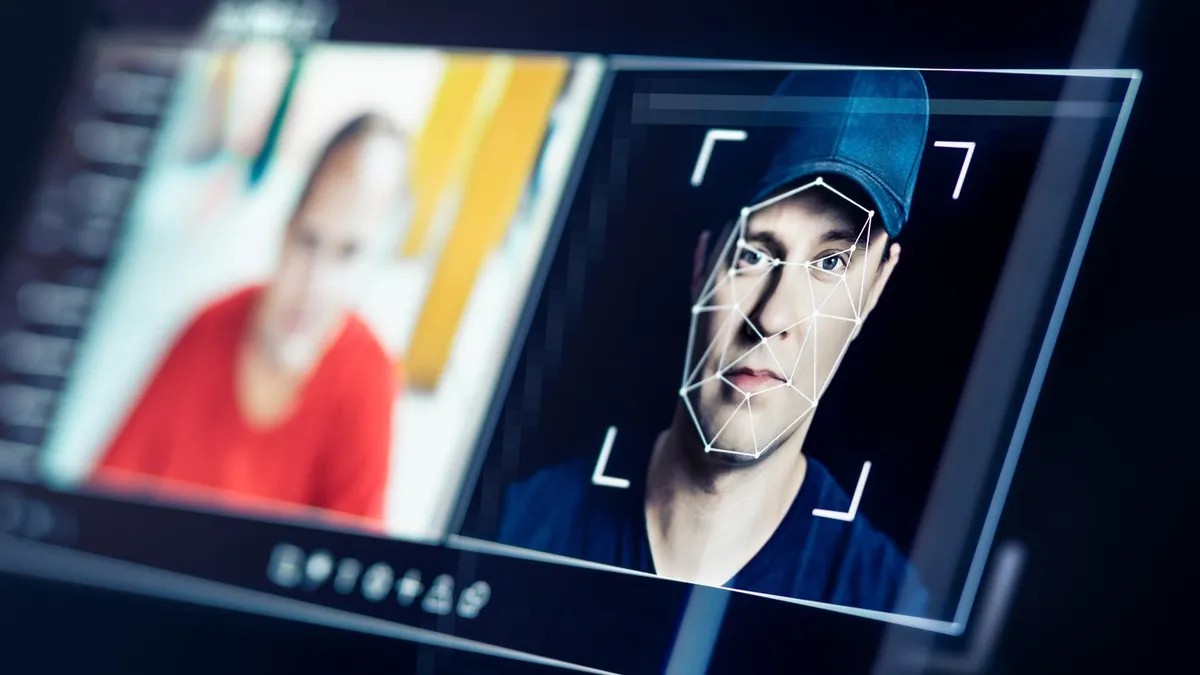
Arrigoni’s approach is aggressive by necessity. Loti AI doesn’t just wait for takedown notices. They scrape the entire internet. Then they deploy facial and voice recognition tools to flag unauthorized content.
Think of it as search, find, destroy.
They hunt everything from non-consensual explicit material to scammers and companies illegally Photoshopping celebrities’ faces onto T-shirt merch. Their strength isn’t just spotting the fake—it’s removing it fast.
We use face recognition and AI to decide if content lives or dies. Realistically? We are a human tool.
This goes beyond defense. There is also offense. Arrigoni’s system works as a clearinghouse for generative AI companies. Before they can use a specific person’s likeness in their models, developers can send requests to Loti AI for real-time clearance.
Got the go-ahead? Good. Skip the permission slip? Arrigoni deletes the output and tells the creator to cut their losses. It is the rail system that keeps the trains on track. You do not need a lawyer, a subpoena, or law enforcement involvement to start this process. Sign up, and their systems begin crawling the web for you within ten minutes.
Why Strike Leads to Protection Services
Arrigoni did not set out to be an AI policeman. He started by tackling revenge porn. Nonconsensual intimate imagery. It is a grim, terrible business that required constant takedowns.
When the Screen Actors Guild-American Federation of television and Radio Artists (SAG-AFTRA) went on strike in 204, the stakes changed. As a member of the union myself, I felt that existential threat deep in my bones. If an actor’s face could be cloned and sold for cents, their craft—and their paycheck—meant little.
Arrigoni reached out to big talent agencies. Creative Artists Agency. William Morris Endeavor. He asked a straightforward question: Would you like a service that ingests swathes of the internet and deletes violations against your clients automatically?
The response was unanimous. A no-brainer.
This shift marked a move from reactive damage control to proactive brand protection. But it highlights a darker truth: AI tools on platforms like TikTok have made generating misinformation or fake explicit images frighteningly easy. High-profile incidents involving Elon Musk’s Grok AI proved that guardrails are either nonexistent or easily broken.
Can AI Ever Create the Best Art?
If deepfakes become perfect, and cheap AI content floods the market, what is left for us? Arrigoni believes the market will correct itself, though he admits the transition will be messy.
We are currently drowning in mediocre content because generative models predict the statistical average. Most published human data sits in the 50% to 75% quality range. AI converges there too. It has no mechanism for reaching the top 1%.
AI cannot replicate the weird, the out-there aesthetic that defines top-tier artists.
He compared it to watching movies. If you crave standard, generic blockbusters, AI can replace that. It will flood the channel with competent but soulless clones. But if you want something with a unique voice—a Christopher Nolan vision or a Jordan Peele twist—you will stick with humans. That distinction defines the future of value in the attention economy.
The risk, he warns, is not just fake videos. It’s a degradation of truth. It’s an education gap. It takes a generation to fix a generation’s ability to think critically. If you start teaching kids in kindergarten how to spot synthetic media, we might stand a chance.
Fighting Fire With Fire
Arrigoni admits to a healthy level of dread regarding where this tech is heading. Tech companies naturally optimize toward extreme versions of themselves until caution and guardrails disappear. Recommendation algorithms maximize engagement, not well-being. They push content because it keeps you scrolling.
Loti AI refuses that impulse.
He insists his investors are aligned with this restraint. They prioritize ethical guardrails over capturing every possible transaction. It is a difficult pitch when the market rewards speed above all else. More people need to say they know they could take the “next step” of unchecked exploitation—and choose not to.
On a personal level, the concern bleeds into parenting. Arrigoni has a fifteen-year-old son. He does not hide his phone. He does not try to build walls the boy can simply climb. He asks a different question: why put in the effort?
The honest answer is hard. He explains that while cheating via AI feels easy now, doing the hard work builds literacy. Knowledgeable people connect better. They attract partners more easily. They navigate jobs with an advantage. It makes life smoother in the long run.
You can cheat if you want. I promise putting in the work makes everything else easier.
We live in an era where anyone can claim to be a doctor using ChatGPT, or pass homework using a chatbot. The line is already blurry. In two years, distinguishing fact from fabrication will be impossible for most people. The solution is not better software. It is better judgment. It starts with parents. It starts with refusing the easy path, even when the rest of the world is rushing toward the cliff.
Arrigoni sees himself as a necessary friction. He is blocking the slide into a fully synthetic world, hoping someone is watching the screens and remembering what reality looks like.