We used to accept black and white business documents as they were. Commercially available laser printers are strictly monochrome beasts. Those days are over. Color laser printers currently dominate the market, but the mechanics behind them are more complicated than you might think.
The operating principle of a color laser printer is the same as that of a black and white printer. The difference is repetition. It’s not just about printing once. It rotates four times during the entire printing process. Cyan succeeded on the first try. One is magenta. One is yellow. There is also black.
This combination of toners, the device can produce a full spectrum of colors. But how do you do it without melting the paper or disturbing the optics? There are three main architectural approaches, each with different speed, cost, and complexity tradeoffs.
Rotary drum method
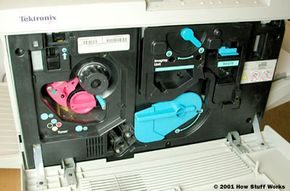
The most common model of mid-range office machines uses rotating wheels. This carousel holds four separate toner and developer units.
The order is:
1. The printer creates an electrostatic image of the first color.
2. Insert the corresponding toner cartridge.
3. Spread this layer on the paper.
4. The wheel rotates to the next unit.
5. Repeat this process three more times.
This method works well for manufacturers, but can be time-consuming for users. Paper remains in the machine when parts are moved. If the cartridge runs out, you can replace it. The remaining wheels continue to spin.
Intermediate method
Some models take a different route. Instead of applying the toner directly to the paper in stages, these printers first add all four colors to an intermediate plate first.
Think of it like a stamp. The printer creates a perfect, full-color image on a rubbery belt or plate. The entire composite image is then transferred to paper at once.
This reduces the mechanical wear of the paper path. It also speeds up printing because you don’t have to stop and wait for each color layer to dry or adhere separately. However, the intermediate belt is a consumable part and wear over time, increasing long-term maintenance costs.
The Dedicated Assembly Line
High-end business printers often skip the rotation and the plate entirely. The unit is assembled like a factory. They feature a complete printer unit for each color.
This means that every single color has its own:
– Laser assembly
– Imaging drum
– Toner system
The paper simply passes over these different drum heads in a straight line. This is an assembly line. The cyan drum adds its layer. The magenta drum adds its layer. The paper collects all four colors as it passes through the machine.
This type of architecture is expensive to build. Requires more space and power. However, it offers the best reliability and speed. There are fewer moving parts in the mixing process. The risk of misalignment is lower. If one color unit fails, the other color units usually continue to function and can print in grayscale while waiting for a replacement.
Why the black channel is important
You may be wondering why black is considered a separate color channel. It isn’t. CMYK models use black for clarity and contrast. Mixing cyan, magenta, and yellow individually produces a muddy brown color.