


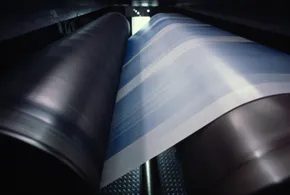
You would assume the digital age would kill the printer. Screens are everywhere. But eyes get tired. Reading text on glass is harder than reading text on paper. So we still print. The problem isn’t the paper. It’s the mess. Ink is expensive. It clogs. It dries out. It stains your fingers.
It would be nice to just leave it out.
Some technologies already let you do that. Whether it is truly “inkless” depends on your definition. Real ink usually has a dye or pigment in a liquid. A dye dissolves. A pigment floats. Both need a carrier like water or alcohol. You can skip all that.
Old methods didn’t need liquid. Engraving carves directly into hard surfaces. It looks great on metal plaques. It doesn’t work on a sheet of A4 paper. It is slow. It is costly. Hot foil printing presses metallic film onto a surface using heat. The result is shiny. The process is not scalable for everyday documents.
Newer tech changes that. It prints on paper. It is cheap. It uses no liquid ink.
The Metal Pen Solution
Some tools don’t even need a cartridge. Grand Illusions makes a pen that writes with a metal alloy. There is no ink reservoir. The tip transfers a tiny amount of metal to the page. The look mimics a graphite pencil.
The difference is durability. Pencil marks smudge when you touch them. This metal alloy stays put. It resists smearing. You get the tactile feel of analog writing without the cleanup.
Modern Inkless Printing Methods

我们已经绕了一圈了。 苏美尔人首次将芦苇压入粘土四千年后,我们正在努力消除从那时起就定义了印刷的墨水。 印刷机通过大量生产文本彻底改变了人类历史,但现代技术现在正在剥夺这一重要组成部分。 从方程式中去除墨水不仅会改变我们的打印方式,还会简化机械,降低维护成本,并缩小硬件本身。 它简化了机械,降低了维护成本,并缩小了硬件本身。
热敏打印和热的作用机制
考虑一下热敏传真机。 这是过去办公室的遗物,但它的机制却非常高效。 没有墨盒泄漏。 不会堵塞打印头。 该设备只是将热量施加到特殊的热敏纸上。 热量会在纸张涂层中引发化学反应,使热敏头接触的地方变黑。 就是这样。
这种方法创造了一种比喷墨同类机器维护成本更低、更耐用、体积更小的机器。 一些热敏变体使用色带而不是热敏纸,将蜡基色带熔化到页面上以创建图像。 该机制比液体墨水所需的精确喷嘴更不复杂,这意味着损坏的部件更少。
复印机从来没有使用过液体墨水
如果您认为复印机依赖墨水,那您就错了。 传统复印机使用称为墨粉 的干燥粉状材料。 这个过程不再是绘制页面,而是更多地涉及静电和化学。
复印机内部的感光鼓带有静电。 光源扫描原始文档,对没有图像的区域(空白区域)进行放电,并在有图像的区域(黑色文本或线条)留下电荷。 然后,带负电的墨粉颗粒被吸引到感光鼓上带正电的区域。 墨粉图像形成后,就会被转印到一张新纸上。
最后一步是熔合。 加热和加压使碳粉中的塑料熔化,将其永久粘合到纸纤维上。 这就是为什么影印的页面有时会感觉轻微凸起或蜡状。 它不是涂层;而是熔化的塑料复合材料。 它是一种熔化的塑料复合材料。
Zink与彩色打印的微型化
Thermal and toner systems are mechanically simple, but they do not replace ink in any way. People still prefer the archival quality, water resistance and sharp contrast of standard inkjet or laser prints of important documents and photos. The ink does not fade even in sunlight. 热敏打印则会褪色。
However, researchers are developing inkless processes to counter this advantage. Zink, short for Zero Ink, introduced a breakthrough product in 2007 that changed the landscape of mobile printing.
The zinc paper has three layers of color crystals: cyan, magenta and yellow. 打印机不喷射墨水。 Instead, the thermal head is used to heat certain areas of the paper with variable intensity. The heat activates the color crystals in the exact proportions needed to create the final color. 这是一场精确的热舞。
This technology allows for significant size reduction. Since there is no need for ink cartridges, print heads or clogged nozzle cleaning devices, the printer itself can be made very small. Zink has partnered with Polaroid, the brand that defined instant photography, to launch an inkless photo printer. The final device is roughly the size of a deck of playing cards. This is a huge change in the way people store and print memories on the go.
施乐的可擦除无墨打印策略
Xerox, synonymous with office copiers, approaches it from a completely different angle. Their inkless method is very different from thermal or zinc methods.
The industry standard for inkless printing has always been at the expense of durability. 热敏收据会褪色。 Zink照片会随时间变色。 Xerox is trying to turn this weakness into a feature. They develop ink-free printing that is specially designed for easy erasing.
At first glance, this may seem contradictory. Why do we need disappearing prints? The usefulness is revealed in certain workflows. Consider reusable stickers, temporary signs or documents that need to be updated frequently without wasting paper. The same paper can be used dozens of times if the “ink” can be wiped off or neutralized.
This changed printing from a permanent act of creation to a temporary means of communication. 这并非关于替换家用照片中的墨水
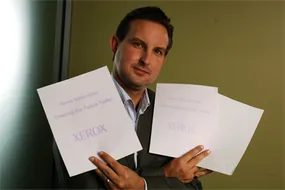

Most office workers treat paper like a disposable battery. Print a memo, read it for an hour, toss it. It’s wasteful and expensive. Xerox is trying to break that cycle by developing a sheet of paper that needs no ink at all. It’s fully reusable. The trick lies in a coating called heliochromic chemical agents. You know the type from photochromic sunglasses that darken in sunlight and clear up indoors. Xerox applies these same light-reactive chemicals to standard paper stock.
How UV Light Replaces Ink Cartridges
Traditional printers burn ink into fibers. This printer does something else. It zaps the paper with ultraviolet light. The UV hits the coated areas, causing them to darken. The result looks like a standard printed page, but there’s no ink. There’s only a photochemical reaction. You can use the document, sign it, slide it across a desk, and then hit it with a different wavelength of light to erase it completely.
The current prototypes have a flaw: the text fades on its own. Without intervention, the image disappears within 16 to 24 hours. That’s not ideal for long-term records. Xerox engineers are tweaking the chemical mixture to extend that lifespan. The goal is stable ink that only vanishes when you actively erase it. This would make the paper truly reusable on demand.
Why This Matters for the Modern Office
We talk about paperless offices, but we rarely achieve it. Printing remains the default for drafts, approvals, and quick notes. If you can print, use, and erase indefinitely, you stop buying toner. You stop buying reams of paper. The environmental impact drops significantly. The cost per page approaches zero after the initial hardware investment.
It’s not just about saving trees. It’s about workflow. No more waiting for the printer to warm up. No more jammed trays filled with empty cartridges. Just light and paper.
The Bigger Picture of Print Technology
This technology sits at the intersection of chemistry and optics. It raises questions about how we define “printing.” Is it still printing if there are no consumables?
For those interested in the mechanics behind everyday office tools, here are some deeper dives:
- How Paperless Offices Work – The shift from physical to digital workflows.
- How Thermal Fax Machines Work – Heat-based imaging without ink.
- How Inkjet Printers Work – The physics of liquid droplets on paper.
- How Photocopiers Work – Electrostatics and toner fusion.
- How Internet Faxing Works – Digital transmission of physical documents.
If you’re tracking the companies leading this charge, keep an eye on Xerox and Zink, which has been exploring similar instant-print technologies using heat and sublimation.
The science behind the colorants comes from research like Steve Evans’ work on dye mixtures at the Cornell Center for Materials Research. Meanwhile, early reports from The Future of Things detailed Xerox’s initial inkless printer prototypes back in 2007. The tech has evolved since then. The chemical stability is improving. The applications are widening.
Will it replace your laser printer? Maybe not tomorrow. But the idea that a document can live and die by a


