


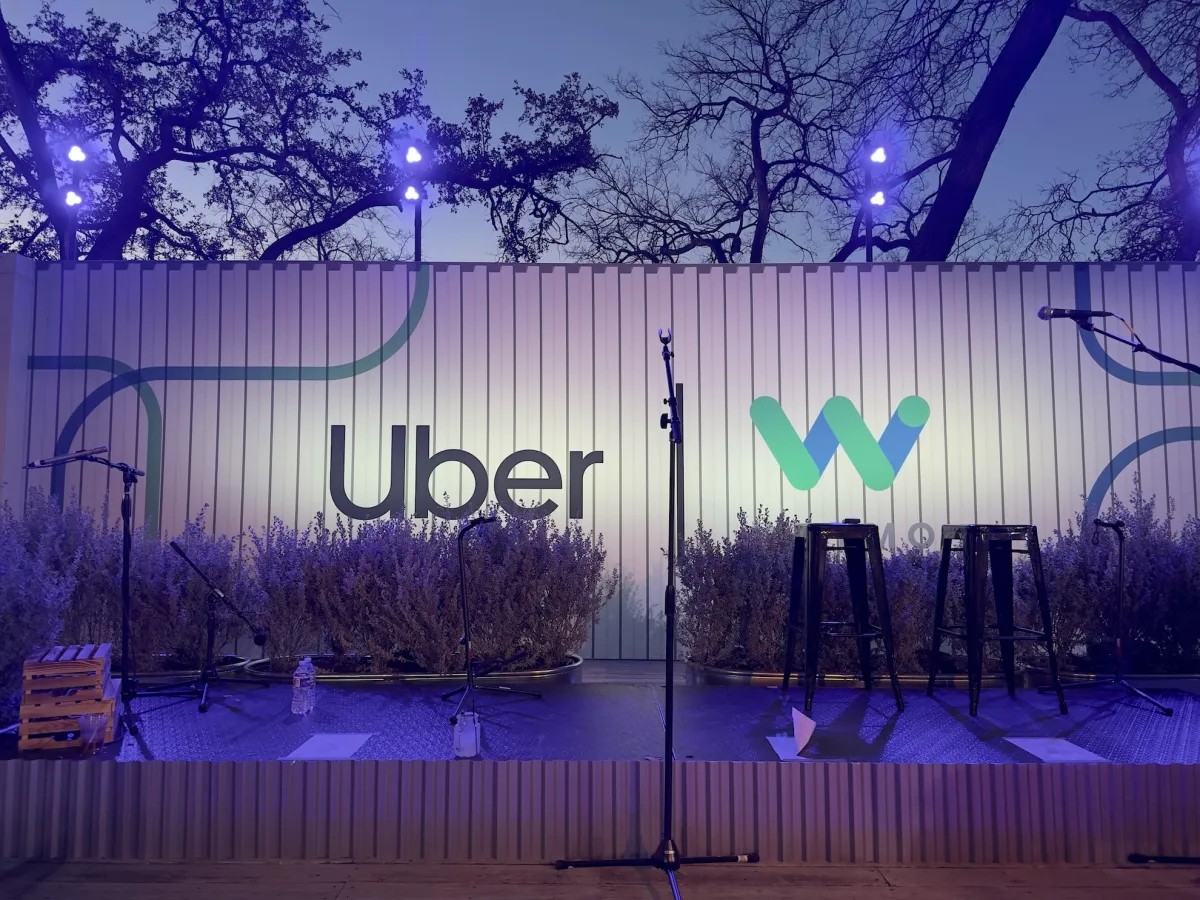
The partnership between Uber and Waymo isn’t just cooling off. It’s fracturing along policy lines.
I predicted this split weeks ago. Sources confirmed it. I dug through correspondence Uber sent to the D.C., Council. They’re digging in. The issue is a proposed bill for Washington, D.C. It would allow autonomous vehicles (AVs) to operate here.
Uber hates it.
Waymo? It’s one of the few companies that actually likes the legislation.
Why the split? It’s about monopoly power.
Uber argues the D.C. bill would displace human for-hire drivers. It would hand the market to Waymo as a de facto monopoly. Uber wants a “hybrid” model instead. They want robotaxis to operate on ride-hailing networks alongside human drivers.
Insiders say this hybrid approach has little chance of law. It’s a long shot.
But imagine if it passed. Waymo would face a nightmare scenario. Either put its robotaxis on apps like Uber. Or employ human drivers next to fleets of AVs. That would mean burning hundreds of millions of dollars on a development strategy designed to eliminate human drivers.
The D.C. Council Hearing
The hearing last Monday was a clash.
Lyft, Tesla, Uber, and WayMo were there. So were disability rights advocates. Local business groups. Labor unions. Highway safety orgs. And think tanks. Dozens of them.
My takeaway from the public testimony and the texts that followed? Most of the industry opposes the bill. Waymo is the exception.
Tesla’s senior policy adviser, India Herdna, echoed concerns I’ve heard elsewhere. She cited specific objections. The 180-day mandatory testing requirement. The 250,000 miles threshold. The $1 million application fee. The $5 million permit fee. And the $0.15 per mile tax.
Tesla, along with others, argued for reciprocity. Miles accumulated in other jurisdictions should count. Otherwise, why test in California or Arizona?
Waymo’s Head Start
Waymo is already here.
It has been testing in Washington, D.C. with human safety operators. It has surpassed the 180 days and 250,00 miles requirements.
If the bill passes as written today, Waymo wins. It enters the market with a six-month head start on everyone else. That’s not just an advantage. It’s a moat.
Big Deals in Mobility
Uber is cementing its status. It’s more than a ride-hail giant now. It’s a delivery powerhouse.
A $14.8 billion deal with Germany’s Delivery Hero changes everything.
If it closes—and it will take time to clear regulatory hurdles—Uber gets access to nearly 100 new markets. Europe. Middle East. Latin America. Asia. The delivery footprint doubles.
Delivery Hero is selling its business in 14 other markets. Those go to New York-based SSW Partners for $1.6 million. Places where Uber Eats already operates.
Other deals caught my eye.
Self Inspection, a San Diego startup disrupting vehicle inspections, raised $10 million. Sheryl Sandberg’s family office led. U.S. AutoForce and Westlake Financial invested strategically. Costanoa Ventures, Rebellion Ventures, BrightCap Ventures joined in.
Senra is modernizing wire harness manufacturing. It raised $65 million in Series B. Co-led by Lowercarbon and Interlagos. General Catalyst, Sequoia Capital Andreessen Horowitz, and Founders Participated.
Zepto, the Indian fast-delivery startup, is seeking an IPO valuation below its $7 billion peak. Bloomberg cited anonymous sources on this drop.
Tidbits
Chip Motors, a Miami startup, revealed a low-speed EV. It’s small. Designed for short errands and families. It has some automated driving capabilities.
The Los Angeles Police Department is ending its deal with Flock Safety. The surveillance company uses thousands of license plate cameras to track vehicles.
Lucid Motors pushed back hard on bankruptcy rumors. A report claimed the EV maker was considering Chapter 11. False. The CEO, the comms team, and an SEC filing all denied it. The stock dropped more than 50% intraday on Tuesday. It has since recovered. Now trading 28% higher.
Lyft CEO David Risher calls his company the “Good Uber.” At least according to Wired.
Manual transmissions are dying. Preliminary government data shows just 0.6 percent of new vehicles sold in the U.S. in 20, 25 had stick shifts. I own two manual vehicles. Do I drive a unicorn?
The National Transportation Safety Board weighed in on a Tesla crash. A driver hit a house in June. The accelerator was pressed to 100%. It overridden Full Self-Driving (Supervised).
San Francisco Mayor Daniel Lurie urged regulators to toughen AV rules. Waymo robotaxis got immobile during heavy July 4th traffic. They ran out of power. They blocked key streets. Lurie outlined four requirements. Robotaxi companies must “perform reliably” during extraordinary events.
SpaceX aborted the second Starship launch. Just moments after the booster ignited in South Texas.
Zoox issued a software recall. A robotaxi got confused by smoke from an emergency fire scene in June.
One more thing…