



Our devices have shrunk. They speed up. They get stronger. But at some point in the update, the old version starts to look tired. They get a technical comb-over. Or they might disappear into history and be left to rot in a flea market trash can.
Inertia is a powerful force. Likewise for laziness.
We don’t keep old devices just because they are better. buying new stuff costs money. And moving boxes is a hassle. And moving boxes is a pain. But sometimes older devices work better. Or feel better. Think vinyl records. They are heavy. They are fragile. It won’t fit in your pocket. But the sound is warm. The ritual is tangible. The artistic weight of a pin drop cannot be recreated in an MP3 file.
Most tech isn’t so lucky.
Pocket electronics are the biggest victim of modern smartphones. We now have supercomputers in our jeans. You can take photos. Save the video. Play music. It navigates the city. Why carry a dedicated camera? A camcorder? A tape recorder? A stack of paper maps? This seems ridiculous. It’s unnecessary.
However, some technologies refuse to die. They are tenacious and cling to companies and users who seem stubborn or completely out of touch. These products make you look socially obsolete. Technologically tone-deaf.
The countdown starts here.
10: Origami navigation nightmare
Paper maps used to be the gold standard. If you try hard, you won’t get lost. I just did the damn thing. now? Folding a map correctly is an art form that most people forget. Even if you could, trying to read a 2D representation of a 3D world while driving 60 mph is a nightmare.
It’s big. They tear. They get wet. When the sun hits the hood of your car, good luck finding that little street. There’s a reason smartphones replaced them. GPS is real-time. It updates. It reroutes around traffic. It tells you exactly when to turn.
But paper maps still exist. In the car. Inside the backpack. If the battery falls into the hands of a person who does not trust it. It brings a sense of security that screens don’t have. A dead battery is a panic attack. A folded map is just a piece of paper.
This is ineffective. It’s very messy. It’s still in the glove box though.


Digital replacement of paper maps
It has been leaking slowly since the turn of the century. Paper maps did not disappear suddenly, but with dwindling sales. By 2003, the writing was already on the wall. The GPS unit starts reaching the highway and your smartphone starts calculating the route.
Paper sales dipped. Hard.
For example, the state of Washington has completely stopped printing state maps. It wasn’t a philosophical stance against cartography. These are budget cuts. If you can’t justify the cost of ink and paper, you stop.
Why is it hard to survive on Analog Maps?
The key issue is practicality. Physical maps are static. It doesn’t move. Not updated. If you take a wrong turn, you are stuck with the wrong turn until you find a place to refold the paper.
Gadgets offer something paper never can: real-time correction.
Turn-by-turn instructions change the relationship between the traveler and the terrain. I stop looking at the scenery and stare at the box in my hand. Instead of the map being a window to the world, it becomes a manual for feet and wheels.
“Paper devices can’t compete with devices that recalculate your route when you take a wrong turn.”
The vulnerabilities of Digital Dependency
Here’s a counterargument. It is very strong.
You could call it paranoid. But let’s think about infrastructure. GPS relies on satellites. Cell phone towers depend on electricity. Both are based on a grid that is far more fragile than a sheet of coated stock.
If a solar flare hits. If cyber warfare takes out the navigation servers. If the power goes out for weeks.
A badly folded old paper map in your glove compartment is the only thing keeping you from wandering into a swamp. No signal is needed. No software updates are required. It just “is”.
The end of an era
We are losing our spatial awareness. We trade the ability to see and understand an entire continent for the ability to follow a blue line.
It’s efficient. Faster. It is very convenient.
Is it better? Maybe. But it is also fragile. When your screen goes dark, you’ll be glad you kept that old atlas. Even if the folds are deep. Even if the ink is faded.

The End of the Analog Alarm
We are witnessing the disappearance of analog alarm clocks. It was a slow and silent shutdown. The pterodactyl had no hope of defeating the meteorite. This plastic box didn’t stand a chance against the smartphone.
Let’s think about math. For $10-$20 you can buy a device that does exactly what you have in your pocket. Better. Mobile phones have speakers that produce very good sound. No static. No crackle. Really clean sound. This is the most important thing.
No glowing faces on your phone staring back at you in the dark.
That flashing red LED. The one that pulses every second. It’s more than a nuisance. This is a sleep killer. Research shows that even low light levels can disrupt your circadian rhythm. That little light? It wakes you up. Your phone stays dark until you need it. Then it wakes up. Then it sleeps. There is no staring contest.
Blackout? Your phone won’t panic. It doesn’t blink like crazy. Battery backup is not required. Alarm clocks use 9 volt batteries which slowly leak acid, take up space and do nothing until the mains goes out. It’s not good anyway. Your phone? It’s already charged. Always ready.
Manufacturers are already seeing the writing on the wall. literally. The display is clear. They’re cutting production lines. Closing factories. Why make products that everyone already has in their pockets? The margin is thin. Demand disappears.
Why Smartphones Killed the Clock
It’s not just convenient. This is integration. Alarms are no longer separate events. It’s part of your morning routine. Sync with your calendar. Pick up weather information. Connect to a smart home. Can a $15 clock radio do that? No, it rings. that’s it.
Think about the user experience. I set an alarm on my phone. You snooze. You hit dismiss. Check the time. Check the news. You check the commute? All in one user interface. There is no need to use separate devices. No need to search for batteries in the dark. No remembering to wind it.
Your smartphone does not blink during a power outage. The smartphone also does not require a 9-volt battery.
The advantages of the hardware are enormous. Lithium-ion batteries last years. Nickel Cadmium or Alkaline Backup? They fall apart. They leak. They fail. Smartphones are independent ecosystems. The alarm clock is a relic.
The reality of the market
For manufacturers, the signal is loud and clear. Sales are declining. Margins are shrinking. Why compete with Apple and Samsung? You can’t match their software. You can’t match their distribution. They sell toys. People want tools.
Some niche markets still exist. Old ways die. People like the tactile satisfaction of turning the dial. They like simplicity. But simplicity is a luxury. Most people don’t want simplicity. They want integration. They want everything in one place.
The industry knows it. Production wanes. The warehouse is being emptied. Soon, finding a new clock in thrift stores and online stores. The mainstream shelf? Empty.
What does this mean for you?
No need to buy an alarm clock. Use your phone.
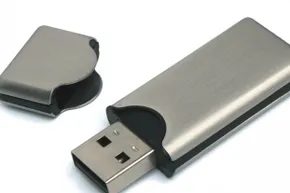
The rise and fall of #USB memory sticks
CDs dragged. Direct cable connections is a nightmare. Then came the USB flash drive. It is very fast. You can write. Any computer from the last 20 years would recognize it instantly. It is the perfect bridge between physical media and digital convenience.
But ubiquity killed it.
You can store gigabytes on a piece of plastic so small it lost with a set of keys. Transfer speeds is much faster than optical media. Files can be stored for months or minutes. It was portable storage perfected.
Then came cloud storage.
Services like Dropbox have changed the game. Why carry something that is easy to lose? You don’t have to worry about drive failure or port damage. All you need is an internet connection. The files exist in the ether. It’s available when you need it, whether you’re at your desk or anywhere in the world.
The flash drive didn’t fade out. It was superseded. Its brief reign at the top of the tech food chain ended sooner than anyone expected.
Why Physical Drives Are Dying
The convenience factor is too high for most users. You no longer need to carry around small, durable devices to meet most of your data needs.
- Accessibility: Cloud services can be used from any device using a browser.
- Security: No physical object to steal or lose.
- Cost: Many cloud tiers are free for basic needs.
Flash drives are still useful in certain niche markets. Air-gapped systems. Legacy environments. Or if you need to transfer terabytes of data without waiting for an upload. But what about the average user? It’s already obsolete.
Gone are the days when a stick was attached to move pictures. Not with a bang. Just a quiet disconnect.

The slow and fragile death of physical discs
The disc in the box is basically a corpse reawakened from its worst nightmare. It refuses to die. Of course, it can store gigabytes of data. I was feeling good. I feel like I’ve reached my limit.
They are also easily destroyed. If you’re handy, you can throw away a $20 Bob Dylan record at least once. You may never be able to play normally again. I’ll skip it. I stammered. Failed.
they are very slow. Insert the disc into the drive of your computer or game console. Wait. Wait a minute. I’m making coffee. Maybe then the disc is ready for actual use.
The iPod and other digital music players accelerated the development of CD music players. Flash media and the cloud also promote the development of computer CD-ROM drives. CD drives are now more of an accessory than a necessity for computers. Being able to stream all the shows and movies we bought in physical form is undermining the DVD and Blu-ray market.
Goodbye disc. Good luck.
6: PDAs are DOA
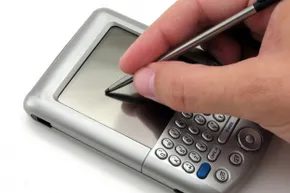
The rise and fall of the #PDA and the resurgence of dial-up
Now let’s laugh. It’s hard not to. There was a time, not so long ago, when packing a calendar, contact list and voice memos into a brick-sized handheld seemed like magic. These are PDAs. Mobile data terminal. These are considered the future of productivity.
For short glowing windows they do.
These days, when people say “PDA,” they mean something entirely different. Show your love in public. Equivalent technology? It disappears. Deleted. These devices must disappear from the face of the earth before they disappear completely from memory.
There is one exception. stock. hospital. industrial estate. In such a tough and practical field, PDAs survive as professional tools. Employees don’t need to use a touch screen to access social media. You need to scan the barcode. Track your inventory. Save the information. Quickly.
These durable devices are cheaper than tablets. Make it simpler. They lack “extra features” that drain battery power and confuse users. they just work. But what about the rest of us? Never forget a pen. In the next 10 years, we’ll be staring at shiny glass screens and wondering where we lost haptic feedback.
5: Telephone network connection
Before high-speed fiber, before cable modems, before Wi-Fi was in every coffee shop, people screamed.
If you were a kid in the late 90s or early 2000s, you probably know this sound. That handshake. dial tone. This is the entrance fee to the World Wide Web.
It’s not just slow. It’s painful.
It may take a few minutes for the entire image to load. 1 Do you want to download a song? Forget it. Connections are sparse, dependent on the wired network and monopolized by one user. When mom picks up the phone, you’re offline. period of time.
Why hold back?
Because there is no other option. No internet. Not at all.
Service providers like AOL and CompuServe dominate. They sell packages. $19.95 for 10 hours per month. People were fighting for the last few hours. Teenagers stayed up until three in the morning, downloading kilobytes of MP3 files and praying the line wouldn’t go down.
This is important because it defines our relationship with technology. We learn patience. We learn to wait. We understand that information is scarce and expensive.
How effective is it?
Computers convert digital data into analog signals. A modem sends these signals over a copper telephone line. The receiver converts them back. This process requires a separate channel. As a result, the phone line was busy.
Which is worse: the waiting time or the price?
Minute billing is common. A simple email can cost $1. That’s $60 an hour. Now you can stream 4K video for one cent with the same bandwidth.
where does it end?
Cable and DSL offer faster speeds. They didn’t connect the phone line. Simultaneous voice and data transmission is possible. The telephone network connection gradually became obsolete. It’s not overnight. It stays in the countryside. This phenomenon still exists in some developing countries.
But for most of us, that scream is a ghost. Remnants of hearing.
Strive for immediacy at the expense of patience
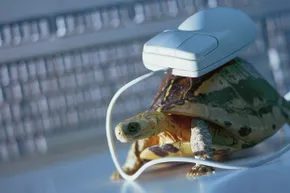
3 percent. This is the portion of the US population that still clings to dial-up services. The rest (around 70%) switched to high-speed broadband. The difference isn’t just speed. This is a chasm in daily utility.
Broadband allows you to stream 4K video to your TV. You surf the internet on your tablet. The mobile phone checks notifications. The computer is downloading large files. All at once.
This is not possible with a dial-up connection. It screams. It screeches. It occupies the phone line. A single web page can take several seconds to load. Try loading a map, a video or a modern web application. It fails. Or it takes too long and you give up.
This isn’t just an inconvenience. This is the cost.
Income differences explained
The researchers reviewed the data. Households with broadband access have higher incomes. Those with dial-up earn less. The correlation is very strong. Why?
Broadband enables remote working. It allows for online education. Connect people to job markets, freelance platforms and digital services. A telephone network connection excludes users from these possibilities.
The rest of the user profiles for the telephone network connection are individual. They are usually older. They tend to have lower levels of formal education. They live in low-income households. Geography also plays a part. Rural areas often lack the infrastructure for faster connections. Suppliers are not interested in supplying fibers to individual premises. That’s why the old copper wire remains.
Why can’t I come back?
Dial-up is a step backwards. This is not a nostalgic choice. This is a bottleneck.
When you try to use modern applications on dial-up, they break. Most software today uses continuous high-bandwidth connections. Email with attachments? It is possible, but it takes a lot of time. Video conferencing? Impossible. Cloud storage synchronization? It’s a nightmare.
Modem technology is outdated. The whistling and buzzing are not charming. They are signs of failure.
Infrastructure deficiencies
The issue is not always choice. It is availability.
In many rural regions, broadband deployment is slow. Private companies avoid sparsely populated areas. The costs per household are too high. Governments around the world are working hard to close this gap. Programs exist to subsidize infrastructure. But the development has been uneven.
For those who continue to use a dial-up connection, the experience is isolating. The internet is not a utility. It’s a privilege.
What does this mean for others?
If you have broadband, you take it for granted. Stream, download and connect without thinking. This ease is valuable. Save time. It enables commerce. Supports healthcare telemedicine and online banking.
Dial-up users do not have these benefits. They are excluded from the digital economy. The gap widens as software becomes more complex and data-hungry.
The trend is clear. Dial-up is dying. But for the remaining 3 percent, the death is slow. And costly.
Conclusion
Speed is not a luxury. This is infrastructure.
Without it, you will have to pay time and money. The earnings potential is lower. The opportunities are fewer. The technology is irrelevant.
Switching to broadband is about more than just faster downloads. It’s about access. Get information. Access to income. Access to modern society.
For the rural poor and the elderly
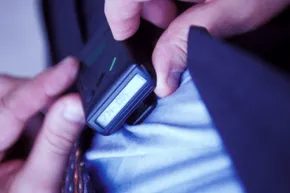
Remember when belt clips sent status signals? It was Rolex in the 1990s. You are either a powerful surgeon, a lawyer born for a mission, or a shadowy figure. It means you are irreplaceable. today? That means you missed the memo about modern communication.
But it wasn’t that long ago that Americans spent millions of dollars on these beeping bricks. In certain areas, it offers reliability unmatched by mobile networks.
Healthcare is the last frontier.
Smartphones are fragile. Must download. A software update is required. They need a signal. Search devices work with alkaline substances. They worked in elevator shafts and underground morgues where cell phone towers went dark. It’s thick, durable and always on.
But this is not enough.
The doctor wants the device. You don’t need a pager * or * a mobile phone * or * a tablet. All-in-one smartphones are winning this war. It absorbs practicality and increases comfort. Search engines are already messed up.
Eventually, they become remnants. Forgotten. it doesn’t matter. Like a drug dealer who got caught.
Tape problems
When we talk about objects, we are talking about physical media before the digital age.
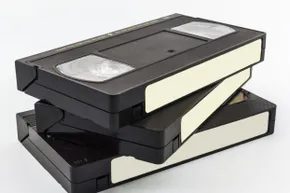
“The familiar VHS tape is quickly giving way to the outdated 8-track.”
This quote, taken from a 2005 Washington Post article, now appears to be history. But if you thought VHS was dead, check your local thrift store or your parents’ attic. It isn’t.
Americans still buy millions of VHS tapes. The use case is unclear. Some use them as bookends. Some people unwind the magnetic ribbon for DIY Halloween decorations. There are darker reasons too, but let’s look at the market data.
VHS has shown surprising resilience. It has survived the DVD era. It survived streaming. It has been survived formats with objectively better quality. In 2005, nearly 90% of US households owned a VCR. today? The number has decreased by 30 percent.
Think about that decline. This is huge. However, it still represents a huge installed base. The technology is old. Creaky. Analog. But it’s not gone.
Maybe it’s best to let go. Stream movies. Clear out that closet. The time of analog tape is over. But the market disagrees.
2: Compact Cameras

Mathematics is cruel. In 2010, manufacturers sold around 132 million compact cameras. By 2013, the number had plummeted by about 50 million. The decline wasn’t subtle. It was a free fall.
This trend is accelerating. The quality was excellent for a compact camera, but I ended up not needing it. The main culprit is smartphones.
Why smartphones are cannibalizing compact camera sales
That doesn’t mean you can take “good” photos with your phone. Most models only do a serviceable job of creating images. The lens is small. The sensor has shrunk. The software struggles with in dark environments. But convenience always wins.
No one wants to carry a smartphone and a camera at the same time.
Let’s think about weight. The bulk. The mental burden is deciding which device to get to take a quick snapshot. The concept of a cell phone camera is easier than shoving a separate device into your pocket or purse. You already have a mobile phone. You already charge it. You made a backup.
For most consumers, even a small improvement in image quality is not worth the purchase of additional equipment.
Who Still Buys Point-and-Shoots?
There are holdouts. Those who do not want to compromise on image quality can enjoy the increasing power of compact cameras. They want an optical zoom that doesn’t look like a digital crop. They want a dedicated buttons. They want a screen that isn’t a touch interface that they’re afraid of dropping.
But for others, pocket cameras are slowly disappearing. It’s like a Polaroid photo exposed to direct sunlight. They’re disappearing. It’s not because the technology is bad. Because the alternative is already in your pocket.
The shift is complete. Standalone cameras are becoming a niche tool. A toy for hobbyists. Professional backup. For everyday users, it’s just a dead weight.
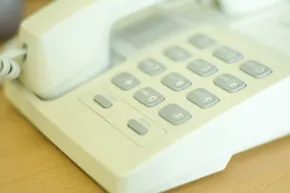
The slow death of #landlines: Why copper wire is losing the war
The difference between cellular networks and traditional copper infrastructure is not a fair fight. It’s like the modern air force fighting the ancient infantry. There is no real competition here. With mobile technology dominating the air, it’s only a matter of time before landlines are phased out entirely.
The family kept both for decades. The logic was simple redundancy. You own a mobile phone for everyday comfort and movement. Landlines serve as an important emergency backup and are increasingly becoming the primary channel for home Internet service. This dynamic has changed.
Does anyone need a landline anymore?
The ultimate predictor here is demographics. Almost 70% of consumers under the age of 30 do not see the value of maintaining two separate services. They refuse to pay for the redundancy. As a result, penetration rates among younger generations, who consider landlines obsolete, have fallen sharply.
Let’s think about the basic state. At least 90 percent of Americans now have a cell phone. Due to this saturation, the number of landline numbers continues to decrease. Infrastructure is increasingly less about connecting people and more about traditional compliance and certain geographical limitations that mobile operators still have to deal with.
Technical necessity
All technology evolves. Even the telephone, which has connected people around the world for over a century, is not exempt from replacement. Landline phones were revolutionary at the time. It solved the problem of distance. However, the new technology offers comfort, portability and versatile functions.
“No matter how important something is, it will eventually be replaced by something newer and more convenient.”
The copper wires that once carried the burden of global communications are now just remnants of the world of fiber optic and wireless networks. For most users, the costs of maintaining the infrastructure outweigh the benefits. This change is not sudden. This is a slow and inexorable decline of services that are no longer able to adapt to the modern pace of life.


