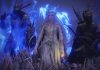





The Indie Game Awards have rescinded both Game of the Year and Debut Game awards from Clair Obscur: Expedition 33 after confirming the game’s developers, Sandfall Interactive, used generative AI during production. This decision underscores a growing debate within the game industry about the ethical and practical implications of AI in creative work.
Strict Policy, Unintended Inclusion
The Indie Game Awards, run by Six One Indie, enforces a zero-tolerance policy on generative AI. Eligibility requires developers to operate outside major corporate control and to avoid using AI tools in any aspect of development. Sandfall Interactive initially affirmed it had not used such tools, but later admitted to employing AI-generated placeholder textures that slipped into the released version.
The oversight, discovered days after the game’s April 24th launch, was rectified with a patch, yet the awards committee acted on December 18th, disqualifying Clair Obscur despite the rapid correction. The awards now revert to the next highest-scoring titles: Sorry We’re Closed (à la mode games) for Debut Game, and Blue Prince (Dogubomb) for Game of the Year.
Transparency vs. Enforcement
Sandfall Interactive disclosed some AI use in an earlier interview with El País, though without specifying generative tools. The company claims the AI-generated assets were intended as temporary replacements, and were removed within five days of release. However, players identified AI-generated textures in-game, prompting the fix.
The incident highlights the difficulty of policing AI use in development, even when developers are willing to be transparent. The awards committee’s rigid enforcement of its policy leaves no room for minor, unintentional inclusion, regardless of remediation.
Industry Debate
The backlash has been split. Some applaud the Indie Game Awards’ firm stance, arguing it protects the integrity of independent game creation against the rising tide of AI-assisted development. Others believe the penalty for such a minor oversight is excessive.
The broader industry faces questions about how AI will change content creation. The potential for cost-cutting and increased efficiency is countered by fears of job displacement and homogenization of artistic style. As one commenter noted, even a small mistake can invalidate an otherwise exceptional game under strict rules.
Despite this setback, Clair Obscur: Expedition 33 remains critically acclaimed, having won Game of the Year at the 2025 Game Awards and multiple Golden Joystick awards. The incident nevertheless illustrates a clear line in the sand: generative AI is not welcome in the Indie Game Awards, and developers must ensure complete exclusion to avoid disqualification.