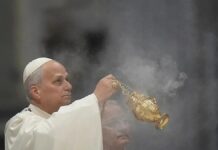



The Vatican is rolling out a new artificial intelligence (AI) translation system to provide real-time interpretation of Mass in 60 languages at St. Peter’s Basilica. The service, launching next week as part of the church’s Fourth Centenary celebrations (2026), aims to make religious services accessible to a wider global audience.
Breaking Down Language Barriers
The AI-assisted translation will be delivered through a QR code system. Attendees can scan the code upon entry to St. Peter’s Basilica, gaining immediate access to audio and text translations via their smartphones and web browsers. No app download is required, streamlining the experience for visitors.
The Technology Behind the Translation
The Vatican partnered with Translated, a language solutions company, and Carnegie-AI LLC to develop the service. The core of the system is “Lara,” an AI developed in collaboration with Professor Alexander Waibel, a leading figure in AI speech translation. Waibel emphasizes that the project demonstrates AI’s ability to bridge communication gaps in a culturally significant setting.
Addressing AI Accuracy Concerns
The developers acknowledge that all machine translation systems carry some degree of error. However, Translated’s CEO maintains that Lara represents a substantial improvement in accuracy, designed to minimize “hallucinations” (AI-generated errors) by leveraging greater contextual understanding. The system prioritizes precision over overly-pleasing responses.
Balancing Innovation with Ethical Concerns
The move comes amid broader debate about AI’s role in society. Pope Leo XIV recently cautioned against the unchecked advancement of AI, highlighting potential threats to human dignity, justice, and labor rights. This rollout suggests the Vatican sees potential benefits in using AI for religious inclusion while remaining aware of the technology’s risks.
Why This Matters
The Vatican’s adoption of AI translation is not merely a technological update. It reflects a growing trend of institutions embracing AI to overcome logistical and cultural hurdles. The church is adapting to a world where global audiences demand accessibility. The use case at St. Peter’s Basilica also sets a precedent for how similar institutions might leverage AI to enhance inclusivity in the future.
The Vatican’s decision to prioritize AI-assisted translation signals a willingness to engage with emerging technologies to foster universal understanding within its congregation.