



The unsettling feeling that arises when encountering something almost, but not quite, human remains a major obstacle in robotics. This phenomenon, known as the uncanny valley, is why robots designed to resemble us often feel…off. Researchers at Columbia University are making strides in overcoming this hurdle by perfecting how robots synchronize lip movements with speech, bringing us closer to machines that interact with us more naturally.
The Problem with Robotic Speech
For years, one of the key reasons robots have felt “uncanny” is their inability to mimic human lip movements during speech. According to Hod Lipson, an engineering professor at Columbia, this has been a surprisingly neglected area of robotics research. The goal isn’t just about making robots talk – it’s about making them speak in a way that doesn’t trigger discomfort or distrust.
The Breakthrough: Audio-Driven Lip Synchronization
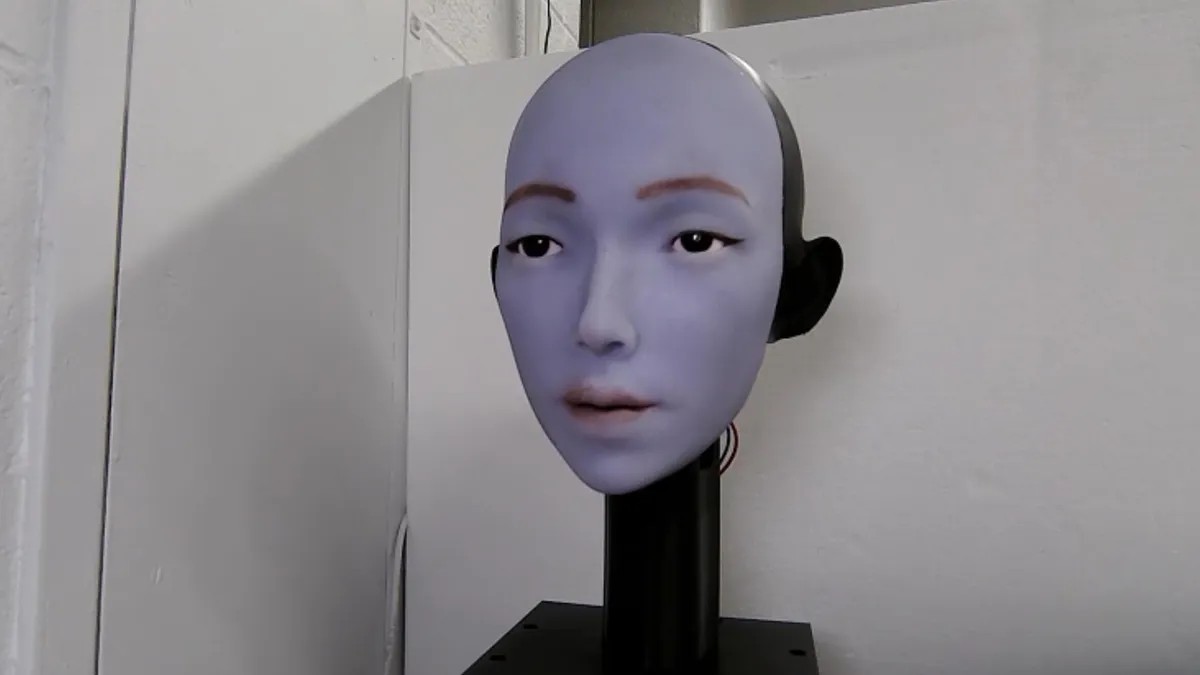
The Columbia team developed a new technique that focuses on the sound of language rather than its meaning. Their humanoid robot face, dubbed Emo, features a silicone skin and magnet connectors to allow for complex lip movements capable of forming 24 consonants and 16 vowels. The innovation lies in a “learning pipeline” that uses AI to generate precise motor commands for lip movements, ensuring perfect synchronization with audio.
What’s remarkable is that Emo can speak in multiple languages – including French, Chinese, and Arabic – even those it wasn’t specifically trained on. This is because the system analyzes the acoustic properties of language, rather than trying to understand the words themselves. As Lipson puts it, the model operates “without any notion of language.”
Why This Matters: The Rise of Humanoid Robotics
This research arrives at a critical moment. The robotics industry is rapidly advancing towards more lifelike machines, as seen at CES 2026, where companies showcased everything from advanced Boston Dynamics robots to household helpers and even companion bots with AI-driven personalities. The demand for robots that can seamlessly integrate into human environments is growing.
Recent studies reinforce this trend: research shows that a robot’s ability to express empathy and communicate effectively is essential for successful human-robot interaction. Another study highlights the importance of active speech for collaboration on complex tasks. In essence, if we want to work and live alongside robots, they need to communicate like us.
The Future of Human-Robot Interaction
While the goal isn’t necessarily to create indistinguishable machines, the technology behind realistic lip synchronization has broad implications. Lipson suggests that future research could benefit any humanoid robot designed for human interaction. He even proposes a simple design solution to avoid confusion: “requiring humanoid robots to have blue skin” as a clear visual cue that they are not human.
Ultimately, perfecting robotic speech is about more than just technical precision. It’s about building trust, fostering collaboration, and ensuring that as robots become more prevalent, they enhance rather than unsettle our daily lives.