



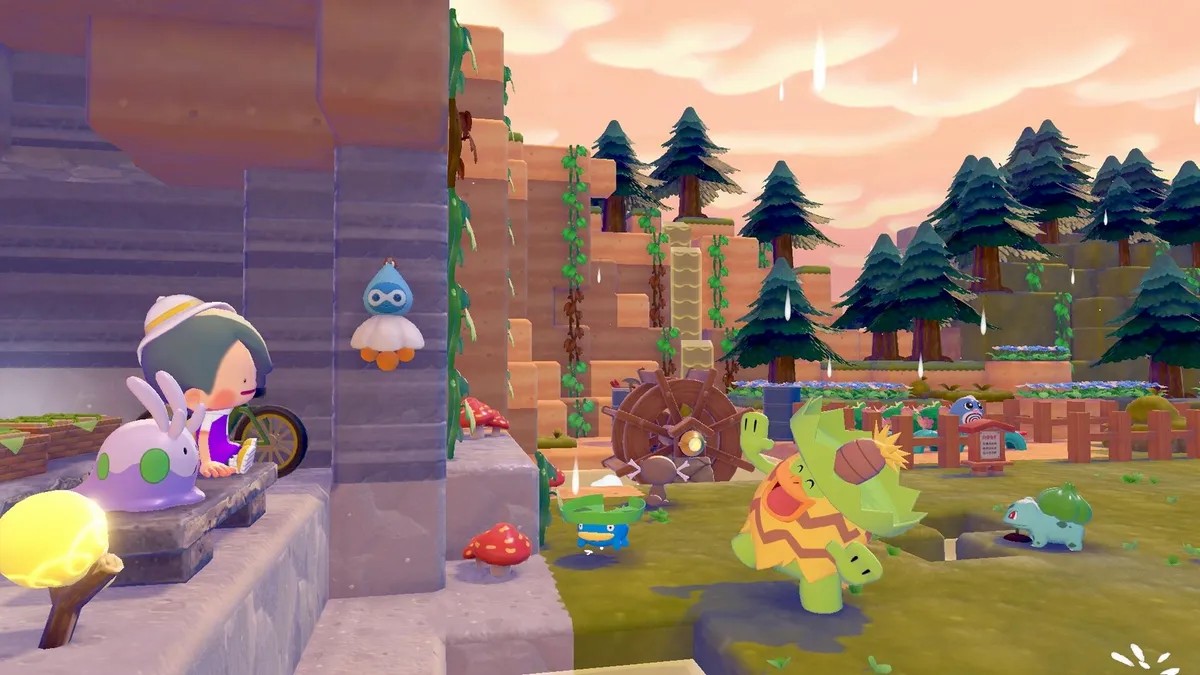
The latest Pokémon title, Pokopia, isn’t about battles or catching legendary creatures. It’s a surprising, and highly effective, take on the cozy life-simulation formula pioneered by Animal Crossing. Players take on the role of a shape-shifting Ditto, stranded on a long-abandoned island and tasked with rebuilding a world left behind by humans. The premise is simple: make friends with Pokémon, restore the environment, and uncover the mystery of where everyone went.
A Familiar Yet Fresh Loop
The gameplay loop is instantly recognizable to fans of Animal Crossing. Daily tasks include resource gathering, crafting, home decoration, and tending to the needs of the Pokémon inhabitants. Unlike traditional Pokémon games focused on combat, Pokopia emphasizes community building and exploration. The game’s scale is notably larger than Animal Crossing, featuring a connected archipelago of islands built on a block-based system reminiscent of Minecraft.
This shift in focus is significant. The Pokémon franchise has long been defined by competitive battling. Pokopia represents a deliberate departure, offering a more laid-back, social experience. This may appeal to a broader audience, including players who enjoy life-sims but haven’t previously engaged with Pokémon.
The Switch 2 Killer App?
Early impressions suggest Pokopia is a major draw for Nintendo’s next-generation hardware. The game is currently exclusive to the Switch 2, and one reviewer notes their child’s desperate desire for the console after experiencing the title. While cross-play with the original Switch is technically possible, it isn’t seamless, reinforcing the incentive to upgrade.
This exclusivity is a strategic move. Pokopia isn’t just a fun game; it’s a powerful incentive for consumers to invest in Nintendo’s ecosystem. The game’s appeal extends beyond Pokémon fans, creating a must-have title that drives hardware sales.
More Than Just a Distraction
The game’s emotional core is surprisingly poignant. The player’s role as a lone Ditto rebuilding a lost civilization evokes a sense of melancholic hope. While the core gameplay is lighthearted, the underlying narrative touches on themes of abandonment and environmental restoration.
This emotional depth sets Pokopia apart. The game isn’t just about collecting items; it’s about creating a new home in a broken world. This resonates with players seeking a sense of purpose and connection within the game.
An Ever-Evolving World
Pokopia features a unique evolution mechanic: the Ditto protagonist can absorb skills from other Pokémon, unlocking new abilities over time. This ensures the gameplay remains fresh and unpredictable. The game’s open-ended design, with seemingly endless customization options and a vast world to explore, suggests a long-term commitment for players.
“This isn’t a game with a clear ending. It’s a world that keeps growing, inviting players to tinker and discover new possibilities.”
Pokémon Pokopia is not just another Pokémon game; it’s a bold experiment that successfully blends the best elements of Animal Crossing and Minecraft. Whether it is a long-term success remains to be seen, but the initial response suggests Nintendo has struck gold with this unexpected hit.