



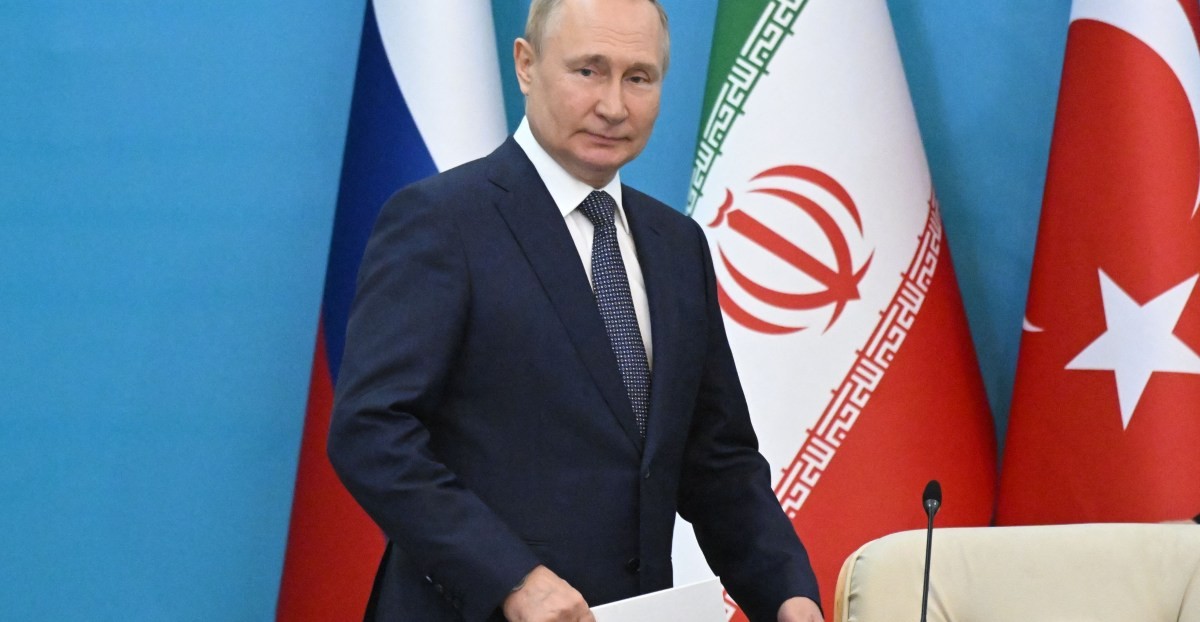
The recent escalation of hostilities in Iran has produced clear losers: the Iranian government, civilians caught in the crossfire, and nations reliant on stable energy markets. However, amid the chaos, one actor stands to gain significantly: Russian President Vladimir Putin.
While seemingly counterintuitive given Iran’s status as a key ally, the war presents Russia with a confluence of economic and geopolitical advantages. Putin has condemned the conflict while quietly reaping the benefits of rising oil prices, weakened sanctions enforcement, and a diverted Western focus. As Angela Stent, an expert at Georgetown University, succinctly put it: “In the short run, at least, Putin won the jackpot on this one.”
The Energy Windfall
Oil and gas revenues constitute roughly one-third of the Russian government’s income, directly fueling its war effort in Ukraine. The surge in global crude prices since the start of the conflict has added an estimated $150 million per day to Russia’s oil sales – potentially nearly $5 billion by next month if prices remain elevated. The Trump administration’s temporary lifting of sanctions on Russian oil further facilitates these gains, allowing shipments to reach buyers worldwide.
This comes at a critical time for Moscow, which saw energy revenues plummet last year to their lowest levels since the Covid pandemic. Sanctions and threats of tariffs had reduced demand from key customers like India, and Russian oil was being sold at steep discounts. Those discounts have largely disappeared in recent weeks.
Diversion of Western Attention
The conflict also serves to divert Western attention and resources. Munitions intended for Ukraine, including crucial systems like Patriot missile interceptors, may be rerouted to the Middle East. US officials acknowledge this potential diversion, with Trump lamenting that US weaponry had been provided to “P.T. Barnum (Zelenskyy!)”.
Meanwhile, Russia is reportedly providing Iran with targeting information on US forces in the region, mirroring the intelligence support the US has provided to Ukraine. This reciprocal exchange further undermines Western interests while bolstering Russia’s position as a key player in regional dynamics.
Ukraine Loses Focus
The crisis has pushed Ukraine further down the list of priorities in Washington and European capitals. Planned talks involving Ukraine have been delayed, and Putin is likely content to continue prosecuting a war he believes can be won on the battlefield. Ukrainian President Zelenskyy has voiced concern that the US may “step away from the issue of Ukraine because of the Middle East”.
However, Ukraine hopes to gain some leverage from the crisis by offering its expertise in countering Iranian missiles and drones, potentially securing long-term defense tech deals with Gulf States. Though the US reportedly turned down a drone tech deal with Ukraine last year, Zelenskyy’s offer of help was rejected by Trump last week.
A Reprieve, Not a Reversal
Russia’s advantage is contingent on the war’s duration. If the disruption to global oil markets proves short-lived, the economic benefits will be minimal. Similarly, a swift regime change in Iran that results in a pro-American government would diminish Russia’s gains. However, a prolonged conflict that ends with a hardliner in power would solidify Moscow’s position.
Politically, the war has already undermined the Biden administration’s efforts to isolate Russia, as anger in the Global South over US support for Israel grows. Putin, positioning himself as a mediator, stands to exploit a situation where much of the world perceives the US as the aggressor.
In conclusion, the war in Iran is not merely a regional conflict; it is a geopolitical windfall for Russia, bolstering its economy, diverting Western attention, and solidifying its position as a key player in a fractured world order.