

The autonomous vehicle (AV) sector is facing a growing confrontation with lawmakers over a critical, yet obscured, operational reality: the heavy reliance on human remote assistance.
While the public often perceives robotaxis as fully independent machines, a recent investigation reveals that many companies utilize remote operators to navigate complex scenarios. The lack of clarity regarding this practice is now triggering potential legislative action in the United States.
The “Black Box” of Remote Assistance
Senator Ed Markey (D-MA) recently launched an inquiry into seven major players in the AV space: Aurora, May Mobility, Motional, Nuro, Tesla, Waymo, and Zoox. The objective was simple: determine how frequently these autonomous systems require human intervention via remote staff to complete journeys.
The results were telling. According to Senator Markey, all seven companies refused to disclose their data.
This silence highlights a significant tension in the industry. While companies market “driverless” technology, the “human-in-the-loop” model remains a vital safety net. The refusal to provide transparency raises several critical questions:
* How much “autonomy” is actually being delivered to consumers?
* Where are these remote operators located, and what are their training standards?
* Does the reliance on remote staff mask underlying technical limitations in the software?
“This is a stunning lack of transparency from the AV companies around their use of remote assistance operators,” Senator Markey stated, signaling that the era of unregulated experimentation may be closing.
Regulatory Escalation
The industry’s reluctance to cooperate has backfired by intensifying political scrutiny. Rather than defusing the issue, the lack of data has motivated Senator Markey to call on the National Highway Traffic Safety Administration (NHTSA) to launch a formal investigation. Furthermore,he is currently drafting legislation intended to impose strict “guardrails” on how AV companies utilize remote operators.
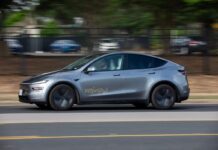
One notable outlier in the corporate responses was Tesla, which admitted that its its remote assistance workers are authorized to temporarily assume direct vehicle control —a significantly more invasive level of intervention than merely providing navigational guidance.
Mobility Market Pulse: Key Moves and Shifts
While the regulatory battle intensifies, the broader mobility landscape is seeing significant capital movement and strategic shifts.
🚗 Ride-Hailing & Luxury Expansion
Uber continues its aggressive expansion into premium segments. The company has announced the acquisition of Berlin-based Blacklane, a move designed to bolster Uber’s luxury and executive travel offerings. This follows the recent launch of “Uber Elite,” signaling a clear strategy to capture high-end chauffeur markets.
💰 High-Stakes Funding Rounds
- Defense Tech: Saronic Technologies, an autonomous military ship developer, secured a massive $1.75 billion Series D round, bringing its valuation to $9.25 billion.
- Drone Delivery: Ireland’s Manna Air Delivery raised $50 million to advance consumer drone logistics.
- Green Logistics: Voltify raised $30 million to develop battery-powered retrofits for diesel locomotives.
🤖 Autonomous & EV Developments
- Also & DoorDash: The Rivian spin-off, Also, secured $200 million in Series C funding, with DoorDash taking a strategic stake and a seat on the board to develop autonomous delivery vehicles.
- GM’s Super Cruise: General Motors is ramping up testing for its next-gen automated driving system on public highways in California and Michigan.
- Tesla’s Pivot: Elon Musk confirmed that production of the Model S and X has ended, marking a definitive strategic shift from passenger vehicle manufacturing toward robotics and autonomous transport.
Summary
The autonomous vehicle industry is at a crossroads where technological ambition meets regulatory scrutiny. As companies face increasing pressure to be transparent about their reliance on human operators, the transition from “driver-assist” to “true autonomy” remains a contested and highly regulated frontier.