


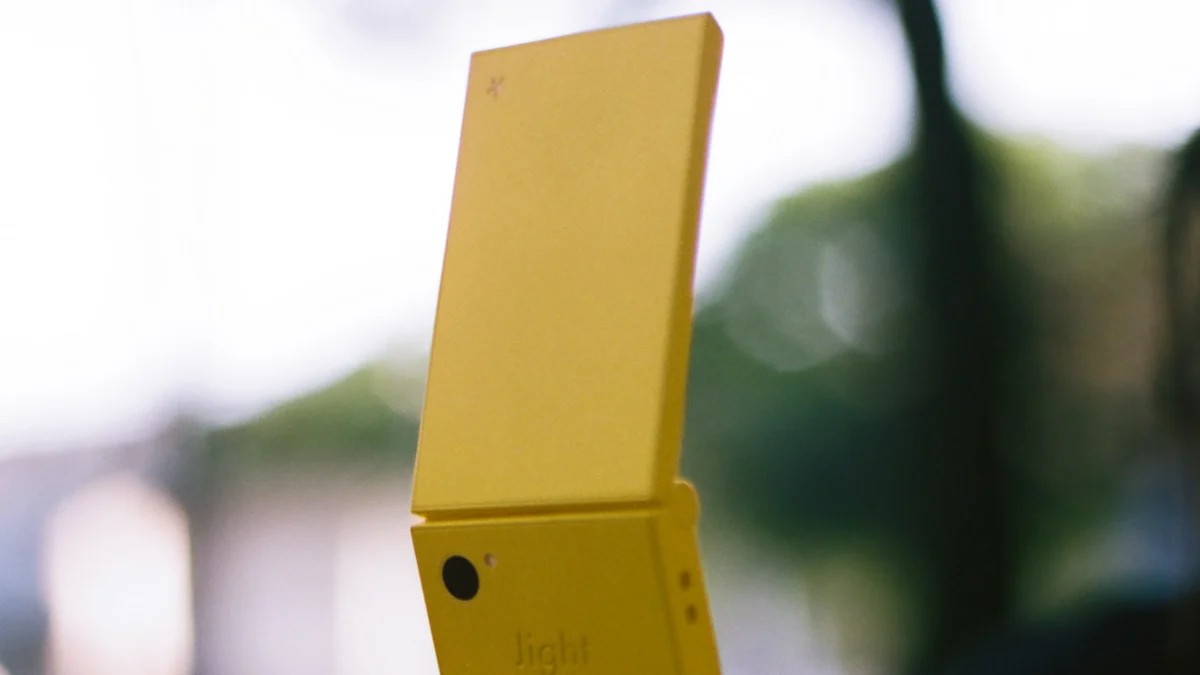
Remember Light? That New York company obsessed with stripping smartphones down to their absolute bare essentials? They’re back.
And they’ve finally folded their solution in half.
Meet the Light Flip. It’s not just a phone. It’s a statement. A refusal to let algorithms dictate your attention span.
The premise hasn’t changed. The hardware has just evolved.
This isn’t a smart-phone pretending to be dumb. It’s a dumb-phone pretending to be smart—by being honest about its limits. The device runs LightOS. It’s Android-based, yes, but it’s been gutted. The interface? Textual. Stark. Two colors, max. No pixel-popping feeds. No infinite scroll of TikTok dances.
If you need to call, message, play music, or set an alarm? It handles that. If you want to doom-scroll? Leave that for your other phone. That’s the whole point, isn’t it?
A Clamshell Return to Basics
The previous flagship, the Light Phone III, was a slab of glass. An OLED touchscreen that looked deceptively like a modern smartphone. The Light Flip strips away even that illusion.
It looks like a throwback. Plastic body. T9 numeric keypad. Physical function buttons. A 2.8-inch non-touch display. It’s clunky if you measure utility in swipes and taps. But if you measure it in friction? It’s a wall. A barrier.
Inside, however, the specs are surprisingly robust. Don’t let the retro shell fool you.
It’s running on a MediaTek MT8873 chipset. Paired with 6GB of RAM and 128GB of internal storage. That’s more than enough headroom for a minimal OS. There’s a 50-megapixel main camera, which is generous for this category. And a 1,800mAh replaceable battery. Replaceable. Because swapping a dead battery feels like fixing a watch. Not replacing a phone.
Other amenities keep it grounded in reality:
– USB-C charging
– 3.5mm headphone jack (rare, and welcome)
– 5G connectivity
– Wi-Fi and Bluetooth
The T9 keypad is the biggest hurdle for modern users. We are trained to tap. We are not trained to predict. But Light isn’t ignoring the pain point. Voice-to-text is built-in. Audio messaging works. You don’t have to hunt for the letter ‘Q’ by tapping four times on the 7 key. You can just talk.
The Cost of Less
Why pay for this? Why spend money to get less?
Because distraction has a tax. It costs your focus. Your time. Your mental bandwidth.
The Light Flip costs $299 upfront. Or $39 a month via the Light Service plan. That’s not cheap. It’s not pocket change. But compare it to the $1,000 flagships you’re trading in. You’re not losing much by switching. You’re gaining silence.
Six color options await: Black, Navy, Red, Pink, yellow, and Light Gray. Pick your shade of restraint.
Shipping kicks off in April 2027?
Wait.
April 2027.
That’s a long wait. Two years from now.
Maybe that’s the final filter. Maybe by then, the urge to scroll will have burned itself out. Or maybe the hype will have died down. Or maybe, just maybe, people will have realized they’re still hungry for something tangible. Something that closes when they don’t need it.
The Light Flip doesn’t offer answers. It removes the questions.
And for some, that’s the only thing left to do.


