


How #Google’s stratospheric balloons connects the offline world
We believe the web is everywhere. This is not true. At the end of 2015, about 4 billion people were still offline. The reasons are rarely philosophical. In many cases, this is simply because the physical infrastructure does not reach the towns, or the existing coverage is unreliable, expensive, or both.
Google knows this gap exists. The search giant is secretly working on two different ways to solve this problem. One of them is Google Fiber. It’s a dream high-speed fiber that offers gigabit connectivity in some US cities. It’s fast. It’s expensive. We cannot expand overnight into rural areas or developing countries.
So there is another project. One that sounds like science fiction.
Project Loon was born out of Google X, the company’s moonshot lab. This is the same unit behind self-driving cars and Google Glass. This idea? Lift wireless access points to the stratosphere. The goal of the project is to use high-altitude balloons to transmit Internet to areas where towers are too expensive or too far away.
为什么是气球?
当你可以铺设电缆时,为什么要把塑料球送上天空呢?
因为敷设电缆的速度很慢。 它很贵。 它需要许可证、人员和多年的建设。 在偏远地区,这往往是不可能的。
气球漂浮在大约 60,000 英尺的高度。 它们乘风破浪,在高空停留数月。 它们携带用于供电的太阳能电池板和用于发送数据的轻型发射器。 网络的工作方式就像一个网状网络。 如果一个气球失去信号,它会将数据传递给相邻的气球,将其弹过平流层,直到到达地面站。 从那里,它连接到常规互联网。
它在概念上是低技术含量的。 执行中高科技。
Testing the Lofty Network
The critics laughed. They called it crazy. But the tests told a different story.
Early tests show that the balloon can maintain a stable connection over long distances. They could adjust their altitude to capture different layers of wind and steering themselves toward target areas. This is not just a theory. Google has already implemented successful pilots to demonstrate that the technology works in real-life situations.
The goal is not to replace fiber. It’s about achieving the unreachable. For the 4 billion people without access, it could mean the difference between isolation and connection. Between the lack of job opportunities and the global market. Between silence and voice.
Is it perfect? No. Weather still matters. Policies are complex. But the alternative is doing nothing.
Google is betting that balloons can change the world. Or at least, connect it.
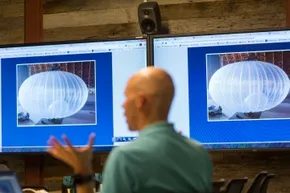


Forget the latex party decorations you blew up for birthdays. In Project Loon, the devices drifting through the stratosphere are built for a very different existence. Standard balloons burst or deflate almost instantly under the extreme pressure drops, UV radiation, and freezing temperatures that characterize life at high altitudes. They also cannot carry the heavy electronic payloads needed to transmit Internet signals to Earth.
Google’s design team needed something tougher. They turned to the weather balloon industry and developed a craft that could withstand the atmospheric shocks encountered during other long flights. The result is a fleet of polyethylene giants that can stay in the air far longer than any of their predecessors. The team named these models after birds – Falcon, Ibis, Grackle and the newer NightHawk – although they function more like high-flying aircraft than simple toys.
Anatomy of a giant on high
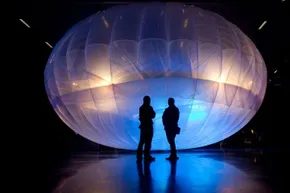
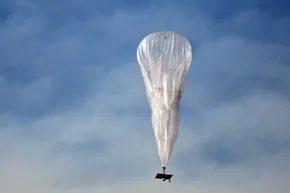
Each balloon sleeve is made of polyethylene plastic, which is about as thin as a sandwich bag. Despite the thin material, the scale is huge. The completed unit is approximately 50 feet wide by 40 feet high and has an area of approximately 500 square meters. Due to their size, they cannot be easily aired in the backyard. The team works on this in huge halls, such as a leased facility at Moffett Federal Airfield in California, which has enough space to maneuver such huge structures.
The technical trick lies in the two-chamber structure. Think of it like a balloon within a balloon. The inner chamber is filled with ambient air, while the outer shell contains helium. This hybrid approach gives the team precise control of altitude without complex propulsion systems.
Valves and a fan attached to the bottom of the balloon allow the team to pump air into or out of the inner chamber. It’s a simple mechanism with profound consequences:
* Adding air adds mass, causing the balloon to sink.
* Releasing the air reduces the mass and allows the balloon to rise.
This system allows the balloons to control wind currents at different altitudes and steer themselves towards or away from target areas.
You learn from mistakes
The early versions of the Loon were not pretty. Many balloons burst prematurely or did not stay aloft long enough to be useful. The team didn’t just guess the problems; they dissect them. Google invited experts from the balloon, aviation and textile industries to analyze the failures. They even hired ex-soldiers to recover the downed balloons, which often landed in remote, hard-to-reach places.
Test environments played a big role in these improvements. Some early experiments were conducted in South Dakota, where subzero temperatures mimicked the stratospheric conditions the balloons would eventually experience. The team recently moved to the McKinley Climate Laboratory at Eglin Air Force Base, Florida. This setup allowed them to expose the balloons to controlled, extreme weather—high winds and freezing temperatures—without having to rely on luck.
The cause of many early failures was surprisingly small: small leaks. A needle-sized hole can significantly shorten the life of a balloon. Once seams were identified, they were reinforced and handling protocols became almost mandatory. Team members were instructed to walk the balloons only in very soft, fuzzy socks to avoid accidental punctures or chafing.
Breaks records
The improvements didn’t just save the project; They have pushed the limits of what is possible in high altitude ballooning. Before Loon, it was considered difficult to stay in the air for more than a few weeks. Balloons now routinely stay aloft for about 100 days. One unit even set a record by staying aloft for 187 days and orbiting the planet nine times.
Experts once thought this flight duration impossible. The Loon team has proven otherwise through iterative design and rigorous testing.
From tarps to Autolaunchers
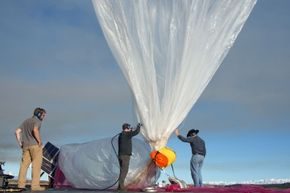
The operation used to be a logistical nightmare. The crew had to spread balloons on tarps, unpack them and partially inflate them by hand. Takeoffs could only be made in winds of 6 miles per hour or less. It was slow, labor intensive and weather dependent.
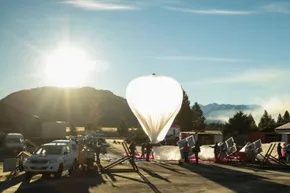
Google solved this problem with “Bird House”, the internal name of the auto-launcher. This 50-foot tall portable hangar features an automatic crane that stretches and inflates the balloons. Automation has significantly streamlined the process:
* Launch conditions: Balloons can now be launched in winds of up to 15 mph.
* Efficiency: The deployment team was reduced from 14 people to 4 people in 15 minutes.
This efficiency makes it much easier to maintain the dense balloon network required for continuous Internet coverage. By reducing deployment friction, Google can keep more balloons in the sky and ensure the network is resilient and responsive.
Electronic devices from Google Loon

Google doesn’t implement these features just for aesthetic reasons. Beneath each giant translucent sphere hang metal containers full of electronic devices suspended from ropes. This payload is equipped with solar panels. It’s not small. We’re talking about a series of monocrystalline cells laminated to plastic and framed in aluminum, each about 5 feet by 5 feet. The area is about 1.5 square meters.
Two of the panels are attached to the payload at an angle outward from each other. Why? Because balloons spin. These sharp angles ensure that the panels capture sunlight as it passes through the upper atmosphere. This is a mechanical solution to the power problem. It can produce about 100 watts of electricity in a few hours in full sunlight. This energy is stored in a rechargeable lithium-ion battery to keep the system running during the long dark hours of the night cycle.
Hardware included
This box is more than just a battery. This is a flying server room. Inside is computing hardware dedicated to controlling the balloon’s internal systems, a GPS unit for precise location tracking, and an array of sensors. These sensors monitor atmospheric conditions and feed data back to Google so it can adjust altitude and stability in real time.
The rest are wireless devices. This is the part that literally puts the Internet in your pocket. The payload contains an eNodeB LTE base station, which is basically a cell tower scaled down enough to fit inside a box. Provides wide coverage connectivity. But Google didn’t stop there. Added fast directional links for point-to-point communication between balloons and backup radios for redundancy. If one link fails, the other link picks up the slack.
The reality of coverage and speed
So what does this mean for a user on the ground? Google claims that each balloon covers a circle on the earth that is about 25 miles (40 kilometers) in diameter. In this bubble, hundreds of people can connect at the same time. Since the beginning of the project, data transfer speeds have increased significantly, in some stages up to 10 times. The goal is not to defeat fiber optics. Designed to match common LTE 4G speeds.
Loon team leader Mike Cassidy presented some hard numbers on the potential scope of the impact. A single balloon network can cover up to 5,000 square kilometers (about 1,931 square miles). With a standard smartphone, this corresponds to about 15 megabits per second. MiFi hotspot devices can see up to 40 Mbit/s.
“They expect the coverage to be at the level of typical LTE 4G network speeds.”
This is not meant to replace home broadband. This is meant to fill the gap. Where digging fiber is too expensive, where cable installation is geographically impossible, or where emergency assistance is needed and infrastructure is lost. The wind blew the balloons around, but the network stays stable. Although the equipment is hardened for the stratosphere, the signal it emits is no different from the signal you’d receive from a cell tower on a suburban street.
The technology is proven. The coverage area is currently being expanded. But the question of sustainability, or keeping these balloons in the air for months or even years without maintenance, remains.
Ride the stratospheric jet
We live in the troposphere. It is the chaotic, humid, weather-beaten depths of the atmosphere. But the balloons don’t stop there. They float in the stratosphere, the layer above it. This zone starts anywhere from 4 to 12 miles above the ground, depending on where you are on the ground. Temperatures are lower near the poles and higher near the equator. The upper limit is about 31 miles (50 kilometers) above sea level.
Project Loon balloons operate in the sweet spot at an altitude of 18-27 kilometers above the ground. This is about twice as much as the commercial route.
Why go there? The stratosphere is calm. There is almost no water vapor. There are no clouds. Rain and storms do not interfere with the signal. The lower you go, the colder it gets and the higher you go, the hotter it gets. This reversal prevents the gas from rising uncontrollably. Forms a stable layer. In these layers, the wind blows in predictable directions and speeds.
Control with height change
Google doesn’t use motors to propel these balloons. They take advantage of the wind. To change direction, the system adjusts the ratio between helium and air in the balloon. Adding air makes it heavier and sinks to a lower level. Adding helium makes it lighter and allows it to be lifted higher. By moving up and down, the balloon captures the wind, which blows in the desired direction.
These include solar and wind power generation. The solar panel charges the battery. The wind moves the vehicle.
But how do you know which wind will catch? You can’t guess. Google analyzes historical wind data and future forecasts from the National Oceanic and Atmospheric Administration (NOAA). They built an algorithm that simulated wind patterns. The goal is accurate navigation.
Mission Control and Automated Steering
所有这些都由称为任务控制的操作系统管理。 它不断地跟踪气球。 它引导他们。 当气球在人口稠密地区附近升起或降落时,它甚至可以与空中交通管制员对话。
The software has evolved. Early versions sent commands once a day. Now, it sends updates every 15 minutes. The system can recalculate flight paths every single minute.
准确性也有所提高。 起初,团队只能将气球引导到几百米范围内。 现在,他们可以瞄准几百公里内的特定位置。 这种精度水平是不容协商的。 你不能让数千个气球漫无目的地漂流。 网络会中断。
Automation is key here. But humans are still in the loop. Mission Control operators watch the screens. They step in if the automation needs help.
Recovery and Safety Protocols
Sometimes the balloon has to come home. Google releases gas from the envelope and brings it back to the surface. This will allow you to restore your device. They want to reuse or recycle these components. It’s not just a matter of cost. It’s about durability.
Safety is built into the design. If pressure changes threaten to burst the balloon, the system automatically deflates the gas. When the balloon descends quickly, the parachute deploys. This prevents heavy LTE devices from hitting people or objects.
Connecting to the Ground
The balloon’s hardware is a standard LTE network device. It works on the current mobile phone frequencies used by telephone companies. This means that no new towers will be built. There is no need to provide users with grounding antennas.
The balloon communicates directly with mobile phones and base stations on the ground. Users only need an LTE-compatible device. However, it cannot connect to any network. Requires a special Loon SIM card. Google is working with local mobile operators to make this happen. The infrastructure is still the responsibility of the transport operator. Lumps provide an air layer.
It’s a strange mix. A high-tech balloon. A regular SIM card. existing cell phone towers;
It’s quiet in the stratosphere. The wind was steady. The algorithm is still learning. But the country was still in turmoil. People still need to be plugged in and care about battery life.
The network is growing. Balloons are toys. A thousand balloons is a practical tool.
Whether it works at scale is another question. Physics is solid. The wind is reliable. Software is getting smarter.
But what happens when the wind direction changes? Not in one day. But after so many years? Weather patterns change. You need to adjust your algorithm.
The balloon is now floating. They are waiting for the right flow to come. They transmit data to the mobile phones in our pockets.
It’s very close.
From the balloon to the edge
The early days were chaotic. The Preliminary testing, which the team unashamedly called the Icarus tests, began in August 2011. Rich DeVaul, the project manager at the time, launched four latex balloons loaded with Linux servers and WiFi routers from California’s San Luis Reservoir. They monitor these high-altitude arrays in vans equipped with antennas and spectrum analyzers. It’s not pretty. Early gear was actually put into styrofoam coolers. But it worked. They were able to bounce the signal from one balloon to another and eventually established an internet connection to the tracked vehicle.
By 2012, things had changed. Icarus flew too close to the sun, so they renamed the project Daedalus after his father. It is a wiser choice. DeVaul has stepped down from his leadership position to focus on critical technical work with Mike Cassidy continuing at the helm. The team has grown. They hired aerospace engineers, cyber experts, mapping and mapping experts, and even textile experts to build the balloons. They started working with Raven Aerostar (a company that makes products used by NASA) to get the aerodynamics right.
There is also a safety net. In order to promote the recovery of the floating equipment, the test units were designated as “harmless scientific experiment” and given reward number. No Google branding yet. The project remains a ghost. Despite this anonymity, it didn’t stop the balloons from causing trouble. In October 2012, drifted into Kentucky’s UFO sighting reports and then drifted all the way to Canada, where they disappeared into the sky.
Breaking Ground in the southern hemisphere
The first full-scale pilot test was conducted near Christchurch, New Zealand in June 2013. Thirty balloons rose 15.5 miles (25 km). Each one carries around 22 pounds of equipment and communicates wirelessly with a spherical antenna on the ground. The real victory wasn’t the altitude; it was the users. About 50 testers participated, including Nimmo and the MacKenzie family. They became the first people to browse the Internet via a balloon web. speed? About 3G. Although the progress was slow by today’s standards, it was groundbreaking for its time.
They didn’t stop there. Testing has also expanded to California’s Central Valley, Australia, Chile and Brazil. In June 2014, the stakes were even higher. The school in Linoca Gayoso Castelo Branco, Brazil, has been connected to the Internet for the first time. They used Project Loon’s LTE-equipped balloon and rooftop antenna. For the 22 million Sri Lankans mentioned later, this is just the beginning.
Google’s plan is ambitious: place hundreds of balloons in a ring around the globe. They want to provide continuous service in the southern hemisphere. Why is it there? Permissions. In many parts of the world, obtaining a permit to fly is a bureaucratic nightmare. In the Southern Hemisphere, there are fewer barriers, fewer borders to discuss, and more land that really needs to be connected.
Global Ambitions and Local Crashes
In July 2015, the project went mainstream. Google announces cooperation with Sri Lanka. The goal is to provide Internet access to the entire country (25,000 square miles, approximately 22 million people). Most of them are offline. The goal is the beginning of 2016. This is a huge leap from latex coolers to national infrastructure.
But in reality, there are ways to grounding high-flying dreams. In September 2015, a Loon balloon crashed into a palm tree in the yard of a house in the suburbs of Los Angeles. It landed near the intended landing site. There were no personal injuries. This is secondary. Remember, even if you have aerospace engineers and NASA-grade suppliers, you still have to deal with wind, gravity, and unpredictable weather.
The benefits are clear. Brazil’s remote areas, schools and countryside suddenly had a lifeline. But the road from California’s test balloon to Sri Lanka’s nationwide network was fraught with technical glitches, red tape and the occasional palm tree collision. The technology worked. The question is whether you can scale without crashing, both literally and figuratively.
The digital divide is not just a difference. it’s a chasm in many parts of the world. Even as connectivity continues to expand, billions of people remain offline or locked into services that are too expensive or too slow to use. When Project Loon was launched in 2011, the International Telecommunication Union estimated that only 2.2 billion people were online. By 2015, the number had increased to approximately 3.2 billion. Progress? Sure. However, around 4 billion people are still completely isolated.
For those with access, “access” often means unstable and slow connections. Terrain such as mountains and dense forests can block signals, and building ground infrastructure in remote areas is prohibitively expensive. This is where the logic of Project Loon Internet Access comes into play.
Sky-Wide Connectivity Solutions
The idea is deceptively simple. It uses a network of high-altitude balloons to transmit LTE signals. These stratospheric balloons can cover vast areas without laying thousands of miles of fiber optic cable or building cell phone towers in places where there are no roads.
The economics made sense for certain markets. Deploying a balloon network is much cheaper than launching communications satellites, which are prohibitively expensive to build and launch, or waiting for ground infrastructure in developing countries.
However, this utility is not limited to peacetime connections. These balloon networks act as a rapid-response tools in emergency situations. When hurricanes, earthquakes or floods destroy land-based cell towers or fiber optic lines, the internet stops working. that blackout are dangerous for first responders and aid organizations. The Loon network can be quickly deployed to restore critical communications connections while ground crews carry out repairs.
Operator partnerships and the path to commercialization
Google is not trying to become a full-fledged Internet service provider for consumers. Instead, the model is B2B2C. Cellular carriers were the primary customers. They could rent capacity of the Loon network and expand its coverage to rural areas without investing in the construction of new towers. This allowed them to reach new population groups and offer faster and more reliable service in underserved areas.
Is it free? No. But if Google can lower its own infrastructure costs, carriers can pass some of the savings on to users. The company begun securing partnerships to test the model. New Zealand’s Vodafone, Australia’s Telstra, Brazil’s Vivo and Telebras are all participating in early trials.
The Big Picture: Why Google Cares
On the surface, Project Loon is a humanitarian effort. Connecting the unconnected brings education, health care and economic opportunity to billions of people. But let’s not forget the bottom line. Google’s entire ecosystem relies on users being online and engaged. More people online means more data, more searches, more advertising and more revenue.
Google isn’t just betting on balloons. In 2014, it acquired Titan Aerospace, a maker of solar-powered high-altitude drones, likely to bolster its aerial capabilities. It also bought Skybox Imaging and invested in SpaceX, which is working on its own constellation of low-orbit satellites to provide high-speed internet. The strategy is clear. Control the skies using balloons, drones, satellites and more.
Facebook wasn’t sleeping either. The company’s Connectivity Lab exploring similar technologies, including satellites and drones, with the goal of lowering the cost of global Internet connectivity. They bought Ascenta, another high-altitude drone company, and hired experts from NASA. The race to connect the world from above has begun.
The Human Impact of Connection
Why is this important to the average person? Because the Internet is no longer a luxury. It’s infrastructure.
- Healthcare: Rural areas often lack specialists. Telemedicine, patients in remote areas can consult a doctor in another location.
- Education: Teachers and students have immediate access to digital libraries, online courses and collaboration tools. Even people who without physical schools can learn.
- Economy: Small businesses have access to global markets. Farmers can check weather conditions and commodity prices.
Google’s own project lead Mike Cassidy points out that for every 10 percent increase in a country’s Internet penetration rate, GDP grows by about 1.4 percent per year. It’s more than just fun and games. It’s about economic mobility.
Google initially hoped to launch commercial services by the end of 2016. The vision was a world where geography no longer determines your digital destiny.
Frequently asked questions
What exactly is the Google Loon balloon?
This was an experimental project by Google X (later Alphabet X) in which helium balloons floating in the stratosphere beam down LTE signals to remote and rural areas. The balloons form a mesh network in the sky and relaying data to ground stations.
Why was the Loon project cancelled?
The main reason for the end of the project was that the maintenance costs of the balloon network were versus the revenue generated. Google ultimately decided to end the project in 2021 rather than continue investing in a technology that would struggle to achieve widespread commercial profitability over cheaper terrestrial alternatives.
Did Google Loon fail?
In a technical sense, the concept has proven to work. the balloons stayed in the air, controlled its own power and navigation, and successfully provided Internet. In a commercial sense, however, it could not be scaled into a profitable business model. The complexity of managing floating networks combined with regulatory hurdles and the rapid expansion of low-cost 4G/5G infrastructure make business difficult.
How does Loon compare to satellite internet?
Satellites like Starlink operate in Low Earth Orbit (LEO) and offer very high speeds and low latency. Loon operated much higher in the stratosphere. Satellites required launching thousands of spacecraft, but Loon relies on balloons. However, satellites are significantly better than Loon in terms of speed and reliability, making Loon’s approach less competitive in today’s market.