


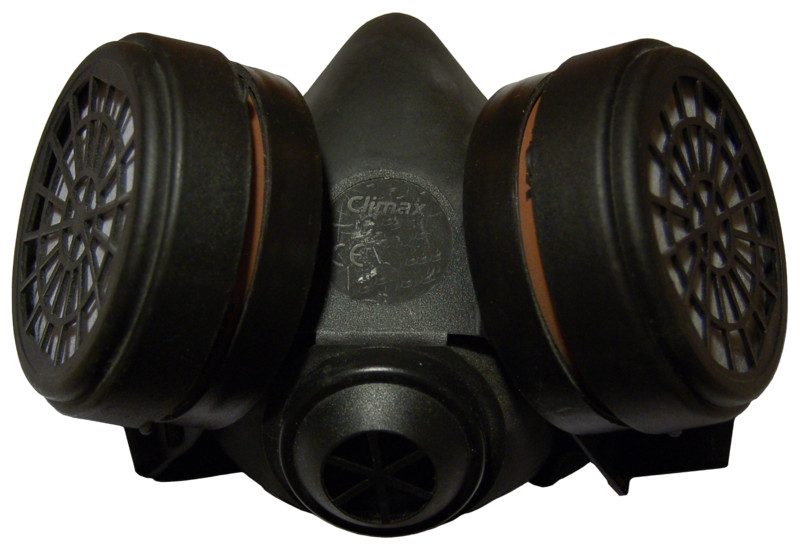
A gas mask is an important piece of protective equipment designed to protect the wearer from biological and chemical threats. But its history is much older than most people realize. It was not born in the trenches of the First World War. It began in the dusty, dangerous depths of 19th century mines.
Origin from mines
Lewis Haslett invented the device in 1849. He built his work on Alexander von Humboldt’s earlier concepts. He had designed a prototype to protect miners from toxic fumes. Haslett refined this idea into a practical two-valve system. One valve drew air through the filter for breathing. The other allowed the exhaled air to escape. He called it a lung protector.
The core function is straightforward: it enables breathing in volatile, dangerous environments. It filters the gases from the environment. However, there is a major misconception that needs to be cleared up. Gas masks do not protect against radioactive substances. They prevent chemical and biological threats. They do not block radiation.
Evolution through war and science
Haslett’s invention laid the foundation for all modern respirators. The design was based on absorption and adsorption valves. Over time, the seal around the face improved significantly. Early versions were actually used by miners. However, the real explosion occurred during the First World War.
Chemical weapons changed warfare. Soldiers needed a way to survive mustard gas and chlorine attacks. This demand led to rapid improvements. Engineers focused on filters. They developed cells with a pore size of only 300 nanometers. These small filters block pathogens. They prevent the spread of viruses such as smallpox or tuberculosis. The technology evolved from simple mine protection to military necessity and finally to highly effective biological filtration.
Who is using it today?
The basic principle remains unchanged. The two-valve system is still the basis of modern masks. But who needs them now?
- Military Personnel: Essential in chemical warfare scenarios.
- Chemists: Protects against laboratory fumes and dangerous substances.
- Firefighters: Protects against inhalation of smoke and toxic combustion by-products.
The lung protector designed by Haslett in the 1840s is now an essential tool. It ensures the safety of specialists in environments where the air itself is the enemy. The technology has become more complex, but the core idea – filtering the air we breathe – remains the same. It’s a simple concept. A life-saving one.
Does the air in your city feel safer now? Perhaps. But the tools to survive a worst-case scenario are still based on 19th-century mine design. The filters are finer. The seals are tighter. But the threat has not disappeared. It simply changes shape.


